Quick Links — Cologne Karneval
Affiliate links — I earn a small commission at no extra cost to you.
In This Guide
I lived 90 minutes from Cologne for two years before I finally went to Karneval. That was a mistake. Nothing in my experience of European festivals — not Oktoberfest, not La Tomatina, not the Running of the Bulls — matches the scale, the chaos, or the sheer communal joy of Cologne during the days before Ash Wednesday.
The city stops. Banks close. Offices close. The streets fill with people in costume, and the Kölsch flows continuously from Thursday morning until Tuesday night. It is extraordinary, but only if you show up understanding what you are walking into.
What Is Karneval?
Karneval is the Catholic tradition of feasting and revelry before Lent. In Cologne, the tradition goes back centuries and becomes the defining civic event of the year. The modern season starts officially on 11 November at 11:11am, but the main public blowout runs across the six days before Ash Wednesday.
Think of it less as one parade and more as a citywide social contract: you wear a costume, you join in, you do not stand at the edge pretending you are above it.
2026 & 2027 Dates
For practical planning, you care about Weiberfastnacht on Thursday and Rosenmontag on Monday. Those are the anchor points around which flights, hotel pricing, and train demand spike hardest.
- 2026: Thursday 12 February through Tuesday 17 February.
- 2027: Thursday 4 February through Tuesday 9 February.
"Karneval only works if you stop spectating and start participating."
Weiberfastnacht
This is the unofficial beginning for most visitors: women cut ties, bars are full by lunch, and large parts of the city essentially begin drinking before the workday has ended. If you want the purest atmosphere, this is one of the best days to experience it.
The Altstadt is dense, loud, and easy to overdo. Pace yourself. Cologne rewards stamina more than ambition.
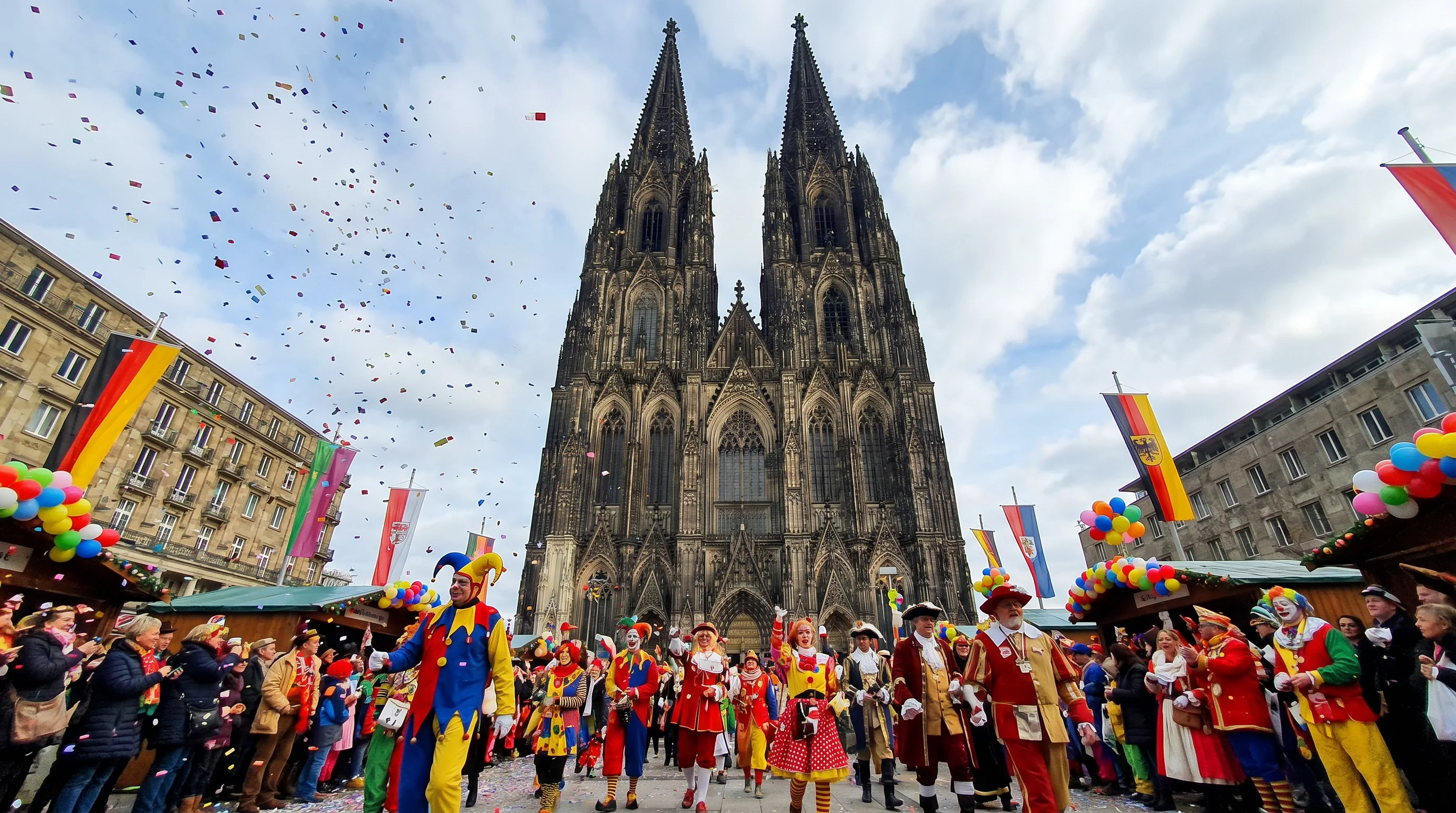
Rosenmontag Parade
Rosenmontag is the massive parade day and the event most outsiders have heard of. Floats, satire, marching bands, candy, and enough spectators to turn the city into a logistics exercise. If you care about the parade itself, arrive early and pick your viewing point before the crush starts.
If you do not especially care about floats, Rosenmontag is still worth experiencing because the surrounding city atmosphere feels like it has tipped from party into temporary alternative reality.
Costume Strategy
Do not show up in normal clothes unless your plan is to feel awkward all day. A lazy costume is fine. No costume is not. This is not a precision cosplay environment; it is a social participation rule.
Pick a costume you can keep wearing for 10 hours in February weather and packed indoor spaces. Funny beats elaborate. Comfortable beats clever.
Survival Guide
- Cash helps: some bars still move faster with it.
- Hydrate aggressively: Kölsch arrives in 200ml glasses, which tricks people into thinking they are not drinking much.
- Plan your trains home early: late returns get crowded fast.
- Use the group energy: Cologne crowds are boisterous, not hostile.
Where to Stay
Stay central if you can afford it. During Karneval, proximity is value. You want to be able to reset, change layers, and get back out without treating public transport as a second job.
Hotels in Cologne
Book as early as possible. Karneval weekend pricing gets ugly fast, and the best-value central hotels disappear first.
Getting There
Train is usually the smartest move if you are already in western Germany, Belgium, or the Netherlands. Flying only makes sense if Cologne is your main trip and you are coming from farther away.