Quick Links — Strasbourg
Resources mentioned in this guide. These are affiliate links — I earn a small commission at no extra cost to you.
In This Guide
Strasbourg sits exactly where Europe gets complicated — and interesting. Passed back and forth between France and Germany more times than a bad joke, the city absorbed both cultures and ended up with something entirely its own: the Alsatian identity. Half-timbered houses over mirror-still canals, flammekueche washing down with local Riesling, and a Gothic cathedral that took 250 years to build.
If you are coming from Paris, the TGV makes this absurdly convenient. From Stuttgart or Frankfurt, it is even closer. There is no good reason to skip this city if you are already moving through eastern France or western Germany.
Getting to Strasbourg
Train is by far the best option. From Paris Gare de l'Est, the TGV takes under two hours. From Frankfurt, around 2.5 hours. From Stuttgart, under 1.5 hours. Strasbourg's Gare Centrale drops you close enough to the Old Town that the arrival feels almost offensively easy.
Book Your Train
Omio is the cleanest way to compare routes and timings, especially if you are piecing Strasbourg into a broader France or Germany itinerary.
If you are driving, leave the car and walk. The center is compact, and the real reward here is wandering rather than checking boxes at speed.
La Petite France
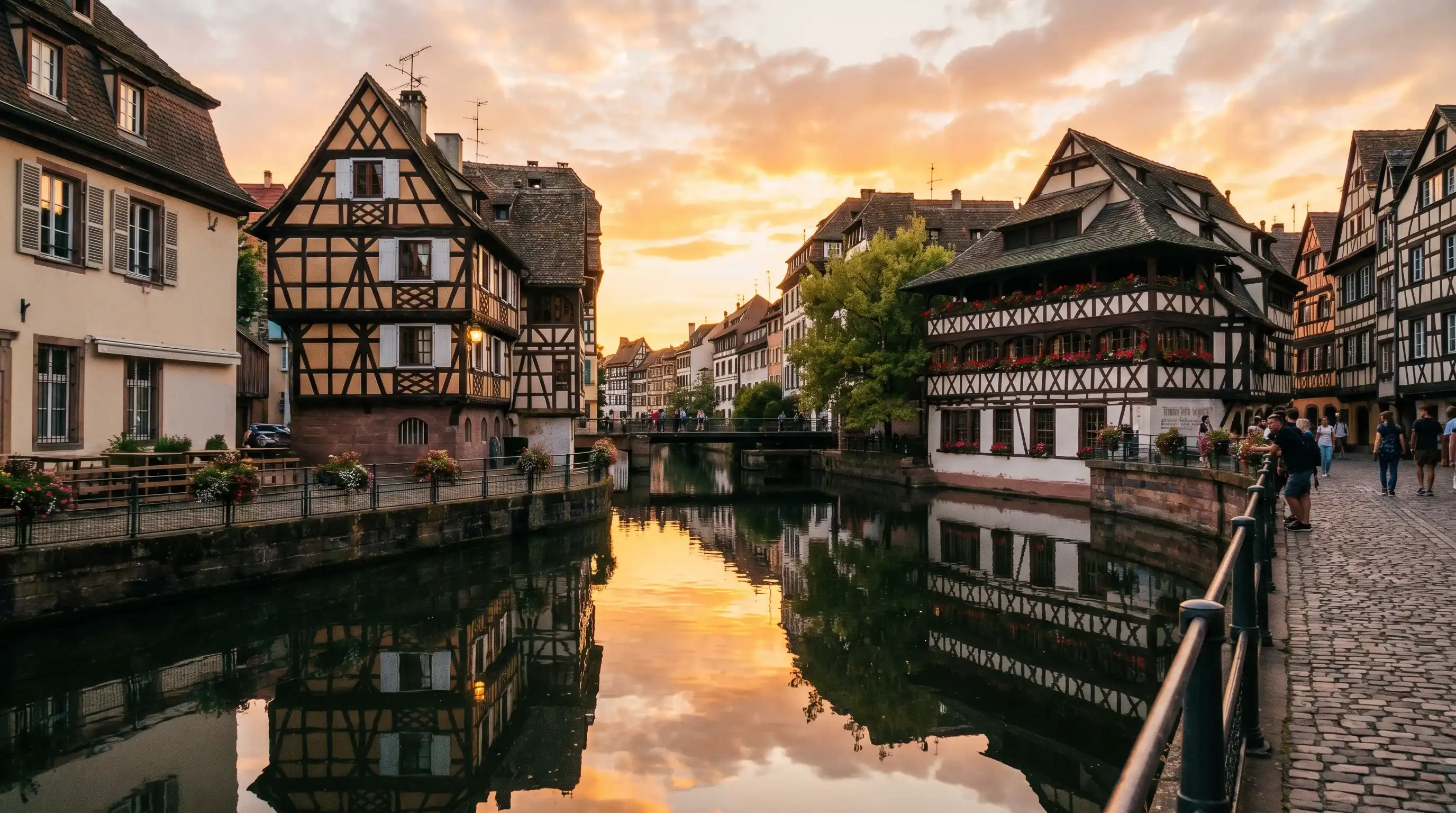
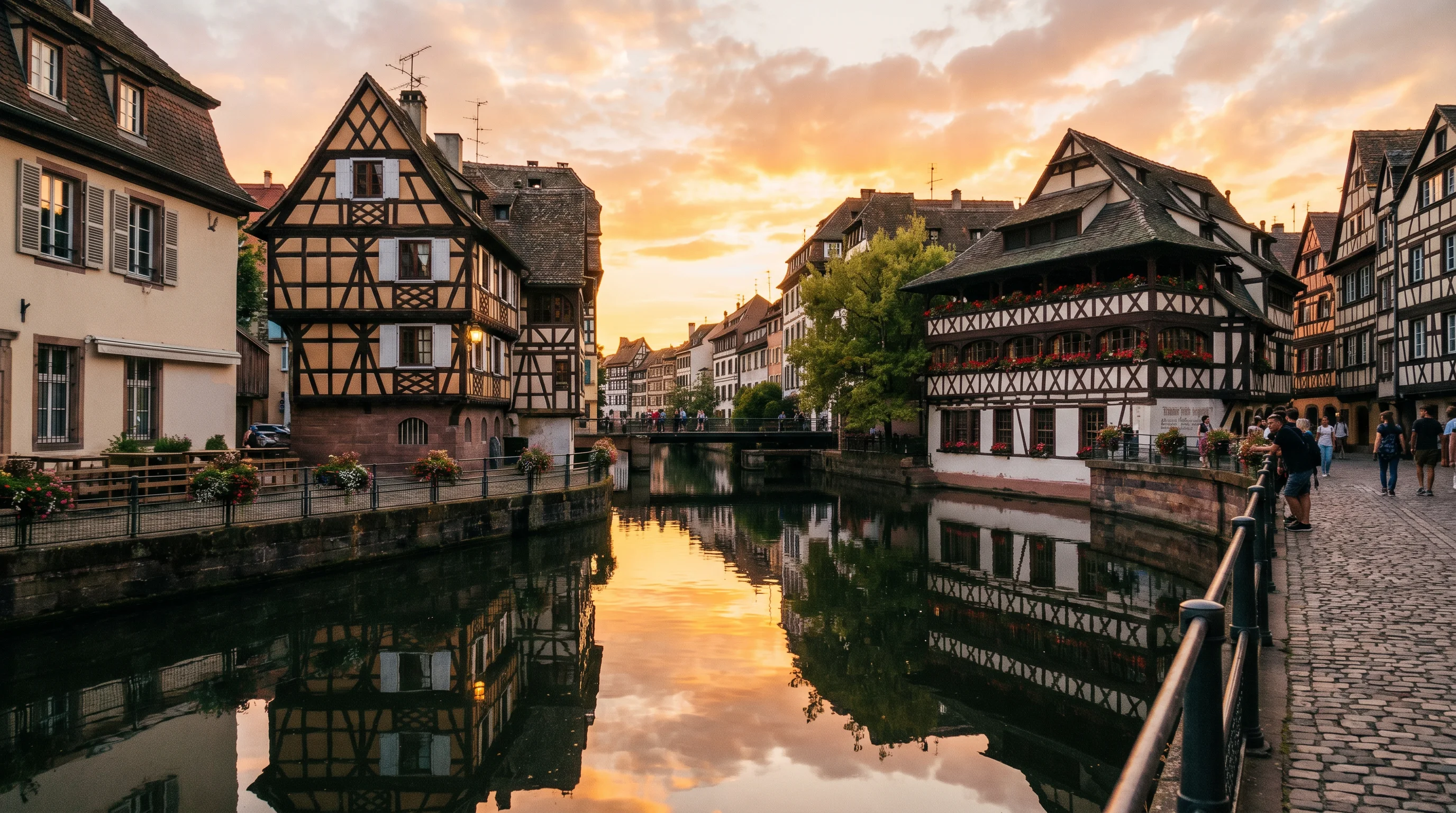
This is the postcard — a medieval quarter of half-timbered houses wedged between canal branches of the Ill River. Come early morning before tour groups arrive, or at golden hour when the reflections start doing half the work for you.
Cross the Ponts Couverts, then head up to the Barrage Vauban for a panoramic view. It is free, low-effort, and exactly the kind of move that makes a one-day visit feel fuller than it should.
"Come early morning before tour groups arrive, or at golden hour when the reflections hit."
The Cathedral of Notre-Dame
For two centuries, this was the tallest building in the world. Even now it feels improbable. Admission to the cathedral itself is free; the astronomical clock and tower climb are separate ticketed add-ons and worth doing if you have the time and patience.
What to Eat
- Flammekueche: Alsace's answer to pizza, better when the crust is aggressively thin.
- Choucroute Garnie: Heavy, cold-weather food with exactly the right amount of stubbornness.
- Bredele: Buy a bag for the train home.
- Local Riesling: Drier and more structured than many first-time visitors expect.
For lunch, duck into a winstub and avoid the places with menus in four languages displayed outside. The good ones usually do not need to advertise that hard.
Skip the tourist menus printed in four languages. Find a winstub with a handwritten chalkboard and let that be the whole selection process.
One Perfect Day in Strasbourg
- 10:00–11:30am: Walk from the station into the Old Town and get your bearings.
- 11:30am–12:30pm: Cathedral interior and astronomical clock.
- 12:30–2:00pm: Lunch at a winstub near Petite France.
- 2:00–4:30pm: Petite France, Ponts Couverts, and Barrage Vauban.
- 4:30–6:00pm: Either the European quarter or one more slow loop through the canals.
- 6:00pm: Drinks before the train home.
Where to Stay
Strasbourg rewards a night or two, especially during Christmas Market season. Old Town proximity is worth paying for because the city's best moments come early and late, not just in the middle of the day.
Hotels in Strasbourg
Booking central saves you time, layers, and unnecessary tram decisions. Strasbourg has solid options at most budget levels.
Practical Info
- Currency: Euro (€)
- Language: French primarily; German widely understood
- Getting around: Walk or use the tram system
- Best time: May–June and September–October, plus the Christmas Market season if you can tolerate crowds
- Avoid: August peak crowds and packed December weekends unless you actively want the festive chaos