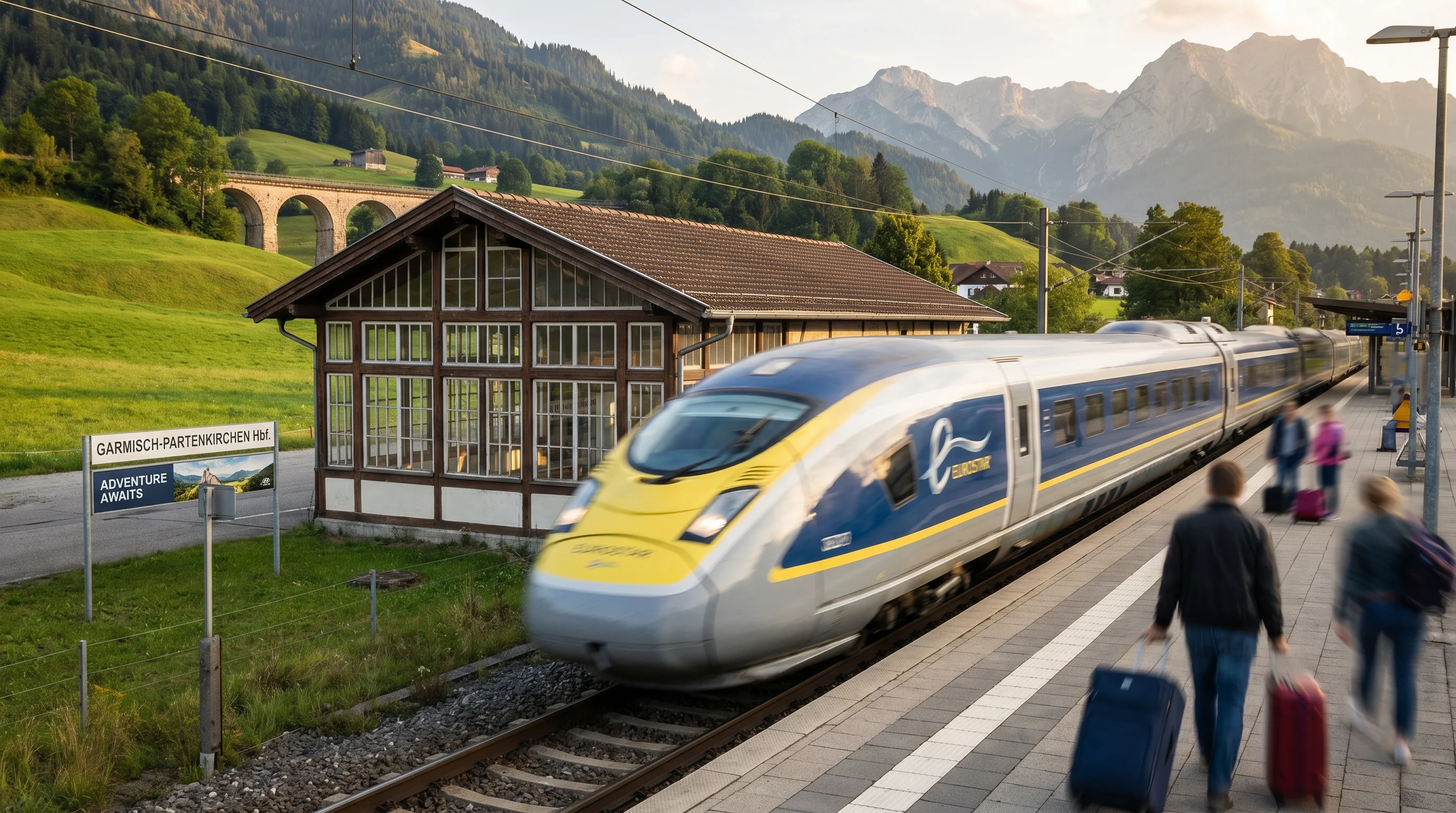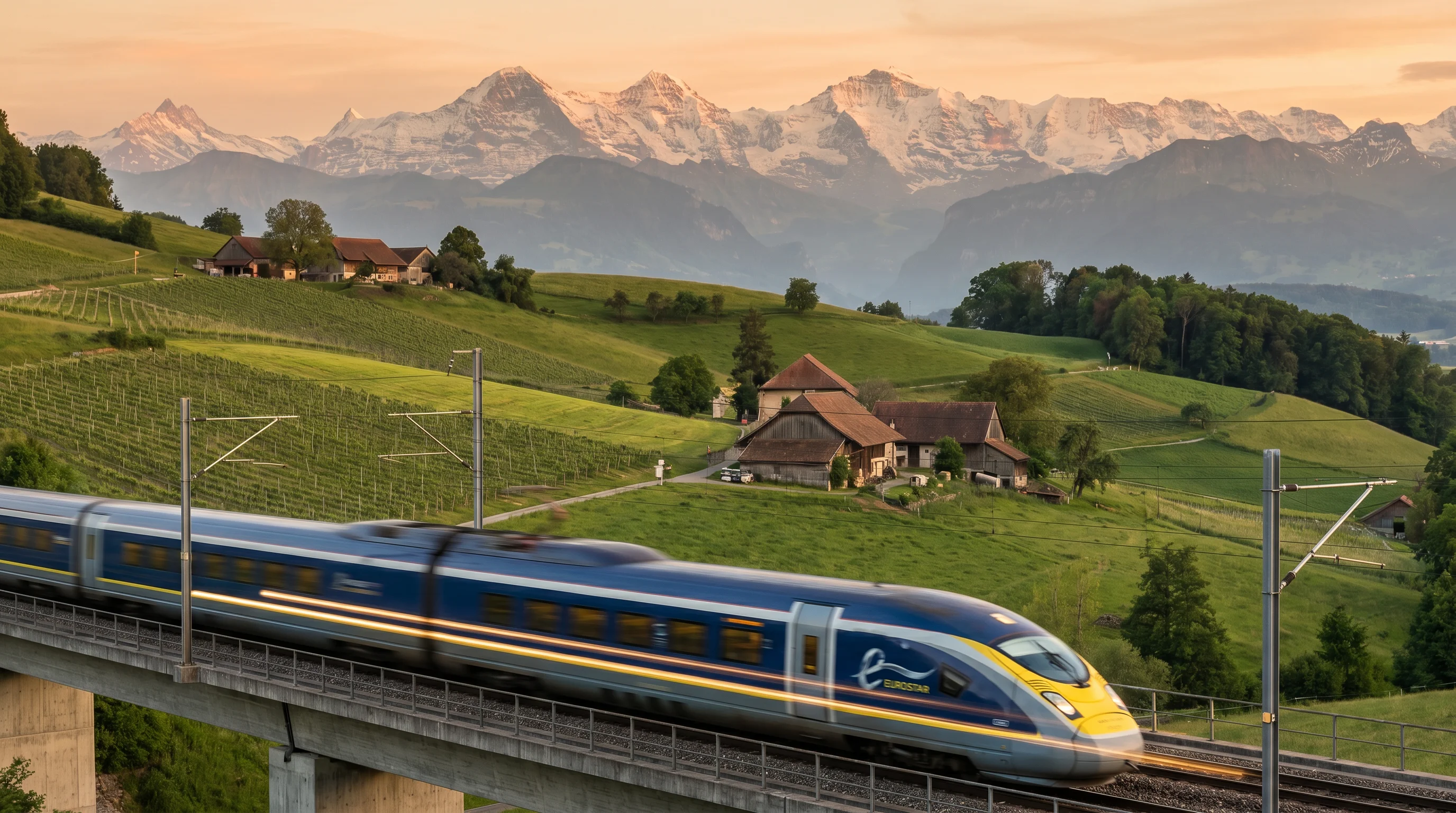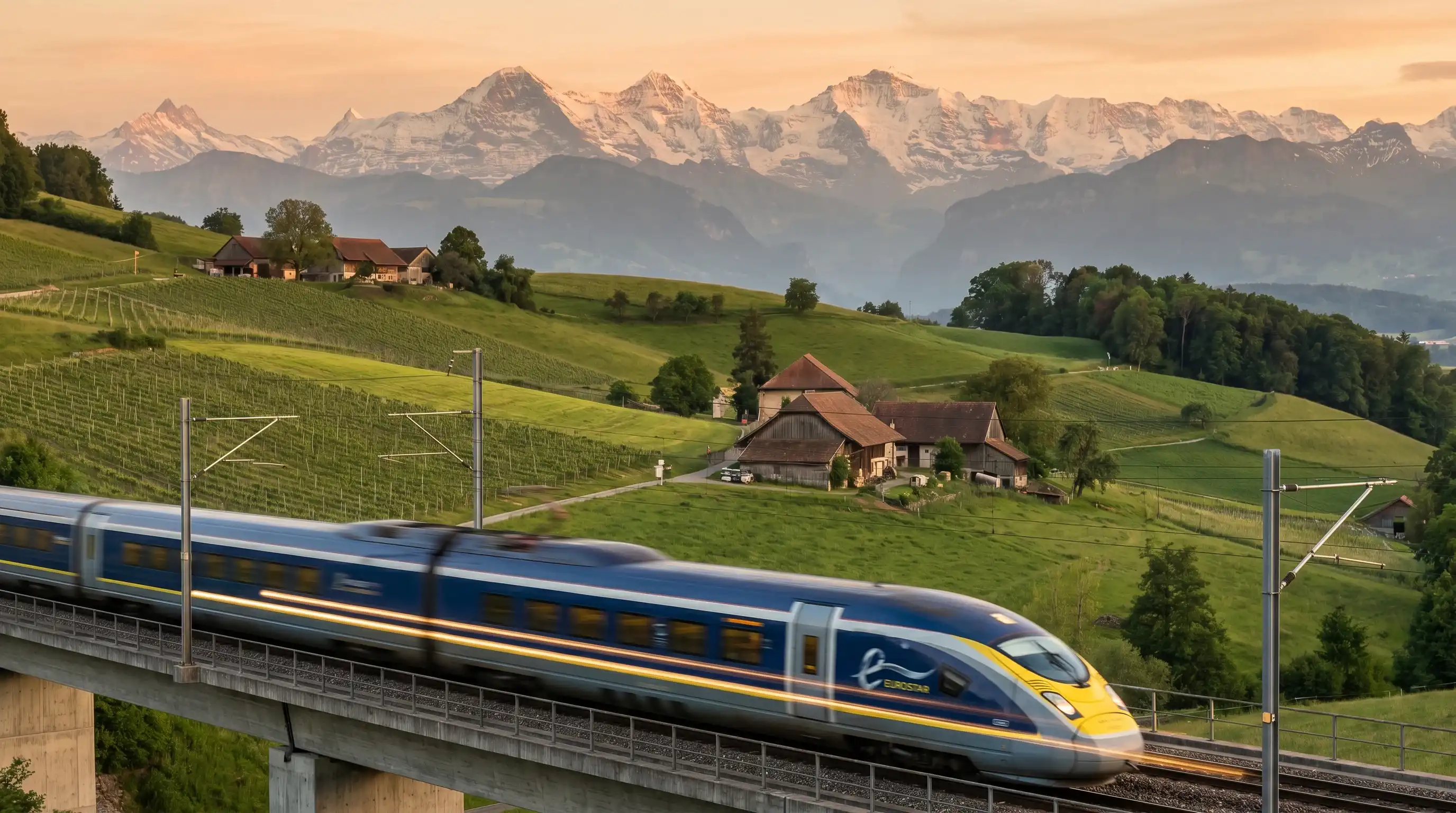
High-speed Eurostar train passing through Alpine countryside at sunset
Travel Tips

The Best Way to Travel Europe by Train in 2026

December 18, 2025 13 min read By CJ Bolt

Quick Links — Rail Booking

The fastest ways to search and book European train tickets. Affiliate links — I earn a small commission at no extra cost to you.

Search Trains on Omio → Compare on Kiwi.com

I live in Stuttgart. My clients are in Frankfurt, Munich, Zurich, and occasionally Paris. I travel for leisure to Vienna, Amsterdam, Strasbourg, and wherever else a free weekend takes me. I have not been on a short-haul flight inside Europe in almost two years — and I have zero intention of changing that.

This is not an environmental stance (though the carbon numbers are not kind to aviation). It's purely practical. For anything under four or five hours of rail time, the train is faster door-to-door, more comfortable, and usually cheaper when you factor in everything a flight actually costs. I want to make that case properly here, then get into the mechanics: how to book, which passes make sense, the best routes, and the surprisingly good night train options that mean you can skip a hotel entirely.

This guide is aimed at people who travel Europe regularly — digital nomads, consultants, anyone doing multi-city trips. Not backpackers with three months and a Eurail pass (though that's covered too). I'll tell you what I actually use and why.

Why Train Beats Flying Under 5 Hours

The airline industry has done an excellent job of making you forget what flying actually involves. Let's walk through it honestly. You need to be at the airport 90 minutes before departure (budget airlines say 2 hours). Add 30–45 minutes of transfer to the airport from a city centre — airports are never central. Add security queues, gate changes, the boarding cattle-call, a 20-minute taxi before takeoff, descent, disembarkation, baggage claim if you checked anything, and then the transit from the destination airport to the actual city you wanted to be in. A 1h30m flight from Stuttgart to Amsterdam realistically eats five to six hours of your day, involves at minimum two shuttle/train journeys, and costs €70–€150 once you add baggage and the soul tax of budget airline upsells.

The ICE or Thalys from city centre to city centre does the same journey without any of that. You walk to the main station, sit in a wide seat with a table, plug in your laptop, and get three or four hours of actual productive work done — or watch the Rhine valley slide past the window, depending on your mood. You arrive at a central station, not an industrial shed 25km outside the city. You walk out into the city immediately.

The specific advantages:

  • City centre to city centre: European capitals have spectacular main stations — Paris Gare du Nord, Amsterdam Centraal, Vienna Hauptbahnhof, Budapest Keleti. You walk out and you're there. No airport transit.
  • No security theatre: You arrive 10 minutes before departure, walk to the platform, and board. That's it. No liquids rule, no belt removal, no laptop tray. I've boarded a TGV in Stuttgart 8 minutes before departure with a full backpack and a coffee in hand.
  • Luggage freedom: There is no baggage limit on most European trains. Bring what you want. I routinely travel with a 65L pack and a laptop bag and nobody says a word.
  • Actual scenery: The Paris–Strasbourg TGV through Alsace, the Munich–Salzburg route through the foothills, the Rhine Gorge on the way to Amsterdam — European rail routes are legitimately beautiful. You miss all of it at 35,000 feet.
  • Work-friendliness: Most high-speed trains have reliable power sockets, tables, and increasingly decent wifi. I regularly bill 3–4 hours on a Cologne-to-Paris run.

The math only turns against you over roughly 5 hours of rail time, where a flight starts to genuinely compress the journey. London–Rome, Paris–Warsaw, anything crossing a sea — sure, fly. But for the dense web of journeys inside Western and Central Europe, the train wins almost every time.

Interrail vs Point-to-Point Tickets — When Each Makes Sense

This is the question I get asked most. The short answer: passes are for spontaneous multi-country trips of two weeks or more. Point-to-point tickets are for planned, specific journeys — and they're often significantly cheaper.

When Interrail Makes Sense

The Interrail Global Pass (for European residents — Eurail for non-Europeans, same product different branding) gives you a set number of travel days across 33 countries. 2026 adult 2nd-class pricing:

  • 4 days within 1 month: €283
  • 7 days within 1 month: €381
  • 15 days within 2 months: €553
  • 1 month continuous: €696
  • 3 months continuous: €956

Youth prices (under 28) are roughly 25–30% cheaper. At these prices, a pass pays off when you're doing high-mileage spontaneous travel — classic backpacking, gap year routes, or a planned multi-country circuit where flexibility has real value. If you're doing Prague–Vienna–Budapest–Krakow in two weeks, jumping on trains as you go, a 10-day-in-2-months flexi pass at €447 (adult 2nd class) is probably competitive.

When Point-to-Point Is Better

For planned, specific journeys, advance point-to-point tickets almost always beat the pass on price. Paris to Amsterdam booked 6 weeks ahead: from €35. Munich to Salzburg on a DB Sparpreis: often under €20. The pass doesn't save you money here — it just adds flexibility you don't need.

There's a critical catch with passes that nobody tells you upfront: seat reservations are mandatory on most high-speed trains, and they cost extra on top of the pass. On French TGV/TGV Lyria trains, a reservation on a pass costs €10–€20. On Eurostar (London–Paris), it's €30+ on top of the pass. On EuroCity routes through Austria and Switzerland, it's often €3–€6. These add up. A pass doesn't give you free travel — it gives you discounted base fares with mandatory add-on fees on the best services.

My actual setup: I buy point-to-point advance tickets for every trip I plan. I haven't bought an Interrail pass since I moved to Stuttgart, because I always know where I'm going at least a few weeks out. The pass would cost more and add no value.

How to Book European Rail Tickets

European rail booking is more fragmented than it should be. There's no single platform that sells everything, which is annoying but navigable once you understand the landscape.

Aggregators — Start Here

Omio is the best general aggregator for European rail. It covers most major operators, shows real-time pricing across routes, and has a genuinely good UX. I use it for initial route research — it tells me what trains exist, approximate prices, and journey times. Book directly through Omio or use it to identify the right operator and then book direct.

Book Your Train Tickets

Omio aggregates routes across most European operators and shows live pricing. Kiwi.com also covers rail alongside flights if you're mixing transport modes.

Search on Omio → Try Kiwi.com Rail

Rail.cc is an underrated tool — a proper rail-focused aggregator that also has excellent route guides, real journey times, and links to all the national booking systems. Worth bookmarking alongside Omio.

National Operators — Often the Cheapest

Booking direct with the national operator is usually cheapest and avoids aggregator fees. The operators you'll use most:

  • DB (Deutsche Bahn): Germany, and they also sell Sparpreis tickets on many international ICE routes. Good for anything touching Germany. Their app is excellent.
  • SNCF / OUI.sncf: France. All TGV routes. Required for Paris–Amsterdam/Brussels (Thalys/Eurostar) and Paris–Zurich (TGV Lyria). Book 90+ days ahead for the best fares.
  • ÖBB: Austria. Sells Railjet tickets (Austria, Germany, Hungary) and all Nightjet sleeper routes. Their advance fares are aggressive — Vienna–Hamburg for €29 if you're early.
  • Renfe: Spain. Barcelona–Madrid AVE and all Spanish high-speed routes. Also iryo and Ouigo Spain now compete, so check all three.
  • Eurostar: London–Paris, London–Brussels, London–Amsterdam. Book direct — aggregators rarely have the best prices on Eurostar.
  • SBB (Swiss Federal Railways): Switzerland. Excellent app and website. Often cheapest for anything entering Switzerland.

Booking Windows by Country

Advance fares open on different timelines depending on country — this matters if you're hunting the cheapest tickets:

  • France (SNCF): 3–4 months ahead. Best fares on TGV routes disappear fast on popular services.
  • Germany (DB): 3 months ahead. Sparpreis fares from €17.90 domestically, good value on ICE.
  • Austria (ÖBB): Up to 6 months. Sparschiene fares are genuinely cheap — €9 domestically, €29 for major international routes.
  • Spain (Renfe): 2–3 months. AVE advance fares can be €15–€25 on Barcelona–Madrid.
  • UK / Eurostar: Up to 6 months. Eurostar's cheapest Standard fares go early and are non-refundable.
  • Switzerland (SBB): 2 months. Supersaver tickets exist but sell fast.

General rule: book anything in France, Spain, or the UK as early as possible. Central European routes (Austria, Switzerland, Germany) tend to have better last-minute availability but still reward advance planning.

The Best Train Routes in Europe

These are the routes I've actually done or would do without hesitation — chosen for the combination of journey quality, time efficiency, and the fact that they make the flight alternative look absurd.

Paris–Amsterdam (3h 20min)

Now operated entirely by Eurostar (they absorbed Thalys in 2023), this is one of the great European train journeys. Paris Gare du Nord to Amsterdam Centraal in 3 hours 20 minutes, direct, via Brussels. You pass through the Belgian countryside and arrive into one of the world's best city-centre stations. Flights on this route, factoring in airport time, are genuinely slower door-to-door. Advance fares start from €35; book 6–8 weeks ahead for realistic prices.

Paris–Zurich (4h via TGV Lyria)

The TGV Lyria from Paris Gare de Lyon to Zurich HB takes about 4 hours on direct services. The scenery through Burgundy and then into Switzerland is exceptional. You'd be looking at 3–4 hours of real-world travel just for airport process on the flight alternative. Fares from around €29 advance through SNCF or SBB.

Zurich–Vienna (~8 hours)

This one pushes the boundary of where trains stop being obviously better than flying — 8 hours is a long day. But it's also one of the most beautiful rail journeys in Europe: out of Zurich through Vorarlberg, over the Arlberg pass, down through Innsbruck, and east to Vienna. If you have any flexibility, take the ÖBB Nightjet overnight instead (see Night Trains section) — you leave in the evening and wake up in Vienna. The daytime route is worth it if you want the views; just bring plenty to do.

Vienna–Budapest (2h 20min–2h 40min)

The ÖBB Railjet between Vienna Hauptbahnhof and Budapest Keleti is one of Europe's most underrated short hops. Under 2h30 on the faster services, frequent departures all day, advance fares from €9 on ÖBB's Sparschiene. This is the route where a budget flight makes absolutely no sense — by the time you've processed through Vienna Airport or BUD, you've added two hours minimum to a 45-minute flight. The train leaves you at two magnificent city-centre stations instead.

Munich–Salzburg (~1h 30min)

A textbook "never fly this" route. Under 90 minutes on the Railjet, with views of the Bavarian Alps starting to appear as you near Salzburg. Fares from around €10–€17 with DB Sparpreis. The route runs constantly — departures every 30 minutes during peak times. Salt­burg Hauptbahnhof is a 15-minute walk to the Old Town. Munich Airport is not.

Barcelona–Madrid AVE (2h 30min–2h 45min)

Spain's AVE high-speed network is the best in Europe by some measures — the Barcelona–Madrid route runs at up to 310 km/h and covers 500km in about 2h30 on the fastest services. Three operators now compete on this route: Renfe, iryo, and Ouigo Spain, which keeps fares competitive. Advance fares from €15–€20 are common. The train drops you at Atocha in central Madrid or Sants in central Barcelona — both minutes from where you actually want to be.

London–Paris Eurostar (2h 16min)

The Eurostar from London St Pancras to Paris Gare du Nord takes 2 hours and 16 minutes at its fastest. The Chunnel section is 35 minutes of underground nothing — the interesting parts are the Kent countryside and the French Nord-Pas-de-Calais before Paris. Prices start from €44 advance but average €80–€130 in practice; it's not cheap. But it's still better than Heathrow on most metrics. Note: you do go through passport control at St Pancras (Schengen border), so budget 30 minutes before departure minimum.

Stuttgart–Strasbourg (1h 23min)

My personal local hero. Stuttgart Hauptbahnhof to Strasbourg in 83 minutes — either via a direct TGV or on regional services through Kehl. There is genuinely no reason to do this by car or with any thought of a flight. I've done this route maybe fifteen times, usually for a day trip to Strasbourg or to connect onward into France. Advance fares start from €9 on good days, typically €25–€35 on the TGV. See my Strasbourg Day Trip Guide for what to do when you get there.

"For anything under five hours of rail time, the train is faster door-to-door, more comfortable, and usually cheaper when you factor in everything a flight actually costs."

European high-speed train at a station platform — the backbone of efficient, scenic travel across the continent
European high-speed rail connects major cities in under 3 hours — often faster than flying door-to-door

Night Trains — Skip the Hotel, Arrive Rested

Night trains are having a genuine renaissance, and 2026 is a particularly good year for it. The basic premise is compelling: you board in the evening, sleep, and wake up in a different city having saved a hotel night and a daytime travel day. Done right, it's one of the most efficient forms of travel there is.

ÖBB Nightjet — The Backbone of the Network

Austrian Railways runs the most comprehensive night train network in Europe. The Nightjet fleet has been significantly upgraded with new-generation trains featuring private sleeping compartments (some with en-suite showers), improved couchette "Mini Cabins" for solo travelers wanting privacy on a budget, and standard seat cars for the cheapest option.

Key Nightjet routes operating in 2026:

  • Vienna–Hamburg (and Innsbruck–Hamburg): Daily, new-generation rolling stock. One of the showcase routes for ÖBB's upgraded fleet.
  • Vienna–Amsterdam (via Munich and the Rhine): Running into 2026, three times weekly. This one goes through some spectacular Rhine valley scenery, which you mostly sleep through but that's the point.
  • Vienna–Brussels (via Munich and Cologne): Thrice weekly. ÖBB has confirmed this continues.
  • Vienna/Munich–Rome (and Venice, Florence): Daily. One of the most popular routes. Book well ahead for summer.
  • Zurich–Vienna (overnight, via Innsbruck): Leaves Zurich in the evening, arrives Vienna next morning. Seat tickets from €29; couchette from around €59; sleeper from €89. This is the smart alternative to the 8-hour daytime journey.

Note: The Paris–Vienna and Paris–Berlin Nightjets were discontinued in December 2025 due to French funding cuts. Good news: the Paris–Berlin route is being picked up by European Sleeper from March 2026.

European Sleeper — The Independent Upstart

European Sleeper is a Belgian-Dutch cooperative that launched in 2023 and has been growing steadily. They operate with a refreshingly direct model: low platform fees, transparent pricing, and a strong community following. Their current routes:

  • Brussels–Amsterdam–Berlin–Prague: Three times weekly. The original "Good Night Train." Couchette fares from around €59; seats cheaper. Over 230,000 passengers in their first year.
  • Paris–Brussels–Berlin (launching March 26, 2026): Takes over the gap left by ÖBB. Runs Sunday/Tuesday/Thursday from Paris, arriving Berlin next morning. Couchette berths starting around €59. Tickets went on sale December 16, 2025.
  • Brussels/Amsterdam–Milan (planned June 2026): Via Cologne, Bern, and the Swiss Alps to Milan. If this launches as planned, it's a significant new corridor for the Low Countries into Italy.

EuroNight Routes Worth Knowing

Beyond ÖBB and European Sleeper, a patchwork of EuroNight services connects Central and Eastern Europe:

  • Basel–Copenhagen/Malmö (launching April 15, 2026): A new SBB/RDC Germany partnership, three times weekly. Switzerland to Scandinavia overnight — unprecedented in recent decades. Bistro car on board.
  • Vienna–Zagreb and Budapest–Bucharest: EuroNight services under various operator partnerships. Reliable, if slower rolling stock.
  • Prague–Zurich ("Chopin" EN train): Extends to Warsaw and Krakow — a useful Central Europe corridor.

Booking note: Night train tickets don't always appear on aggregators. For Nightjet, book through ÖBB directly or DB's website. For European Sleeper, their own site is the only reliable source. Rail.cc is excellent for checking what night trains exist on a given route.

Plan Your Night Train Trip

If a night train isn't available for your route, Booking.com has the best selection of centrally-located hotels with free cancellation — useful when your plans are flexible.

Browse Hotels on Booking.com → Search Night Train Routes
Pro Tip

Book night train couchettes as early as possible — the good cabins sell out 90+ days in advance for popular routes like Vienna–Paris or Amsterdam–Vienna. Use the Rail Europe or OBB Nightjet websites directly. Aim for a 6-person couchette for budget travel or a private 2-person sleeper for comfort.

Practical Tips for European Rail Travel

Seat Reservations

On most high-speed trains in Europe, seat reservations are either mandatory or highly recommended. This is separate from the ticket itself — and if you're on an Interrail/Eurail pass, you pay for reservations even though you've already bought the pass. Costs vary: €3–€6 on Austrian Railjet routes, €10–€20 on French TGV, €30+ on Eurostar with a pass. On many regional trains (DB Regional, Austrian S-Bahn, Swiss regional) reservations are optional — your ticket gets you on, and you sit wherever you like.

Luggage

No formal luggage rules on most European trains. In practice: don't block the aisle with enormous bags on busy services; use the overhead racks or the luggage racks at the end of carriages. I travel with a 20L daypack and a 45L main pack with no issues. For oversized luggage, check the specific operator — some IC/EC routes have specific guidance.

Left Luggage (Gepäck, Consigne, Deposito Bagagli)

Most major European stations have left luggage facilities (lockers or staffed storage), which is enormously useful when you arrive somewhere before your accommodation is ready. Stuttgart, Munich, Vienna, Zurich, Paris, and Amsterdam all have them. Typical costs: €4–€8 per item per day. Some stations now use Radical Storage or similar app-based services in nearby shops.

Eurail/Interrail Seat Reservation Fees — The Hidden Cost

To repeat this because it genuinely catches people out: pass holders pay mandatory reservation fees on TGV (€10–€20), Eurostar (€30+), Spanish AVE (€10–€20), and many other high-speed services. Factor this in when doing the maths on whether a pass is worth it. On a 10-day trip with eight TGV journeys, that's potentially €160 in reservation fees on top of the pass price.

Apps Worth Having

  • DB Navigator: Works for all German and many international routes. One of the best rail apps in Europe — real-time delays, platform info, and tickets in one place.
  • ÖBB: Essential for Austrian routes and Nightjet bookings. Also shows international connections through Austria well.
  • SNCF Connect: Required for France. Clunky UX but necessary — you can't always get the best French fares elsewhere.
  • SBB: Swiss trains. Excellent app, reliable real-time info.
  • Omio: Good for searching across borders when you're not sure which operator covers a route.

Delays and Connections

European high-speed trains are generally punctual. The German ICE has had reliability issues in recent years (DB acknowledges this, network upgrades are ongoing). French TGV is notably reliable. Austrian ÖBB Railjet and Swiss SBB are among the most punctual in Europe. When booking connections, build in at least 30 minutes at interchange stations on international routes — things do occasionally run late, and you don't want to miss your onward train because you allowed 8 minutes at Basel.

CJ's Rail Setup — What I Actually Use

Here's the honest version of how I handle European rail as a Stuttgart-based digital nomad working in management consulting:

For client work: I book point-to-point advance tickets, always 2–4 weeks ahead minimum. ICE first class for anything over 2 hours where I'm billing time — the price difference is usually €15–€30 and the extra legroom/quiet carriage is worth it when I'm working. DB Navigator handles booking and has my ticket on my phone.

For leisure weekends: I use Omio to see what exists, then book direct with the national operator. Stuttgart to Strasbourg, Vienna, Amsterdam, Munich — all done through the respective operator apps. I never buy more than 4–6 weeks ahead unless it's a peak period (Christmas, Easter, summer) where prices jump early.

For night trains: I book through ÖBB directly for Nightjet routes. The Zurich–Vienna overnight is my favourite way to do that trip — leave Zurich at 22:00, arrive Vienna at 09:00, having slept on the train and saved a hotel. Couchette is fine; I bring a sleep mask and earplugs. Splurging on a private sleeper is genuinely lovely but hard to justify at €150+ when the couchette for €55–€69 does the job.

On passes: I don't use them. My travel pattern is too planned and route-specific for a pass to make financial sense. If I were doing a three-week Balkans loop or a spontaneous month through Scandinavia, I'd reconsider — but for the structured travel I actually do, advance point-to-point always wins.

Luggage: I travel carry-on only, full stop. 45L Osprey Farpoint as my main bag, 20L daypack as personal item. This works on every train, every country, with no fees and no check-in.

The short version: European rail is genuinely excellent, requires almost no learning curve if you're already comfortable with online booking, and rewards advance planning with prices that make flights look overpriced for what they deliver. Build the habit once and you'll wonder why you ever queued at Ryanair gates.

Scenic European rail journey through mountain landscapes — one of the great pleasures of slow travel across Europe
Some of the world's most scenic train journeys are on ordinary European rail lines — the Gotthard Panorama Express and Rhine Valley route are unforgettable
Affiliate Disclosure: Some links in this guide are affiliate links. If you book through them, I earn a small commission at no extra cost to you. I only link to services I've personally used or trust. See my full Affiliate Disclosure.

Get New Guides First

Monthly Europe travel guides — practical, personal, and built from real experience.