Quick Links — Spain
Resources mentioned in this guide. These are affiliate links — I earn a small commission at no extra cost to you.
In This Guide
It's the most-asked question in Spain travel, and most guides dodge it with "well, they're both amazing in different ways!" which tells you nothing useful when you have ten days and a flight to book. So here's my actual take, earned from spending proper time in both cities — not a rushed weekend, but the kind of slower, wandering stays where a city actually shows you who it is.
The honest answer is a framework, not a cop-out. Barcelona and Madrid are genuinely different cities. They attract different travellers. They reward different travel styles. And depending on what you're after — architecture, food culture, nightlife, beach access, Catalan identity versus Spanish capital energy — one will clearly suit you better right now. Let me break it down.
City Vibe: Coastal Creative vs Capital Intensity
Barcelona feels like a city that's perpetually a little distracted by something more interesting happening elsewhere — which is not a criticism. It's a Mediterranean coastal city with an independent streak. The Catalan identity is real and present: you'll notice it in the language on shop signs, in the political graffiti, in the pride locals take in distinguishing their food and culture from "Spanish." Barcelona faces the sea, which gives it a particular looseness. People linger. Plans dissolve into long lunches. There's a reason it attracts more digital nomads, artists, and architects than any other Spanish city.
Madrid is different. It's landlocked, inland, and it has the focused energy of a capital. This is a city that eats dinner at 10pm, goes out at midnight, and is genuinely still dancing at 6am. It's the cultural centre of Spain in the institutional sense — the major museums, the royal palace, the corridors of power. But there's also something unexpectedly intimate about Madrid. Its neighbourhoods — Malasaña, Lavapiés, Chueca — are tight, walkable, and fiercely local. Once you stop treating it as a museum city and start wandering, it reveals itself quickly.
If you want to feel like you're somewhere different from the rest of Europe — coastal, visually distinctive, politically charged — Barcelona delivers that more forcefully. If you want the beating heart of Spain, the place where everything converges, Madrid is your city.
Food: Tapas Culture vs Catalan Cuisine
Madrid is the spiritual home of the Spanish tapa. The tradition of free (or very cheap) food with drinks survives in certain bars here in a way it doesn't in Barcelona. In the bars around La Latina and around the Mercado de San Miguel, you'll find pinxtos and raciones that cover the full range of Iberian produce — jamón ibérico, croquetas, boquerones, tortilla española done properly. Madrid also has the best offal cooking in Spain if you're into that (and the callos a la madrileña — tripe stew — is genuinely excellent, though you have to want to order it).
Barcelona's food scene is different in character. Catalan cuisine draws on the Mediterranean more heavily: seafood dominates, olive oil replaces lard, and the sauces — romesco, picada, sofregit — are more complex. A good suquet de peix (Catalan fish stew) or fideuà (paella's noodle-based cousin) at a restaurant in Barceloneta or Poblenou will remind you that this is its own food culture. The city also has Europe's best covered market in La Boqueria — though avoid the stalls facing the main entrance, which are entirely tourist-priced. Go to Mercat de Santa Caterina instead for the same quality at half the markup.
On price: food is broadly comparable. Both cities have cheap lunch menus (menú del día) running €10–14 for three courses with wine — one of the great deals left in Western Europe. Barcelona's tourist-adjacent areas (Gothic Quarter, beachfront) run significantly higher. Madrid's central tourist areas are similarly overpriced, but its neighbourhood restaurants stay honest a little longer into the gentrification cycle. If you're budget-conscious and planning to cook some meals, Madrid has marginally more affordable grocery prices.
Where to Stay in Barcelona
The Eixample neighbourhood puts you central to the Gaudí sights and Passeig de Gràcia without being in the noise of the Gothic Quarter. El Born is smaller, more characterful, and better for walking. Avoid Barceloneta unless the beach is genuinely your priority — the hotel-to-quality ratio isn't there.
Architecture & Sights: Gaudí's World vs Spain's Greatest Museums
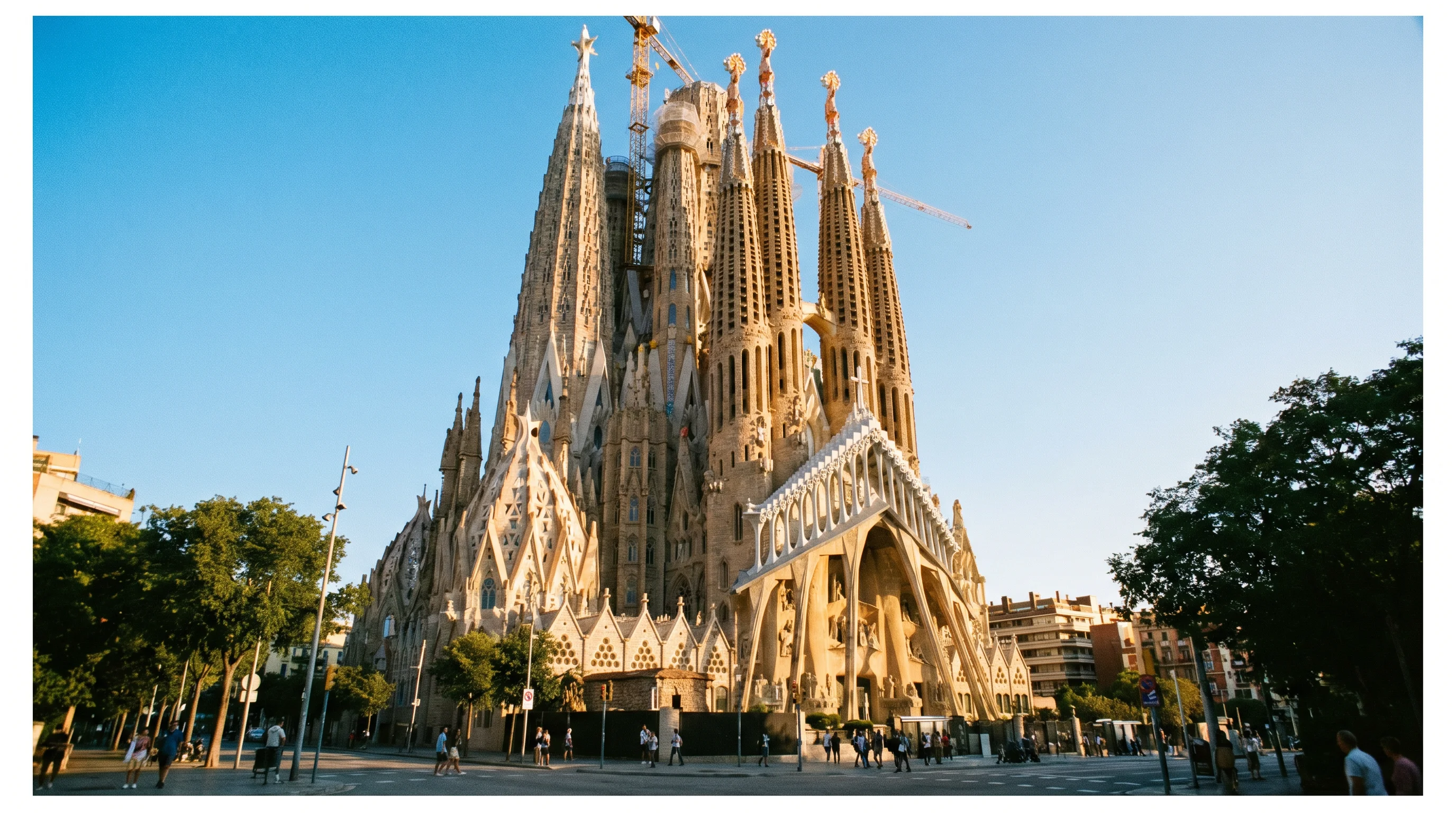
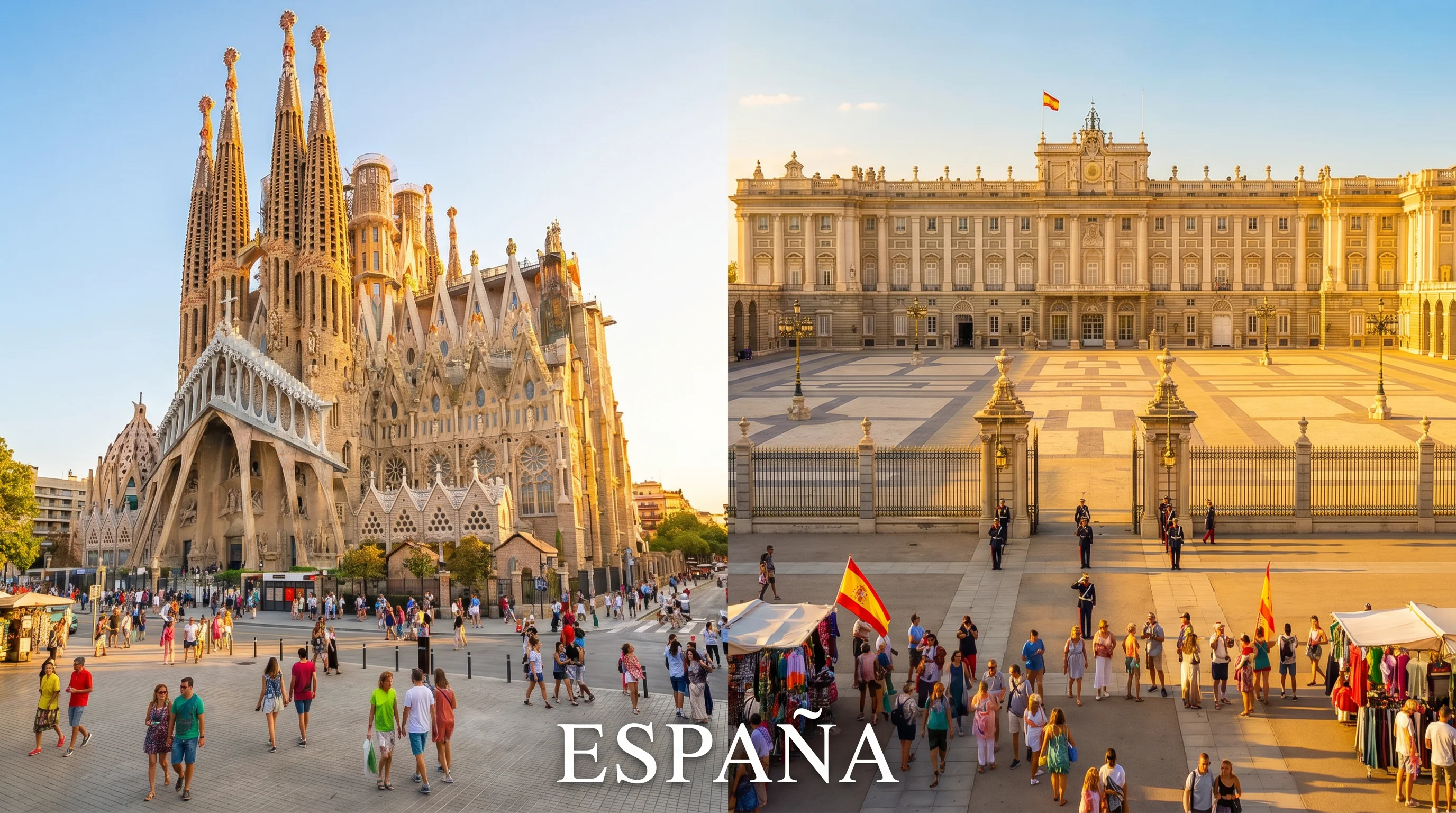
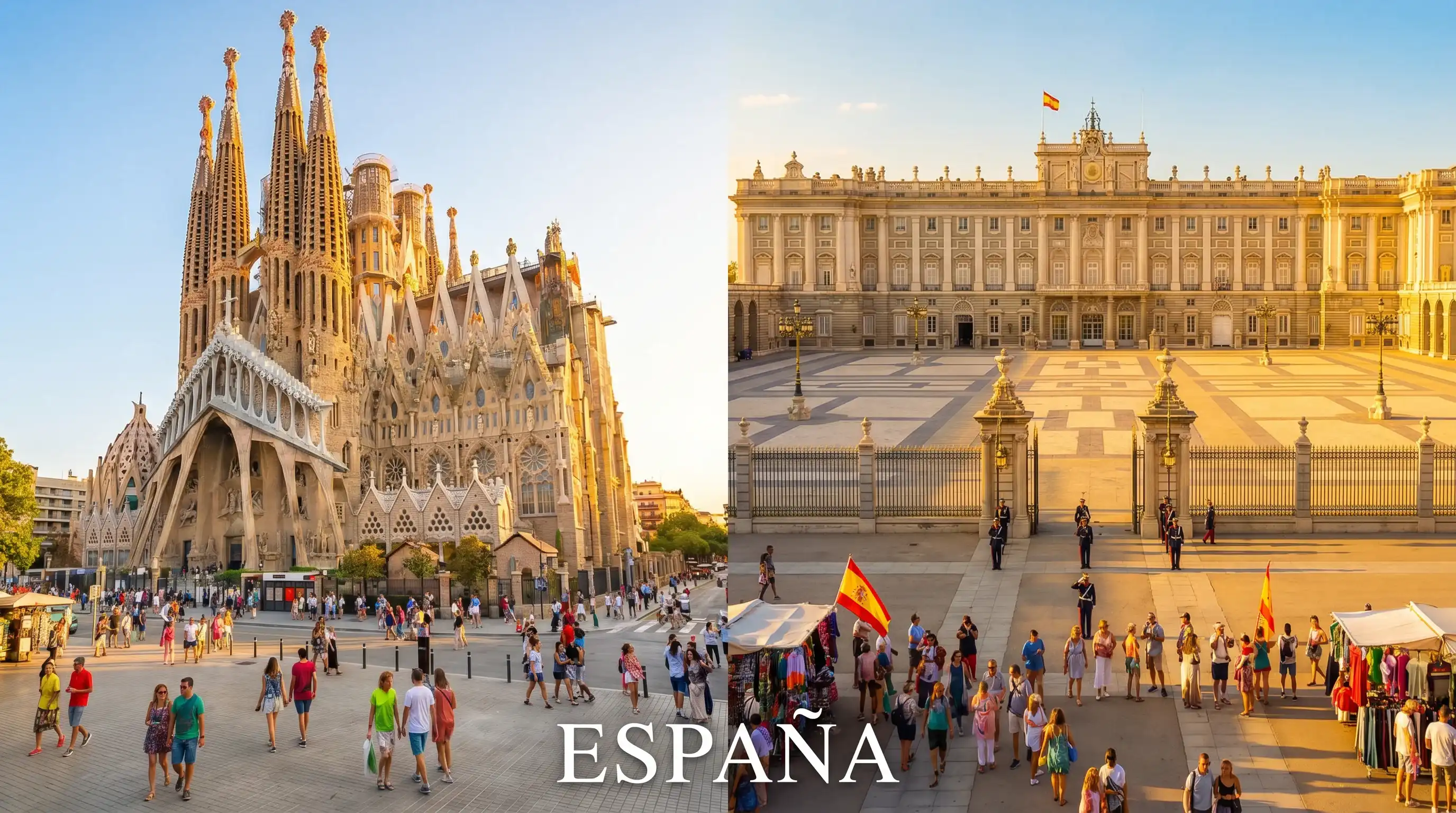
Barcelona has one of the most recognisable skylines of any city on earth, and it's almost entirely down to one man: Antoni Gaudí. The Sagrada Família is not overhyped — it is genuinely one of the strangest and most ambitious buildings ever attempted, and it's still being built. The construction has been running since 1882 and the completion date keeps shifting (currently targeting 2026 for certain towers, though I'll believe it when I see it). Inside, the nave is unlike anything in conventional Gothic architecture: the columns branch like trees, and the stained glass throws coloured light across surfaces that no cathedral planner before Gaudí would have dared attempt. Book tickets well in advance — same-day entry is essentially impossible in peak months.
Beyond Sagrada Família, Park Güell is worth the climb for the mosaic terrace and the views. Casa Batlló and Casa Milà (La Pedrera) on Passeig de Gràcia are both ticketed and both worth an hour. The Born neighbourhood contains the Basílica de Santa Maria del Mar, a 14th-century Gothic church built by the local merchants and sailors — less famous than the Cathedral but, to my eye, more purely beautiful.
Madrid's answer is the Golden Triangle of art: the Prado, the Reina Sofía, and the Thyssen-Bornemisza, all within easy walking distance of each other. The Prado alone could consume two days — Velázquez, Goya, El Greco, Rubens, and Bosch's Garden of Earthly Delights, all in one building. Guernica at the Reina Sofía is as affecting in person as it should be; I've seen it twice and it still takes something from you. The Thyssen covers everything the Prado doesn't, from Impressionism through to Pop Art.
Away from the museums: the Parque del Retiro is Madrid's great park and genuinely one of the best urban green spaces in Europe — big enough to get lost in, with the Crystal Palace pavilion worth finding. The Gran Vía at night, lit up and dense with people, has an energy that justifies the cliché about Madrid never sleeping.
"The Sagrada Família is not overhyped — it is genuinely one of the strangest and most ambitious buildings ever attempted, and it's still being built."
Nightlife: Madrid Until 7am vs Barcelona's Beach Clubs
Madrid has the best nightlife of any city I've been to in Europe, and I include Berlin and Amsterdam in that assessment. The city simply doesn't stop. Bars open at 10pm and fill by midnight. Clubs open at 1am and fill at 3am. The metro doesn't run all night (though it runs later than most cities), but taxis are abundant and cheap. Malasaña is the neighbourhood for indie music bars and staying out until breakfast. Chueca is the hub of Madrid's large and visible LGBTQ+ scene. Lavapiés mixes international food, underground art spaces, and bars where the playlist is genuinely unpredictable.
The late dinner culture is real and worth leaning into. Eating at 7pm in Madrid marks you as a tourist. Locals eat at 9:30 or 10pm, which means the restaurants around you will be full of Madrileños, the food will be fresh, and the atmosphere will be right. It takes one day to adjust and then it feels completely natural.
Barcelona's nightlife is strong but different in character. The beach clubs along Barceloneta run from late afternoon through midnight — outdoor, warm most of the year, with a soundtrack that skews electronic and a crowd that skews international. The clubs in the Poblenou district (notably Razzmatazz, a five-room complex that regularly books world-class DJs) are genuinely world-class. But the city quietens earlier than Madrid, and the neighbourhoods don't quite have the same density of bars-within-bars that make Malasaña feel inexhaustible.
If you're going specifically for the nights out: Madrid. If you want sunshine, terraces, and beach club sessions mixed with your evening programmes: Barcelona.
Cost Comparison: What to Budget
Both cities are significantly cheaper than London, Paris, or Amsterdam — this is one of Spain's great advantages. But they're not identical:
- Accommodation: Barcelona runs 15–25% more expensive than Madrid for equivalent hotels, particularly in peak summer months. A decent 3-star hotel in Eixample will cost €110–160/night in high season; similar quality in central Madrid runs €85–130. Budget accommodation (hostels, cheap guesthouses) is competitive in both.
- Food: Very comparable. The menú del día lunch deal is similarly priced (€11–14) in both cities. Dinner at a neighbourhood restaurant: €20–35/person including wine. Touristy areas in both cities will charge double for half the quality.
- Drinks: Madrid tends to be slightly cheaper for bar drinks. A beer in a neighbourhood bar in Madrid: €2–3. Barcelona: €3–4, rising sharply near the beach or Gothic Quarter.
- Attractions: Sagrada Família (€26–36 depending on tour type) is Barcelona's biggest ticket cost. Madrid's Prado is €15, Reina Sofía €12. Both cities have free entry hours at major museums — check in advance, as these fill quickly.
- Transport: Both have excellent public transit. Barcelona's T-Casual metro card gives 10 trips for about €11. Madrid's equivalent is similarly priced. Neither city requires taxis for getting around if you're comfortable on the metro.
For a week's trip, budget roughly €900–1,200 all-in for Barcelona (excluding flights) and €750–1,000 for Madrid, assuming you're eating out twice daily at mid-range places and not skimping on experiences.
Where to Stay in Madrid
Barrio de las Letras (Literary Quarter) and Malasaña are my first choices — central, walkable, with good neighbourhood bars and restaurants within 5 minutes in every direction. Sol/Gran Vía is more convenient for tourists but noticeably louder at night.
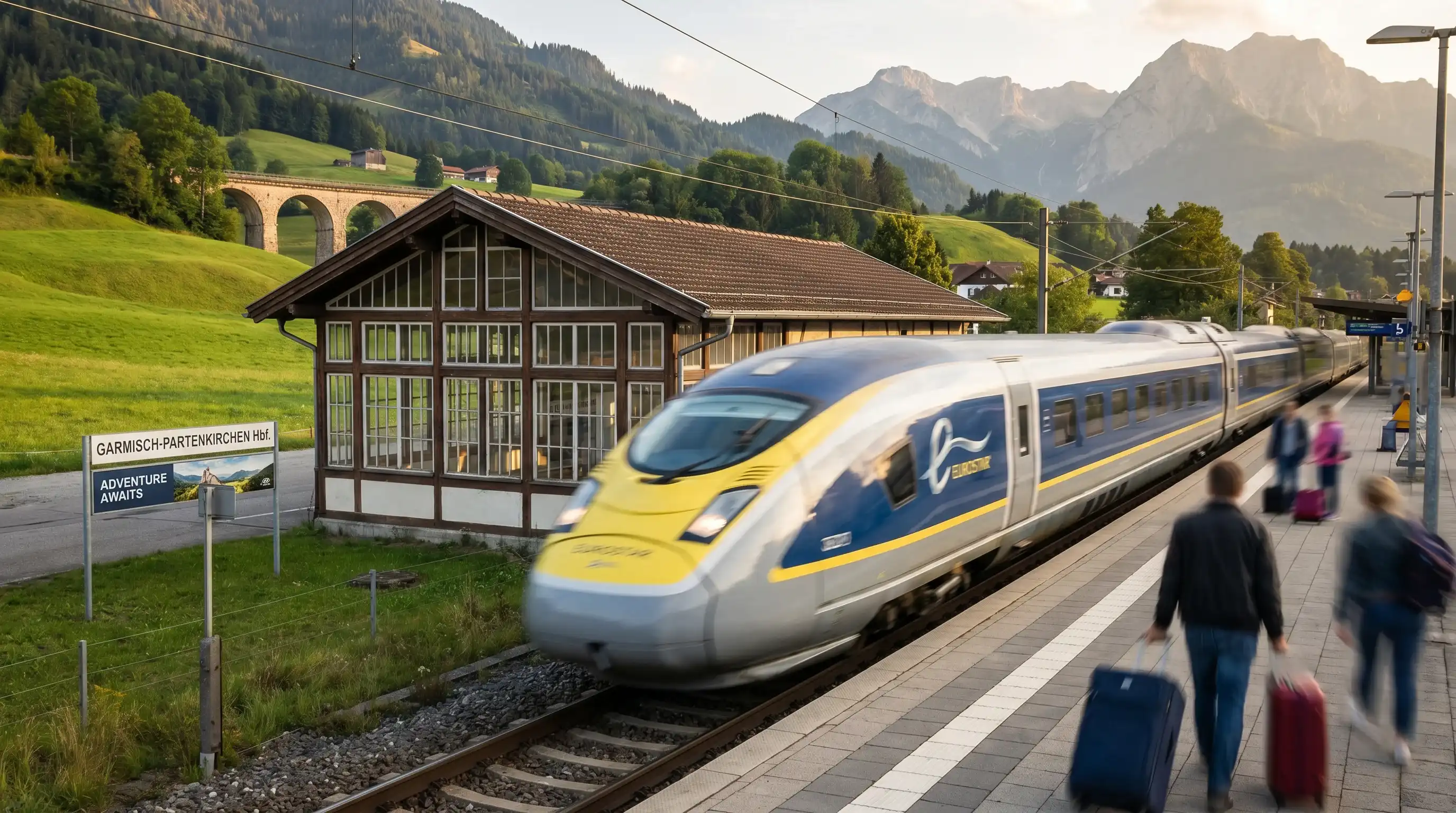
The high-speed AVE train between Madrid and Barcelona takes 2h30 and costs €25–60 booked in advance — cheaper and faster than flying once you add airport time. Book directly on Renfe.com (not aggregators) for the best fares. The AVE station in Barcelona is at Sants, well-connected by metro.
Getting There & Between the Cities
Both cities are well-served by European and international flights. Barcelona El Prat (BCN) and Madrid Barajas (MAD) are both major international hubs. Ryanair, easyJet, and Vueling serve both from cities across Europe. From Stuttgart specifically, there are direct flights to both on most days of the week — check Kiwi.com for the best price-versus-timing combination.
The best single piece of logistics advice for Spain: if you're visiting both cities, take the AVE high-speed train between them. The Madrid–Barcelona route is one of the best-value high-speed rail journeys in Europe. The trip takes 2 hours 30 minutes city centre to city centre, trains run roughly every 30–60 minutes throughout the day, and tickets bought a few weeks ahead often cost €35–55 each way. Compare that to flying (which involves two airports, security queues, and no city-centre drop-off) and there's no competition.
Book AVE tickets through Renfe's website or Omio/Trainline for easy comparison. Prices rise significantly closer to travel — booking two to three weeks out is the sweet spot.
- Barcelona El Prat (BCN): 35 minutes to city centre via the Aerobus or L9 Sud metro line
- Madrid Barajas (MAD): 25 minutes to city centre via Line 8 metro — one of the most efficient airport connections in Europe
- AVE Barcelona–Madrid: 2h30m, Sants to Atocha/Chamartín, trains every 30–60 minutes
- Aena.es: Spain's national airport authority for real-time departures and arrivals
A practical trip structure that works well: fly into Barcelona, spend 4–5 days, take the AVE to Madrid for 3–4 days, fly home from Madrid. No backtracking, no repeated airports, and you see both cities properly.
Book Flights to Spain
Kiwi.com is particularly good for Spain because it searches Iberia, Vueling, and the budget carriers in one view, and its flexible date search finds price patterns across the week that most tools miss.
The Verdict: CJ's Honest Take
Here's the framework I give everyone who asks me:
First trip to Spain? Go to Barcelona. It has the most immediately distinctive visual identity of any city I've visited — Gaudí's work alone is worth a transatlantic flight. The combination of architecture, beach access, good food, and a walkable city centre makes it an easier introduction to Spain. You'll understand it quickly, love it quickly, and leave wanting to come back.
Second trip to Spain? Go to Madrid. Madrid rewards you more slowly and more deeply. The city's character takes longer to surface — it's not as obviously photogenic as Barcelona, and it doesn't hand you the postcard moments quite so readily. But once it clicks, it's one of the most compelling cities in Europe. The art museums alone justify the trip. The nightlife is unmatched on the continent. And the food, particularly if you push past the tourist-facing restaurants, is quietly extraordinary.
Ideally? Do both on the same trip. Fly into Barcelona, take the AVE to Madrid, fly home. Five days and five days is ideal. Three and three is workable. The two cities complement each other in a way that makes the pairing genuinely satisfying — Barcelona's visual exuberance followed by Madrid's cultural depth is a good sequence. Or flip it and arrive in Madrid first, then decompress on the Barcelona waterfront. Either works.
What I'd avoid: spending more than seven days in one city on your first visit, or doing a quick two-day hop in each. Both cities need time. Give them time and they'll give you something worth coming back for.