Quick Take
The short answer
Spend three nights in Bilbao for the Guggenheim and old-town bars, then four in San Sebastian for its bay, pintxos, and coastal outings. Move hotels once and keep coast days flexible for Atlantic weather. Rent a car only for a western loop through Gaztelugatxe and Urdaibai; both cities are best explored on foot.
Trip details at a glance
- Route: 3 nights Bilbao + 4 nights San Sebastian, with a departure on the morning after day 7.
- Best pace: one full day in each city, one western coast day, one Getaria/Zumaia day, and one flexible eastern or beach day.
- Car strategy: no car in the cities; rent for one western coast day only if the route matters more than parking convenience.
- First bookings: the two hotels, Guggenheim admission, and a free Gaztelugatxe access slot when your date is controlled.
In this guide
The Basque Country gives northern Spain a different color palette: green hills, red-roofed fishing villages, and an Atlantic coast where waves break against dark rock. Along the Bay of Biscay, a harbor lunch might mean a whole grilled fish and a glass of txakoli, the local white wine. Inland, Bilbao’s old streets lead to a riverfront transformed by contemporary architecture. Farther east, San Sebastian curves around a sheltered bay, with elegant promenades and bars where dinner arrives a few small plates at a time.
There is a distinct culture here, too. Euskara, the Basque language, appears alongside Spanish on signs; San Sebastian is also Donostia, and Bilbao is Bilbo. Basque identity continues across the French border. This itinerary concentrates on the Spanish coast, where you can spend a week moving between city streets, fishing ports, and cliff walks without driving every day.
I recommend three nights in Bilbao and four in San Sebastian. That gives both cities time and leaves room for the coast when the weather cooperates. The San Sebastian travel guide goes deeper on its neighborhoods and food. Here, we’ll connect those evenings to the wider region, with advice on stays, transport, and the few visits worth reserving.
Seven Days on the Basque Coast
Bilbao and San Sebastian make a good pair because they offer different pleasures. Bilbao has the scale of a working city: broad shopping streets, bridges, museums, and an old quarter where the river keeps appearing between buildings. San Sebastian brings the sea into everyday life. You can walk from breakfast to a beach, climb above the bay, and finish the evening within a few streets of your hotel.
Between them are smaller places worth traveling for: Getaria’s fishing harbor, Zumaia’s extraordinary rock formations, and the wooded estuary of Urdaibai west of the route. Staying in the cities gives you restaurants and indoor alternatives when a coast day meets rain. You can still have a long lunch in a village without making it another luggage stop.
This itinerary covers seven nights, with arrival on day 1 and departure on the morning of day 8. Days 1–3 use Bilbao; on day 4, move east. Reverse it if your flights work better that way.
- Day 1, Bilbao: the Guggenheim and a first walk along the river.
- Day 2, Bilbao: old-town streets, market food, and Plaza Nueva.
- Day 3, Bilbao: Gaztelugatxe and a fishing port, or the Urdaibai estuary.
- Day 4, San Sebastian: transfer, La Concha bay, and an evening of pintxos.
- Day 5, San Sebastian: surf at Zurriola, the old town, and seaside sculpture.
- Day 6, San Sebastian: grilled fish in Getaria and the cliffs at Zumaia.
- Day 7, San Sebastian: Hondarribia, a French Basque town, or another beach day.
An early arrival makes the museum possible on day 1. With a late arrival, give it day 2 and shorten the old-town day or skip the western excursion. Move the exposed coastal outings to the clearest forecasts. The city days can comfortably absorb a shower.
For hotels, I would start with Bilbao’s Abando or Ensanche, the central districts between the station and the museum, or the edge of Casco Viejo for old-town atmosphere. In San Sebastian, Centro puts the bay and shopping streets close by; Gros, across the river, offers neighborhood cafés and access to the surf beach. Parte Vieja has the densest concentration of pintxos bars, with evening noise to match. Read recent noise reviews before paying for a room above them.
Find a Walkable Base in Each City
Compare central Bilbao hotels for the museum and old town, then Centro or Gros in San Sebastian for evenings you can finish on foot. Check the full stay price and cancellation terms before choosing.
Days 1–2: Bilbao, From the Guggenheim to the Old Town
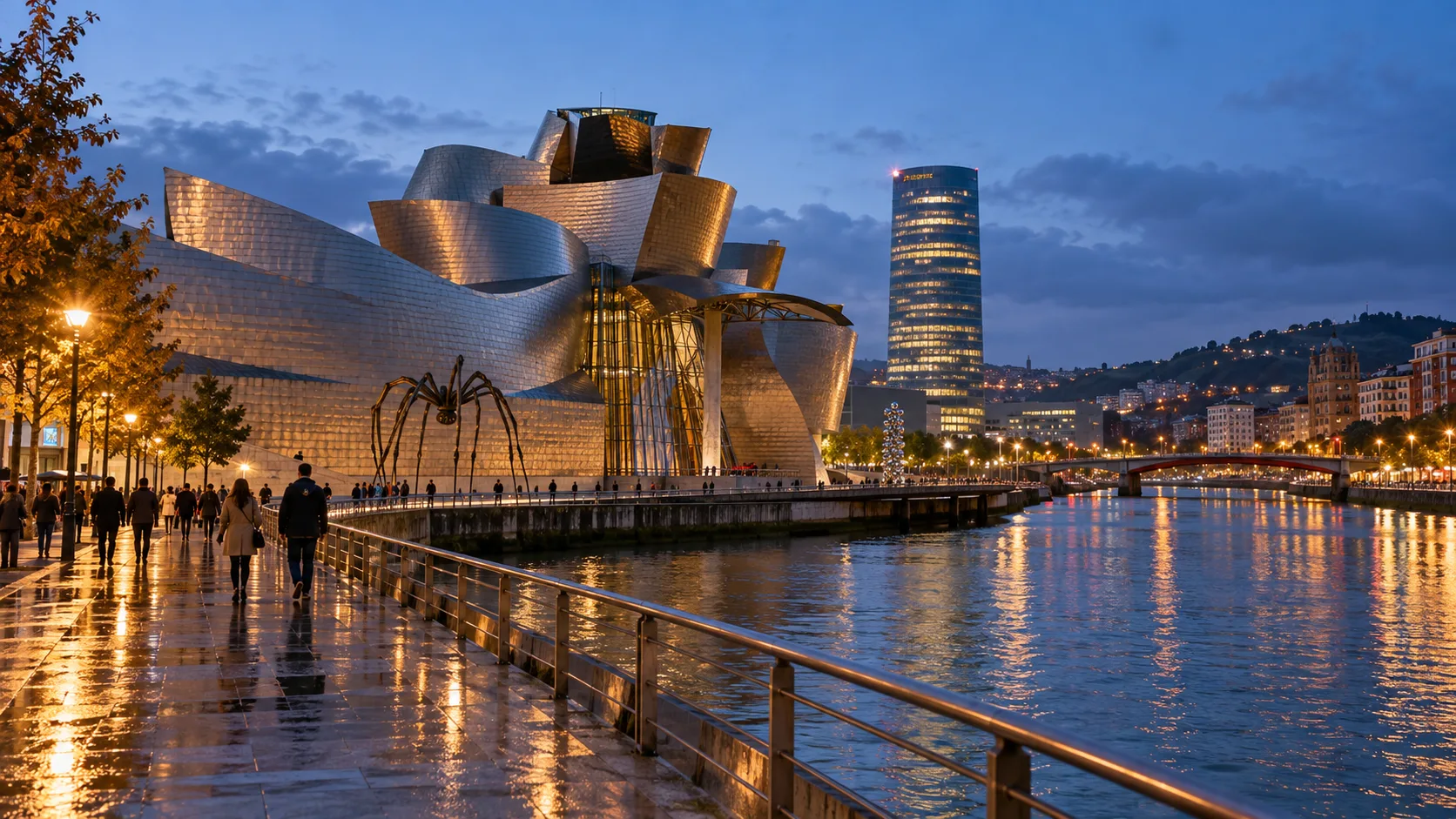
The Guggenheim Bilbao is a museum of modern and contemporary art whose building is part of the attraction. Architect Frank Gehry wrapped its enormous curves in thin titanium panels, giving the riverfront a surface that catches the changing sky. From one angle it resembles a ship; from another, a cluster of metal petals. That strange, sculptural shape makes it interesting even to someone who usually walks past contemporary art museums.
Opened in 1997 on former industrial land, the museum became the most recognizable symbol of Bilbao’s transformation. It helps explain why this city belongs in the trip. The old commercial port and the ambitious new waterfront sit within walking distance, so you can see different chapters of Bilbao in the same afternoon.
Outside, Louise Bourgeois’s Maman, a giant bronze spider, towers over the promenade. Inside, Richard Serra’s The Matter of Time places immense curved steel forms around you. Walking between them changes the space and your sense of balance. I would buy admission for that experience, then choose other galleries according to the current exhibitions. You don’t need to understand every artwork to enjoy how this museum uses space.
The official visitor page listed adult admission at €18 when checked on October 5, 2026. Regular hours are 10:00–19:00, Tuesday through Sunday, with selected Monday openings and seasonal extensions. Check your date before arranging the day around it.
Afterward, follow the river toward the center. Bilbao gives you wide pavements, bridges, and enough places to stop for lunch that the walk can take longer than the map suggests. The Artxanda funicular climbs to a viewpoint above the city; save it for clear weather, when you can make out the hills surrounding the buildings.
Day 2 belongs to Casco Viejo, the old quarter built around the Siete Calles, or Seven Streets. Its appeal is immediate: narrower lanes, tall houses, shopfronts at street level, and the covered arches of Plaza Nueva. Around the square, bars turn a short walk into a series of small decisions about what to eat next.
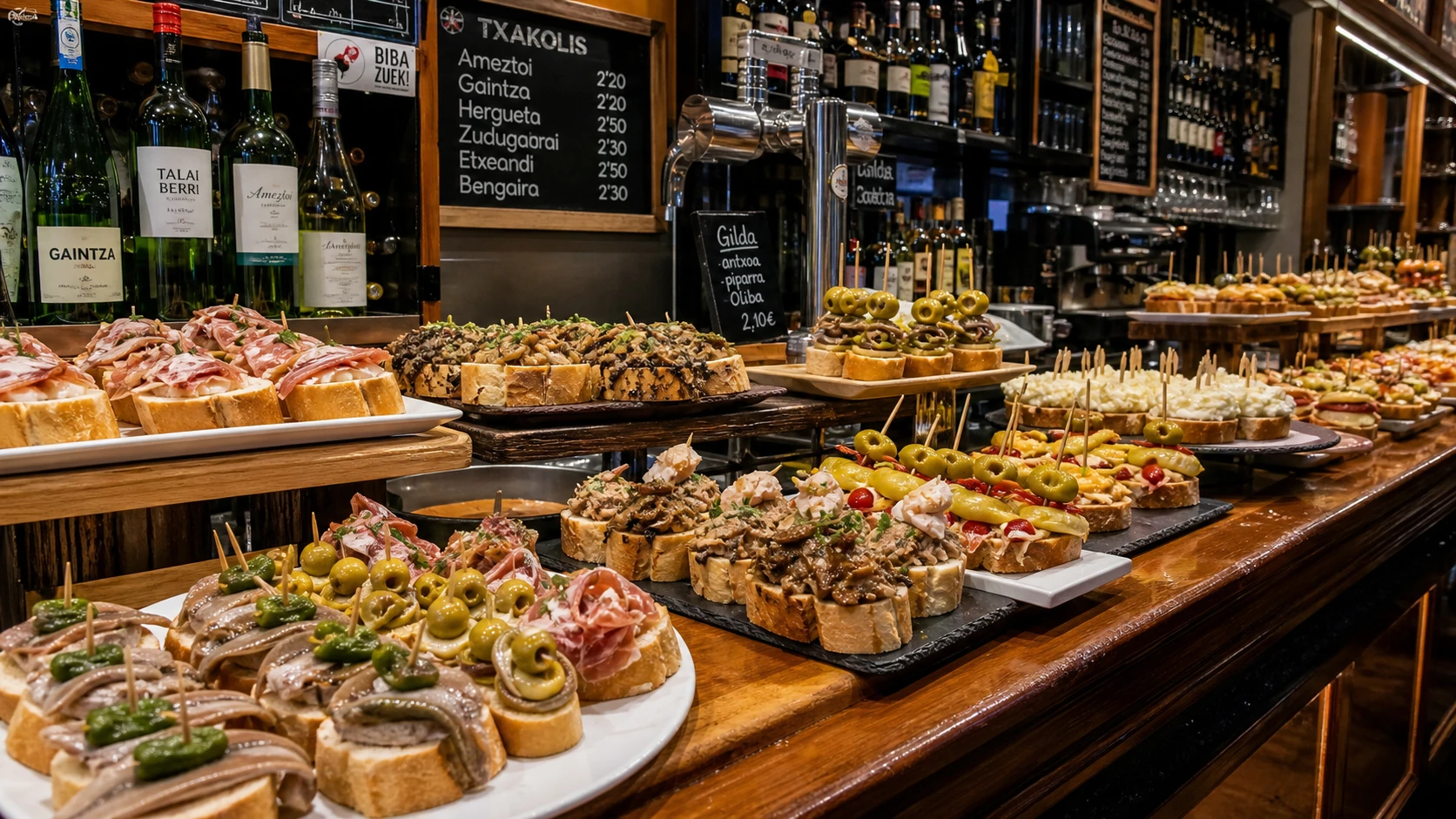
Begin around Mercado de la Ribera, the riverside market, then walk into the old town. Look for a gilda, a skewer of anchovy, olive, and pickled pepper: salty, sharp, and a good introduction to the appetite for small, strongly flavored bites here. Pintxos are the Basque bar snacks you’ll encounter throughout the week, from simple pieces on bread to elaborate hot dishes ordered from a menu.
I would give the afternoon to whichever part of Bilbao interests you most. Cross into Bilbao La Vieja for a different view of the river and its surrounding streets, or choose another museum if the Guggenheim left you wanting more art. Leave the evening for Plaza Nueva and the lanes around it. The old town rewards an evening when you can follow your appetite and stay for another round.
Day 3: Gaztelugatxe and the Urdaibai Coast
San Juan de Gaztelugatxe looks improbable even after you’ve seen the photographs. A stone bridge reaches a rocky islet, then a staircase winds upward to a small hermitage. Below it, the Atlantic pushes white water against the rock. The building is modest; the setting supplies the grandeur. This is the western coast outing I would choose for someone who wants one memorable, exposed walk.
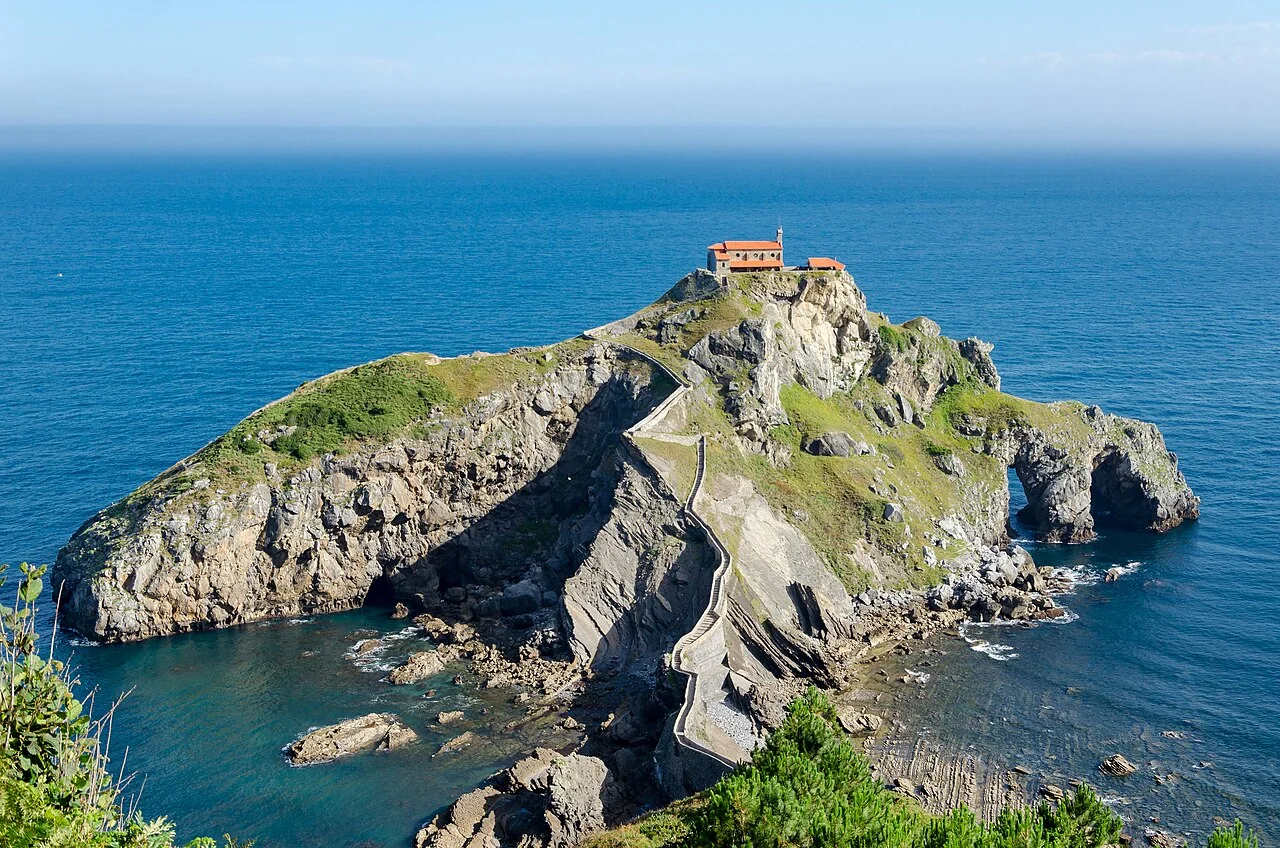
It is also a physical visit, with descents, climbs, and uneven steps. Wear shoes with grip, bring a layer for wind, and take the forecast seriously. On controlled-access dates, Bizkaia’s official site requires a free reserved ticket. Check the calendar, download your reservation, and cancel it if your plans change.
Pair the walk with Bermeo, a working fishing town whose harbor gives the day a gentler second half. Boats, waterfront houses, and a meal by the port make a satisfying change after the exposed climb. I would keep this pairing small enough to enjoy lunch rather than spend the afternoon checking how far behind you are.
Another version of the day follows Urdaibai, a protected estuary where wooded slopes surround tidal water and marshes. Mundaka sits near its mouth, with a compact harbor and a surf reputation. Gernika adds historical depth inland: its Assembly House and oak are tied to Basque political traditions, while its Peace Museum addresses the town’s 1937 bombing and the wider question of peace. Choose Gernika and Mundaka if history and the estuary interest you more than the staircase.
A car helps with Gaztelugatxe and a harbor stop because you can connect places outside the simplest public-transport routes. Rent for this day if that outing matters to you; allow for collection, return, parking, and a designated driver. A full-week car adds little to the two city stays. For a trip without driving, use Euskotren toward Gernika and Mundaka, or compare an organized Gaztelugatxe excursion with its actual walking demands and included stops.
Trying to fit every western port into one day would sacrifice the very things that make them appealing. Choose the walk and one town, or the estuary and its history. Either gives you a coast day with time to look around.
Day 4: San Sebastian’s Bay and Your First Pintxos Evening
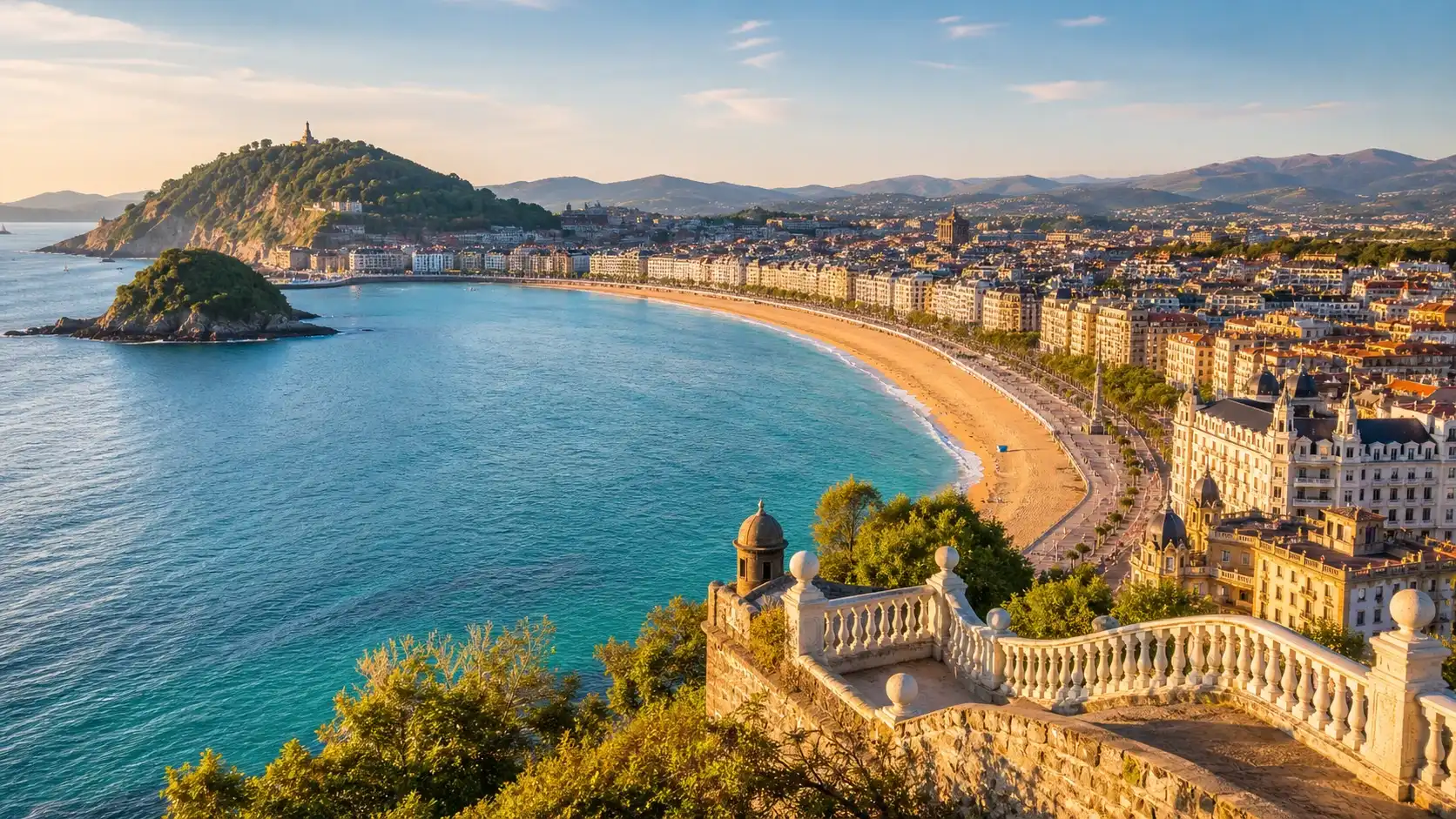
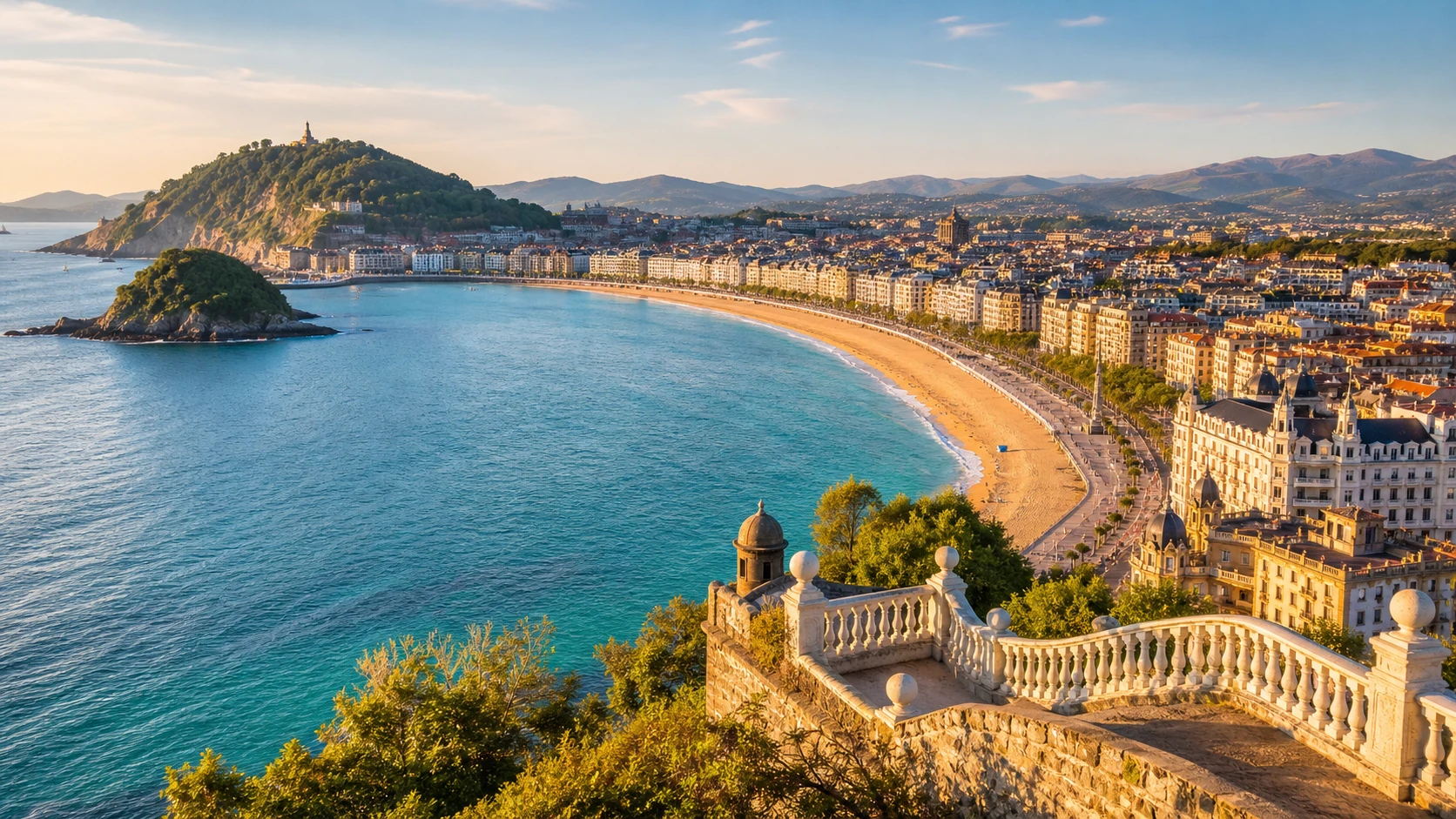
San Sebastian has a more polished seafront than Bilbao. La Concha is a broad crescent of sand enclosed by green headlands, with Santa Clara Island in the bay. Along the promenade, white railings face the water and the city rises behind you in orderly streets. It’s an easy place to understand on foot: sea on one side, cafés and shops on the other, and a hill above the old town.
Take a morning intercity coach from Bilbao, checking the current schedule with ALSA. Once you’ve checked in, walk the bay toward the harbor. If the weather is clear, climb Monte Urgull, the wooded hill behind Parte Vieja, for a view across the beaches and rooftops. Keep the afternoon light enough to enjoy your first evening.
That evening is a good time to learn pintxos. In the old town, bars crowd together within a few streets, and the food can be surprisingly ambitious for something eaten standing up. You might begin with an anchovy bite, follow it with mushrooms or a small hot dish, and end somewhere entirely different from where you expected.
Order a drink and one or two things that appeal to you, asking about the house specialty or hot menu. A glass of txakoli brings crisp acidity; local cider is another option. Some bars display food on the counter, others cook to order, and ordering and payment practices vary. Watch, ask, and give yourself permission to be new at it.
I recommend a short circuit rather than a list of ten famous addresses. The pleasure comes from tasting, talking, and walking between bars. If you want a sit-down meal, have one: a week here leaves room for both styles of eating.
Leave an evening free for the bar that catches your attention on the walk back. Food is one of the reasons to come here.
Day 5: Beaches, Neighborhoods, and the Wind Comb
Across the Urumea River, Gros faces the more open water of Zurriola beach, where surfers give the seafront a different mood. Start with a café here and a walk beside the sand. The contrast with La Concha is worth seeing: one bay feels sheltered and formal; this stretch of coast feels more exposed, with boards heading toward the waves.
Later, walk back toward Parte Vieja. For more context on the region, San Telmo Museum explores Basque society and culture in a former Dominican convent. I would choose it if the language, history, and traditions you’ve encountered have made you curious. It gives the week more substance than another viewpoint alone.
The afternoon can follow La Concha toward Ondarreta, the beach at the western end of the bay. Beyond it is Eduardo Chillida’s Peine del Viento, or Wind Comb: three steel sculptures fixed into the rocks where the promenade meets the sea. Their heavy, rust-colored curves look different as the water moves around them. On a rough day, the spray becomes part of the experience; observe barriers and local warnings.
With good swimming conditions, spend part of the afternoon on the beach. In cooler weather, the same promenade is still a worthwhile walk. Pick a museum, the coast, or a long lunch as your main event and leave room around it. This is the day to enjoy living temporarily in the city.
San Sebastian can take a substantial share of the week’s accommodation and restaurant spending. Compare complete hotel totals, then decide whether one special meal matters more to you than several expensive reservations.
Day 6: Getaria’s Grilled Fish and Zumaia’s Cliffs
In Getaria, stone streets slope toward a harbor beneath a rounded green headland. Vineyards climb the surrounding hills, and fish grills give the town a reason to linger over lunch. The local white wine is txakoli, with the Getariako Txakolina designation rooted in this stretch of coast. Together, the harbor, vineyards, and food show how much of Basque travel happens around the table.
A whole grilled fish is the meal I would plan the day around. Ask how it is priced and what size suits your table, particularly when the menu uses a price by weight. If you have a specific restaurant in mind, reserve it; otherwise, explore the harbor and old center before choosing. Wine tastes better when you aren’t immediately responsible for a rental car.
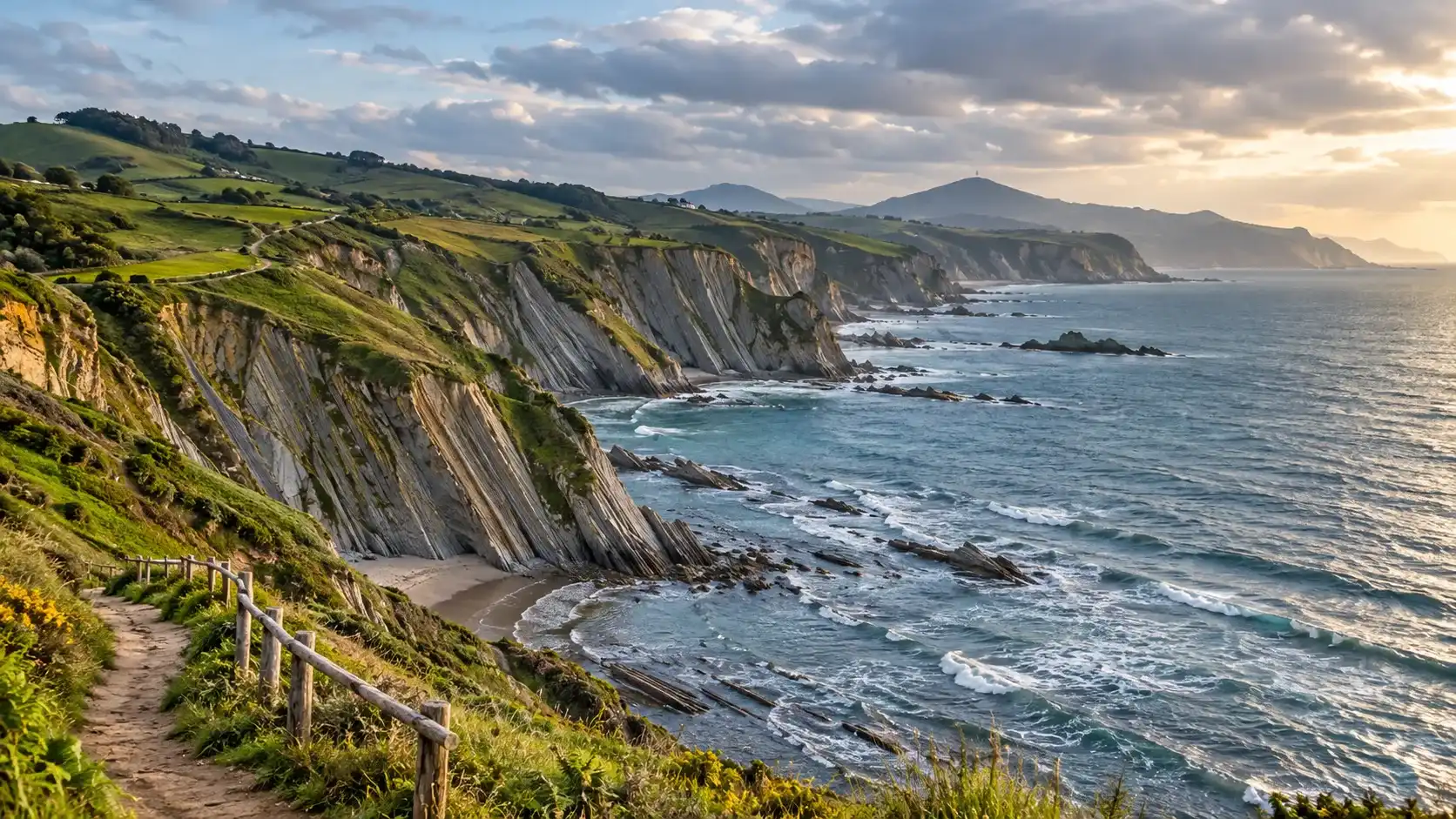
Nearby Zumaia offers a very different spectacle. Its flysch consists of layers of sedimentary rock exposed along the shore: long ribs extending toward the water, tilted bands in the cliffs, and green slopes above. These formations preserve millions of years of geological history. You can appreciate them without knowing the science, but understanding that the stripes are successive rock layers makes the landscape more interesting than a dramatic backdrop.
Start around Itzurun beach and choose a marked viewpoint or coastal walk that suits the conditions. Tide and weather change what is visible and accessible; exposed rock platforms are not an invitation to follow every photograph down to the water. The Basque Coast Geopark is the place to check guided outings and learn what you’re looking at.
Getaria and Zumaia can be connected by the coastal bus network from San Sebastian; check Lurraldebus for the day’s services and your return. A car offers more freedom, but it doesn’t improve a long fish lunch or remove the need to park. I would choose lunch and one satisfying walk over adding two more towns. Return to San Sebastian for a quiet evening or another bar circuit, depending on how generous lunch turned out to be.
Day 7: Hondarribia, France, or Another Day by the Bay
Hondarribia makes a good final excursion if you want another town with a distinct character. Inside its walls, streets climb toward a fortified old center. Down in the fishing quarter, colorful balconies and eating streets bring a livelier waterfront feel. Across the Bidasoa estuary is France. Spend the day between the old town and the lower quarter, with time for lunch, rather than treating the border as another deadline.
For a French Basque day, choose Saint-Jean-de-Luz or Bayonne and check the cross-border journey before committing. Saint-Jean-de-Luz offers a fishing harbor and a sheltered seaside setting; Bayonne adds a larger historic center where rivers, timber-framed houses, and cathedral streets reward a walk. Basque culture crosses the border, while the architecture, menus, and language around you change. One destination is plenty for a day from San Sebastian.
You can also stay put. If the week finally delivers beach weather, take it. A morning on Ondarreta, a lunch you’ve been looking forward to, and a last walk around La Concha are a perfectly good ending. This spare day also lets you recover a coast outing postponed by rain.
With more time, Vitoria-Gasteiz adds a medieval inland capital, and Rioja Alavesa adds vineyards and hill towns. I would save those for a longer trip, when they can have proper days of their own. For this week, Bilbao, San Sebastian, and the coast already offer substantial variety.
The part I would protect is an afternoon with somewhere interesting to be and nowhere urgent to go: beside Getaria’s harbor, above Zumaia’s rock layers, or watching the bay before dinner. Those are good reasons to spend seven days here.