Quick Links — Vienna
Everything you need to book this trip. These are affiliate links — I earn a small commission at no extra cost to you.
In This Guide
Vienna is the city where Europe went to feel important about itself. Every building seems purpose-built to remind you that an empire once ran a third of the continent from here. The coffeehouse on the corner has been serving Melange since 1876. The opera house was rebuilt after World War II with such precision that it looks like it never burned. Even the public transport runs on time in a way that makes you briefly question every other country's priorities.
I've come from Stuttgart a handful of times now — it's an easy enough trip, and Vienna rewards revisits. The first time I stayed two nights and barely scratched the surface. The city operates on a different temporal scale; it takes a while to slow down enough to appreciate it properly. Here's what I've learned about doing a weekend here without burning through your travel budget on entry fees and overpriced Sachertorte.
Getting There from Stuttgart
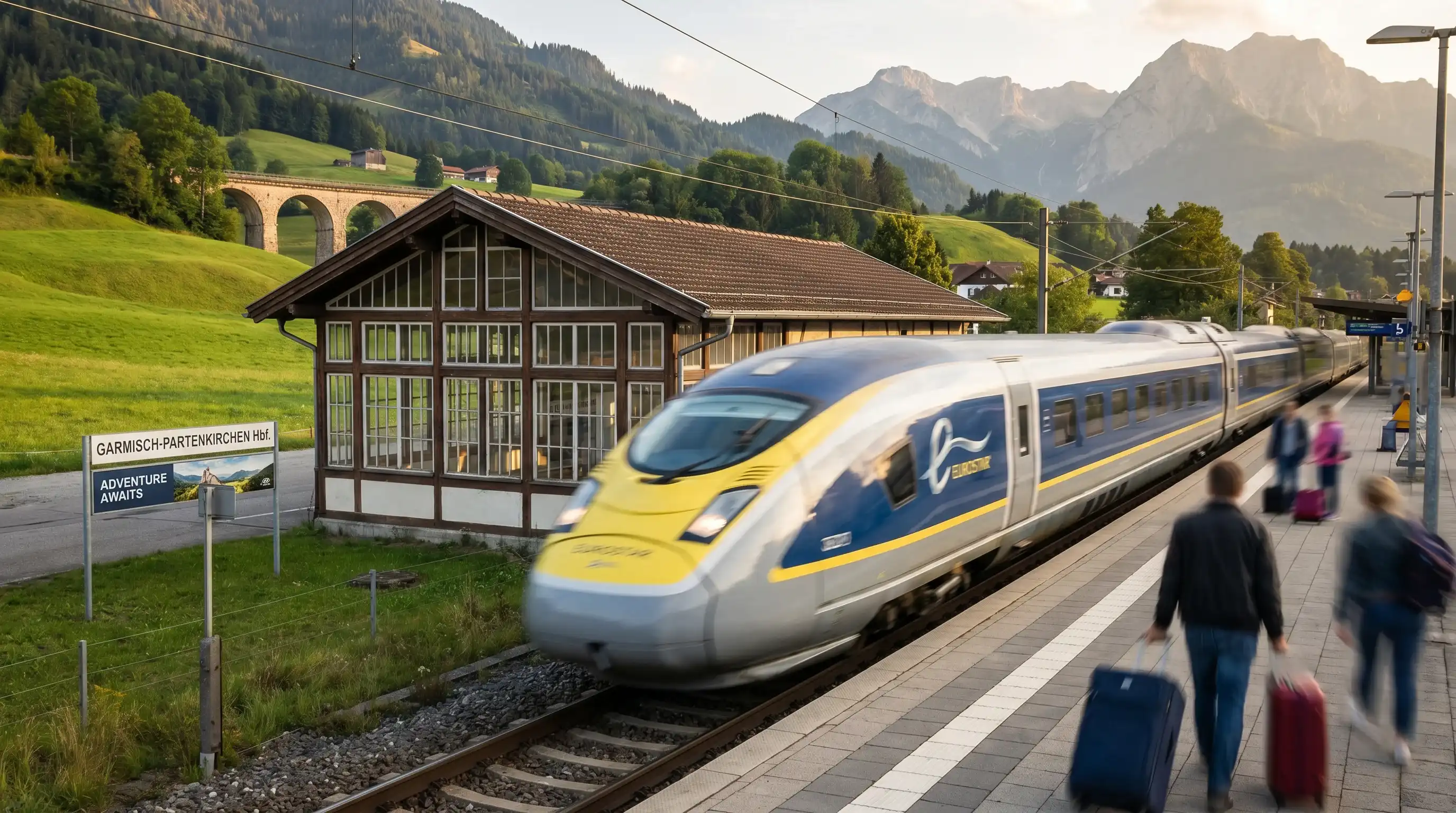
The daytime train from Stuttgart to Vienna takes around 6h30 to 7 hours, with one change, usually Munich or Salzburg. Fares start at roughly EUR39 booked in advance on OBB or Deutsche Bahn. It's a comfortable ride and the stretch through Salzburg and along the Austrian countryside is genuinely pleasant — not a bad way to decompress on a Friday evening.
The better option, if your schedule allows, is the overnight Euronight train. It departs Stuttgart Hbf at 20:29, passes through Ulm, Augsburg, Munich, and Salzburg, and arrives at Vienna Hauptbahnhof at 06:34. A couchette in a 6-person compartment starts at EUR49.90. A private 2-person sleeper is EUR109.90. You arrive in Vienna rested, your Friday night effectively becomes a travel night, and you've saved a hotel night.
Book Your Train to Vienna
OBB sells the overnight Euronight tickets directly and typically has the best pricing. Book at least 3-4 weeks out for the cheapest couchettes — they go fast on Friday departures. Omio is useful if you want to compare daytime options across operators.
Flying is theoretically faster but rarely is in practice — Easyjet and Ryanair both serve Stuttgart-Vienna, but factor in airport time, security, baggage fees, and a city transfer from Schwechat Airport, and the train is genuinely competitive. I take the night train.
Schonbrunn Palace: Do It Right
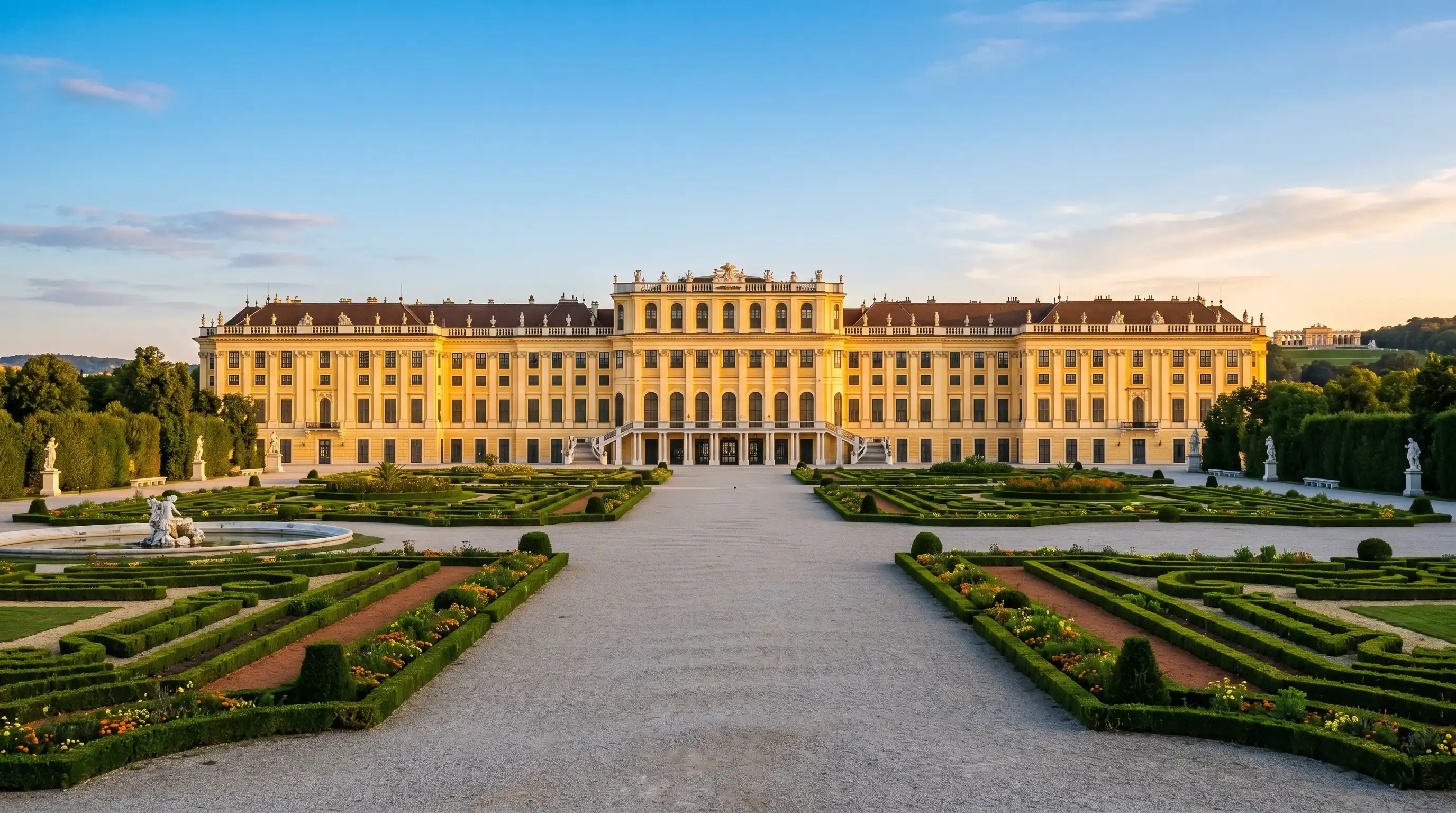
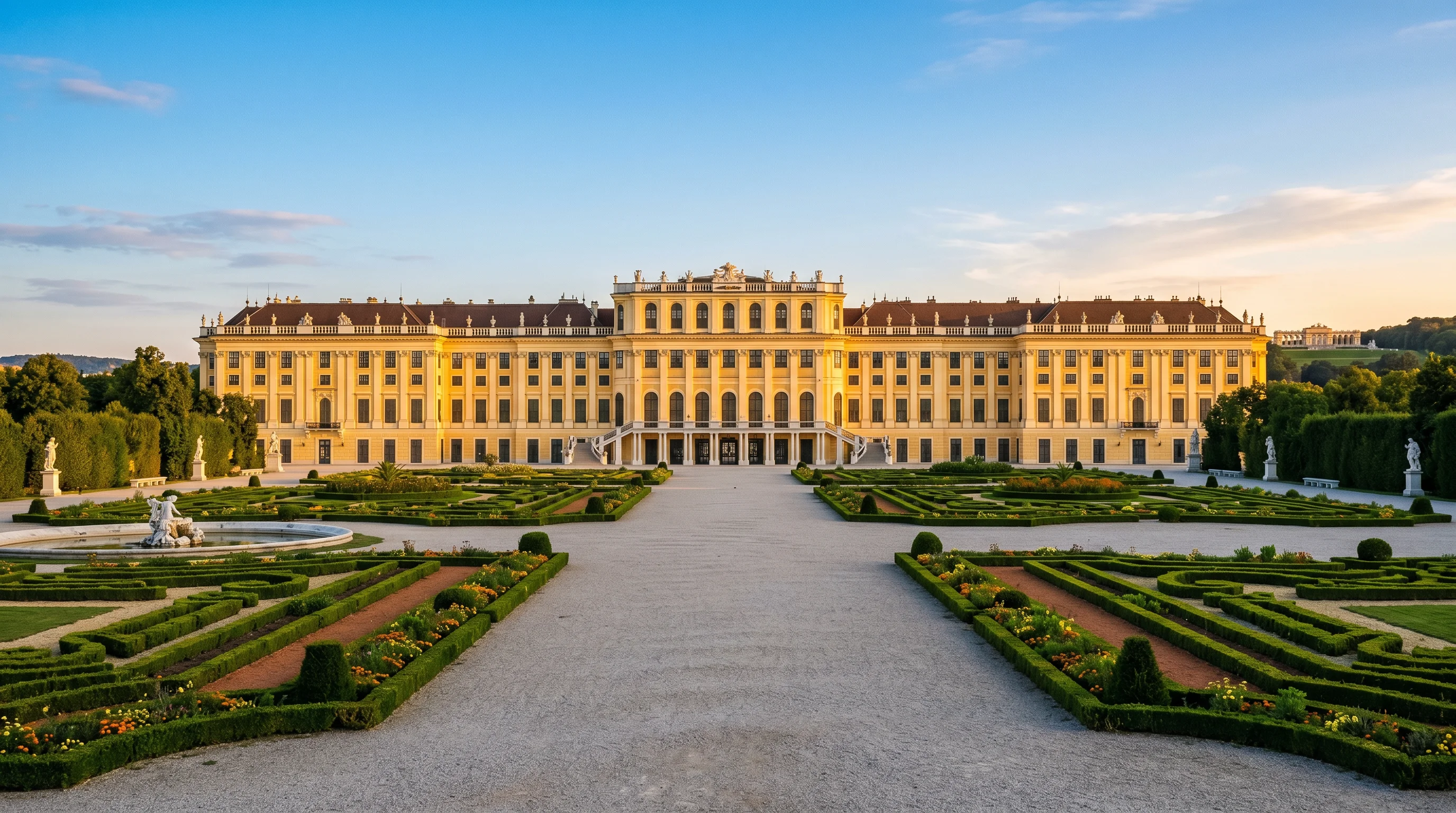
This is the one attraction you cannot skip, and the one most people do badly. Schonbrunn is Vienna's most-visited site, which means the standard advice — show up around 10am, queue for the Grand Tour — results in 45 minutes shuffling through baroque rooms with 200 other people while an audio guide tells you which Habsburg died in which bedroom.
The better approach: arrive before the ticket office opens (the gardens open at 6am) and walk up behind the Neptune Fountain to the Gloriette, the hilltop colonnade that looks down over the entire palace and Vienna beyond. This view, before the crowds, is the best free moment in the city. Then come back for the palace tour at opening — the Imperial Tour (22 rooms, EUR18) is plenty; the Grand Tour (40 rooms, EUR22.50) runs longer without adding proportionally more value.
The palace gardens themselves are free all day. Walk through them, find the maze and labyrinth (EUR5.50 if you want to go in), and take your time. Vienna punishes rushing.
"The view from the Gloriette before the crowds arrive is the best free moment in the city — and almost nobody knows to go early."
The Inner City and Hofburg
The Innere Stadt — Vienna's first district and UNESCO-listed historic core — is compact enough to cover on foot in half a day. Start at Stephansplatz, where St. Stephen's Cathedral looms over the pedestrian zone in a way that should be overbearing but somehow isn't. Entry to the main nave is free; the tower climb (332 steps, EUR5) gives a rooftop view of the city's terracotta and grey skyline worth the legs.
From there, walk the Graben, Vienna's elegant pedestrian shopping street lined with plague columns and overpriced espresso, toward the Hofburg — the imperial palace that served as the Habsburg seat of power for six centuries. The complex is vast and confusing. My recommendation: skip the Imperial Apartments unless you're specifically interested in Empress Sisi's obsessive fitness regime and declining mental health, which, fair enough, is a compelling story. Instead, head to the Osterreichische Nationalbibliothek's State Hall — it's one of the most beautiful rooms in Europe and costs EUR10.
The Kunsthistorisches Museum across the Ringstrasse is worth half a day if you have any interest in art. The Habsburgs spent several centuries hoarding Bruegels, Vermeers, and Raphaels, and the collection shows. Entry is EUR16; closed Mondays.
If you visit on the first Sunday of the month, entry is free at several city museums including the Roman Museum, the Museum of Military History, and the Pratermuseum. The Belvedere is not on this list but runs regular evening promotions. Check the schedule before booking anything full-price.
Naschmarkt and the Belvedere
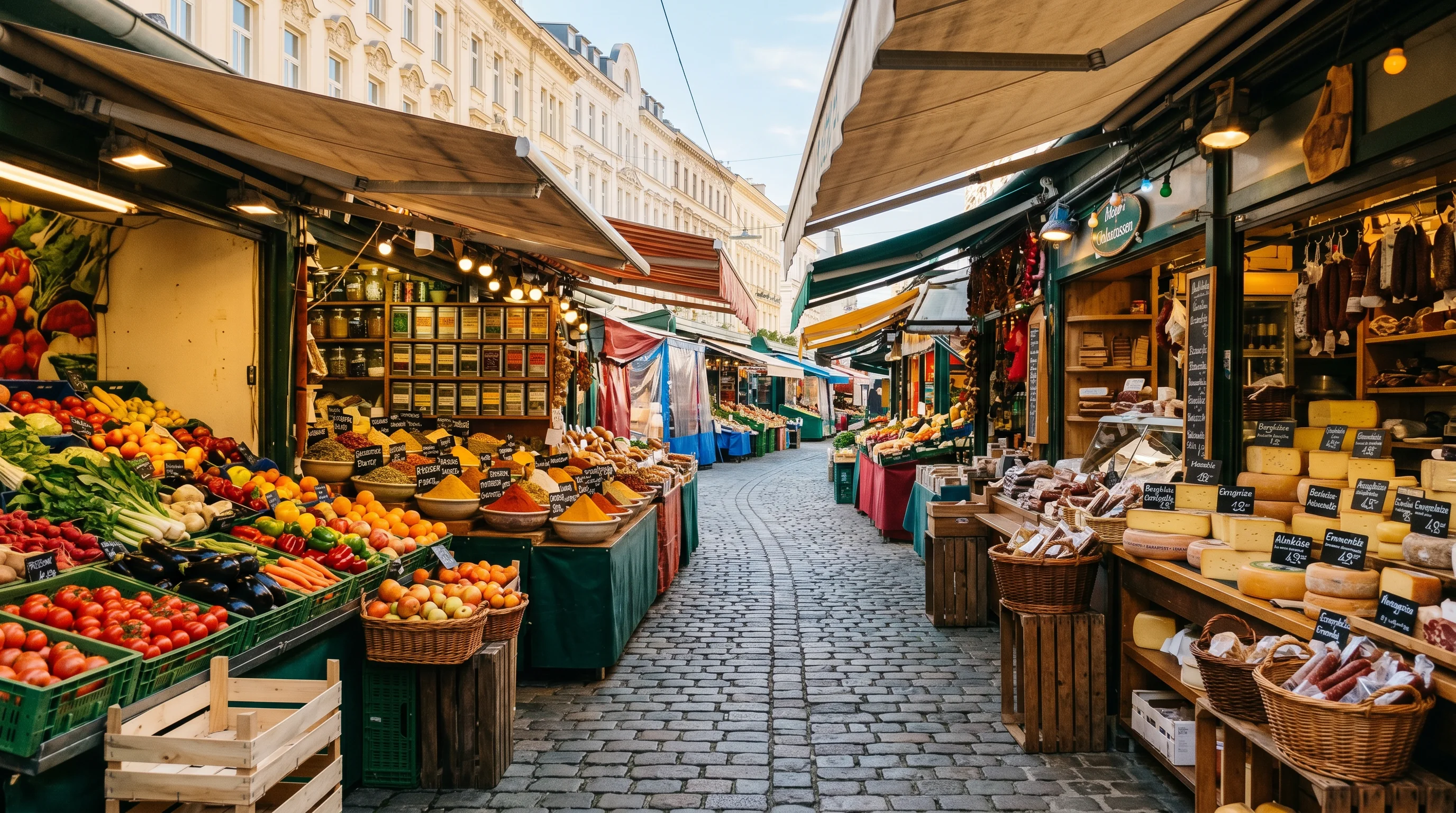
The Naschmarkt is Vienna's main open-air market — roughly 1.5km of stalls running along the Wienzeile from Monday through Saturday. It sells everything from fresh Austrian produce and artisan cheeses to Turkish spices, Persian pickles, and cheap falafel. On Saturday mornings, a flea market extends from the southern end toward the U4 Kettenbruckengasse stop. It's chaotic, loud, and very good.
A Mittagsmenu, or lunch special, at a sit-down Naschmarkt restaurant runs EUR10-15 for two courses. This is how you eat well in Vienna without surrendering to the tourist-menu pricing around Stephansdom.
A 15-minute walk south from the Naschmarkt brings you to the Belvedere — actually two palaces connected by formal gardens. The Upper Belvedere holds Klimt's The Kiss, which is either worth the EUR17 ticket or the most overexposed painting in central Europe depending on your tolerance for tourism. I say worth it, once. The gardens between the palaces are free and beautiful in spring when the roses are out.
What to Eat in Vienna
Viennese cuisine is an underrated argument for the Habsburg Empire. Six centuries of multi-ethnic influence produced a food culture that's simultaneously heavy and precise. A few specific things worth finding:
- Wiener Schnitzel: Veal, pounded thin, breaded and fried. Not the frozen pork version served everywhere in Germany. The proper version at a good Beisl runs EUR18-25. Figlmuller on Wollzeile is the tourist pilgrimage site — worth it once despite the queue. Gasthaus Poschl in the first district is better value.
- Kasekrainer: A grilled sausage stuffed with cheese, sold at Wurstelstand sausage stands throughout the city for EUR3-5. This is the correct street food. The stands near the Naschmarkt and at the Prater are consistently good.
- Melange: Vienna's native coffee — espresso cut with steamed milk, served in a glass. Not a latte. Order one at a traditional coffeehouse such as Cafe Central, Cafe Landtmann, or Cafe Hawelka and stay as long as you like; nobody will rush you. Expect to pay EUR4-6.
- Sachertorte: Vienna's most famous cake is a chocolate sponge with apricot jam, covered in dark chocolate glaze. The original, at Cafe Sacher adjacent to the State Opera, costs EUR7.90 a slice and is genuinely excellent. Every other version is a compromise. Have it at the source or skip the exercise.
- Tafelspitz: Boiled beef with horseradish sauce and roasted potatoes — simple, specific, and exactly the kind of thing Vienna does quietly well. Plachutta on Wollzeile is the definitive version.
For dinner, stay out of the first district. The 6th and 7th districts, Mariahilf and Neubau, have better restaurants at lower prices — a two-course dinner with wine at a solid Neubau Beisl runs EUR25-35 per person, versus EUR45-60 at the same quality level near Stephansdom.
Weekend Itinerary
This assumes the overnight train arriving Saturday morning and departing Sunday evening:
- Saturday 06:34-09:00: Arrive at Vienna Hauptbahnhof. Drop bags at hotel, most allow early bag storage. Walk to Schonbrunn — arrive before the tour crowds. Gloriette view, garden walk, palace tour opening.
- Saturday 12:00-14:00: Naschmarkt for lunch. Budget EUR10-15. Walk south to the Belvedere gardens.
- Saturday 14:00-17:00: Upper Belvedere, The Kiss, then walk the Ringstrasse to the Kunsthistorisches Museum or Kunsthalle Wien depending on current exhibitions.
- Saturday 19:00: Dinner in the Neubau, Vienna's 7th district. Pre-book if visiting on a Saturday — tables fill up.
- Sunday 09:00-11:00: Slow morning at a coffeehouse. Cafe Central at Herrengasse 14 is the one with the arched reading room. Order a Melange and a Kipferl and take your time.
- Sunday 11:00-15:00: Innere Stadt on foot. Stephansdom, Graben, Hofburg exterior, National Library State Hall. Kasekrainer from a Wurstelstand for lunch.
- Sunday 15:00-18:00: Prater, the old amusement park. The Riesenrad, or Giant Ferris Wheel, is EUR13 and has been turning since 1897 — the views are good and the historical context of riding something this old is its own experience. Or just walk the Hauptallee for free.
- Sunday evening: Head back to Hauptbahnhof for the return train.
Where to Stay
The first district is convenient but expensive — a decent 3-star runs EUR120-160/night. The better value neighborhoods are the 4th, Wieden, and 6th, Mariahilf, both within 20-30 minutes of everything by U-Bahn or tram, and EUR30-50 cheaper per night.
If you're budget-conscious, the 15th district, Rudolfsheim-Funfhaus, has the cheapest options — roughly EUR25-35 for a hostel dorm, EUR70-85 for a private room — with decent metro connections. It's not scenic, but Vienna's public transport means proximity to the sights matters less than in other cities.
Hotels in Vienna
Booking.com has the best selection for Vienna across all price points. Filter for "free cancellation" — Vienna prices fluctuate and you can often find better rates closer to the date if you're flexible. The 6th and 7th districts are my recommended base.
Practical Info
- Currency: Euro (EUR)
- Language: German, with Austrian dialect; English is widely spoken in tourist areas.
- Getting around: Vienna's U-Bahn, tram, and bus network is excellent. A 72-hour transit pass costs EUR17.10 and covers unlimited rides — worth it for a weekend. Single tickets are EUR2.40. The city is also very walkable within the inner districts.
- From the airport: S-Bahn S7 from Schwechat Airport to Wien Mitte takes about 25 minutes and costs EUR4.20 — significantly cheaper than the CAT express at EUR12. Same journey, different train, different price.
- Visa: Schengen zone. EU and US passports enter freely.
- Best time to visit: April-June and September-October. Spring is my preference — the Schonbrunn gardens are in bloom, the coffeehouses aren't sweltering, and you avoid both the summer crush and the winter Christmas-market pricing. July and August are hot and crowded. December is beautiful but expensive.
- Avoid: The Vienna Pass unless you're planning to hit 5+ paid attractions in 2 days. Most weekends don't justify the cost over individual tickets.