Quick Take
What you should know before you book
Amsterdam is best as a 3-4 day city break built around timed museum visits and neighborhood time, not a race between attractions. Stay in Jordaan or De Pijp, use GVB for outer hops, book the Anne Frank House and Van Gogh Museum separately, and treat the I amsterdam City Card as optional because it does not include either one.
- Best trip length: 3 full days for canals, Museumplein, and one neighborhood; 4 days if you want the city to feel less rushed.
- Booking reality: Anne Frank House tickets are online-only and timed; adult admission is €16.50, while Rijksmuseum and Van Gogh Museum tickets are €25 each.
- Transit reality: GVB costs €3.40 for 1 hour, €10 for 24 hours, or €21.50 for 72 hours; Schiphol rail is separate unless you buy an Amsterdam Travel Ticket.
- Best-value bases: De Pijp for food and relative value, Jordaan for walkability and atmosphere, and Noord for a quieter stay with a free ferry to Centraal.
In This Guide
In This Guide
A few things to calibrate expectations before we get into it. Amsterdam is not cheap. It’s one of the most expensive cities in Western Europe, and the budget travel playbook that works in Prague, Budapest, or Krakow doesn’t translate here. A hostel dorm runs €35–50/night. A sit-down lunch at a non-tourist restaurant is €15–20. A museum ticket is €25. You can manage costs with some planning, but anyone who tells you Amsterdam is doable on €50/day is leaving something out — or not eating dinner.
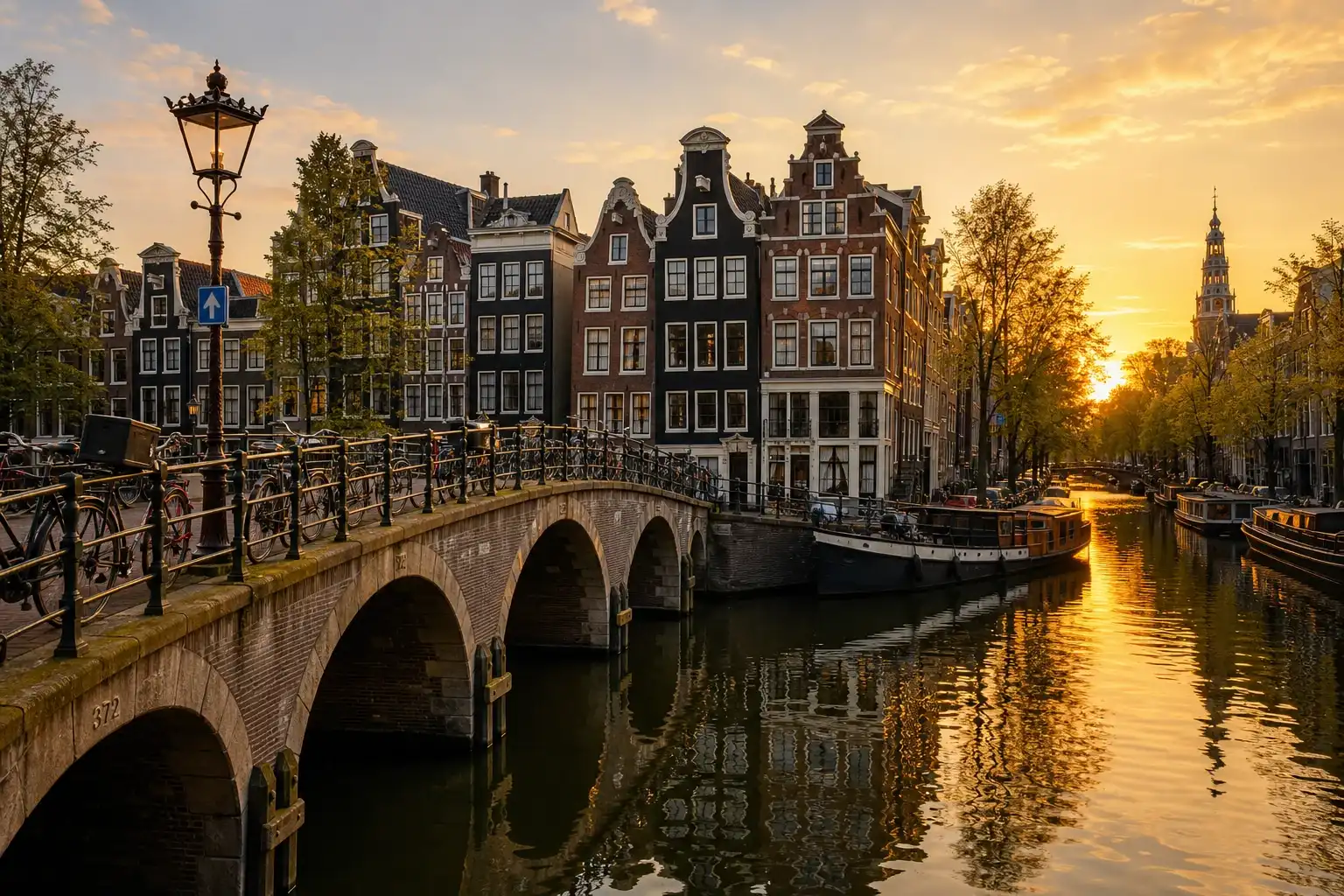
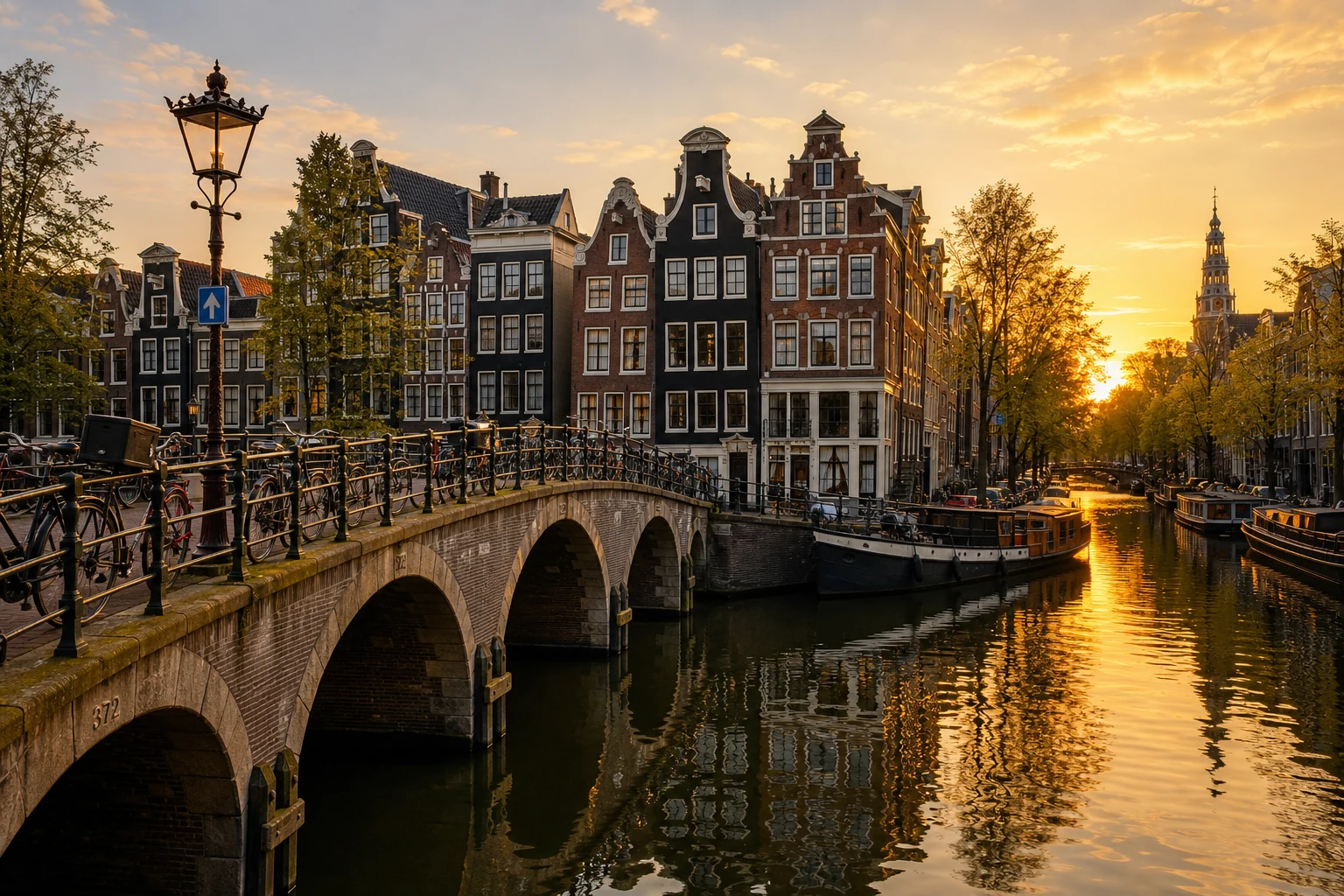
What Amsterdam is, though, is legitimately one of the better cities in the world to spend several days. The canal ring is a UNESCO World Heritage Site and it earns it. The cycling infrastructure makes getting around the city a pleasure rather than a calculation. The Rijksmuseum collection is one of the great museums in Europe. And the Jordaan — the neighborhood west of the main canals — has an unusually high concentration of good cafes, food, and independent shops.
Here’s what you actually need to know before you go.
Getting There
By Train
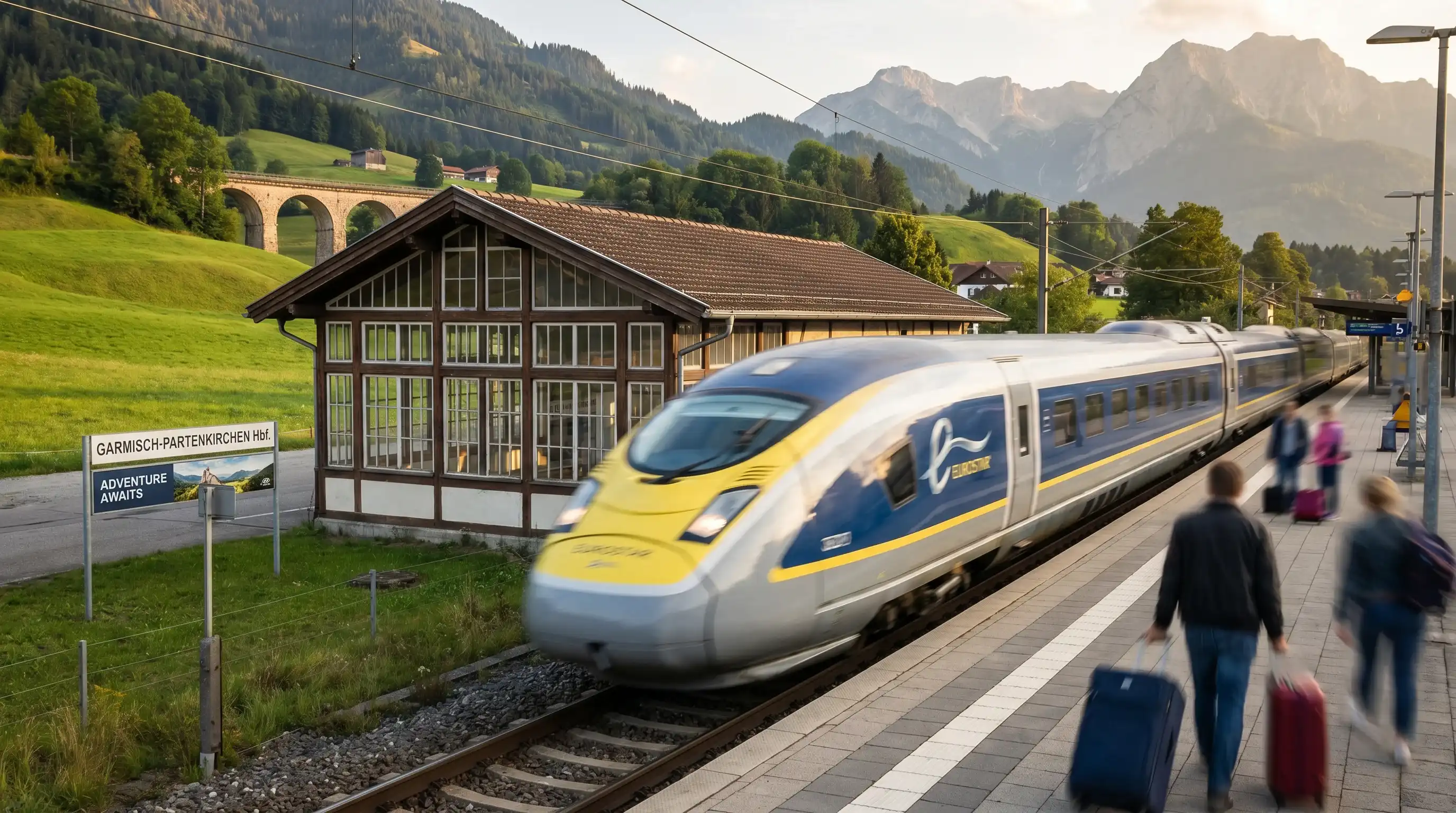
Amsterdam Centraal is a useful arrival station for a wider European trip because it sits in the city rather than beside it. If you are coming from Belgium, France, Germany, or another Dutch city, compare the full door-to-door journey with flying: the train usually gives back some of the time you would otherwise spend getting to an airport and waiting there.
From southern Germany, Stuttgart-Amsterdam is a good example of the tradeoff. The fastest itineraries usually change at Köln Hbf or Frankfurt and take roughly 5.5-6.5 hours before the final walk or tram to your hotel. Use the operator’s current planner for the fare and connection; prices vary more than this older guide’s fixed examples suggest.
One practical rule: prefer a single clean change over a nominally cheaper itinerary with 5-6 changes through smaller stations. The latter may work on paper but is harder to recommend with luggage or a tight arrival day.
If you're traveling back toward western or southern Germany, Amsterdam pairs well with a Cologne stop on the return. Köln Hbf sits right beside the cathedral, so even a few hours between trains is enough to see the old center before continuing onward.
Flying
Schiphol Airport (AMS) is southwest of the city center, with NS trains reaching Amsterdam Centraal in roughly 14-17 minutes. The fare changes with the route and ticket product, so check the NS planner or tap in and out with a supported contactless card. A GVB multi-day ticket covers GVB buses, trams, and metros, not the NS airport train; if you want one airport-and-city product, the 2026 Amsterdam Travel Ticket costs €20 for 1 day, €27 for 2 days, or €34 for 3 days.
Flying makes sense from farther away or when you are combining Amsterdam with another air-connected destination. Once you add the airport buffer, the train is often the calmer choice for nearby European city pairs.
Getting Around
Amsterdam’s city center is 2.5 km across at its widest point. The canal ring — the core of the historic city — is entirely walkable. For anything outside that, the tram network is excellent.
GVB tram and metro prices (verified from gvb.nl, 2026):
- 1-hour single ticket: €3.40 (valid for transfers within the hour)
- 24-hour pass: €10.00
- 48-hour pass: €16.00
- 72-hour pass: €21.50
For a 3–4 day trip the 72-hour pass is straightforward. Buy it through the GVB app, a ticket machine, or a GVB service point. The I amsterdam City Card is a separate calculation: it includes 70+ museums and attractions, one canal cruise, one 24-hour bike rental, and GVB public transport, but it does not include the Van Gogh Museum or Anne Frank House. Check the current included-attractions list and any required time slots before deciding that it pays off.
One thing that doesn’t need much explanation but surprises first-time visitors: Amsterdam operates on bicycles. This is not a metaphor. The cycling infrastructure is seamless. Renting a bike for roughly €12–18/day is one of the better ways to cover the canal ring and outer neighborhoods, and it’s how locals actually move around. Just remember that Dutch cyclists ride fast, they follow traffic laws, and they will not swerve for you if you’re standing in the bike lane.
What to See
Anne Frank House
The Anne Frank House on Prinsengracht 263 is a sobering and genuinely significant site. The building where Anne Frank, her family, and four other Jewish people hid for 761 days during the German occupation is preserved largely as it was, and the audio tour (included in the ticket) does a good job of letting the space speak without over-explaining it.
Important: tickets must be pre-booked online. The Anne Frank House operates entirely on timed-entry reservations and walk-ups are not admitted. Tickets are released each Tuesday at 10:00 CEST for visits six weeks later, so use that release rhythm instead of relying on a last-minute visit.
Verified 2026 ticket prices from annefrank.org:
- Adults: €16.50
- Children 10–17: €7.00
- Children under 10: €1.00
- Note: the I amsterdam City Card does NOT include the Anne Frank House
Allow 1.5–2 hours for the visit. The museum is compact but the content is dense and not a place to rush through.
Rijksmuseum
The Rijksmuseum on Museumplein holds the national collection of Dutch art and history — which means Rembrandt’s Night Watch, Vermeer’s Milkmaid, and a substantial collection of 17th-century Dutch Golden Age paintings. The building itself, a 19th-century Neo-Gothic and Dutch Renaissance structure, is part of the experience.
Tickets (verified from rijksmuseum.nl):
- Adults: €25
- Under 18: free
Book a starting time online; the Rijksmuseum requires reservations even though you can stay until closing. The Night Watch has its own dedicated room, and it rewards 10 minutes of standing in front of it. One practical tip: the café on the ground floor, with views of the Garden, is a legitimate lunch stop.
Van Gogh Museum
The Van Gogh Museum on Museumplein — a five-minute walk from the Rijksmuseum — holds the world’s largest collection of Van Gogh’s work. Over 200 paintings and 500 drawings, arranged chronologically so you can follow the arc from his early Dutch period through Arles and Saint-Rémy to Auvers-sur-Oise.
Tickets (verified from vangoghmuseum.nl):
- Adults: €25
- Students: €16 (EU/EEA student card)
- Under 18: free
Book online. The audio guide is €3.75 and is worth considering here specifically; the context on his letters and relationships with Gauguin and his brother Theo adds a lot. The Van Gogh Museum and Anne Frank House are not included in the I amsterdam City Card, so reserve them separately.
Book Your Amsterdam Museum Tickets
The Anne Frank House and Van Gogh Museum are separate bookings, and neither is included in the I amsterdam City Card. Rijksmuseum admission is included with the card. If you are also planning a canal cruise, bike rental, and other included museums, compare the card against your actual itinerary rather than assuming the headline price will win.
Neighborhoods Worth Knowing
Jordaan
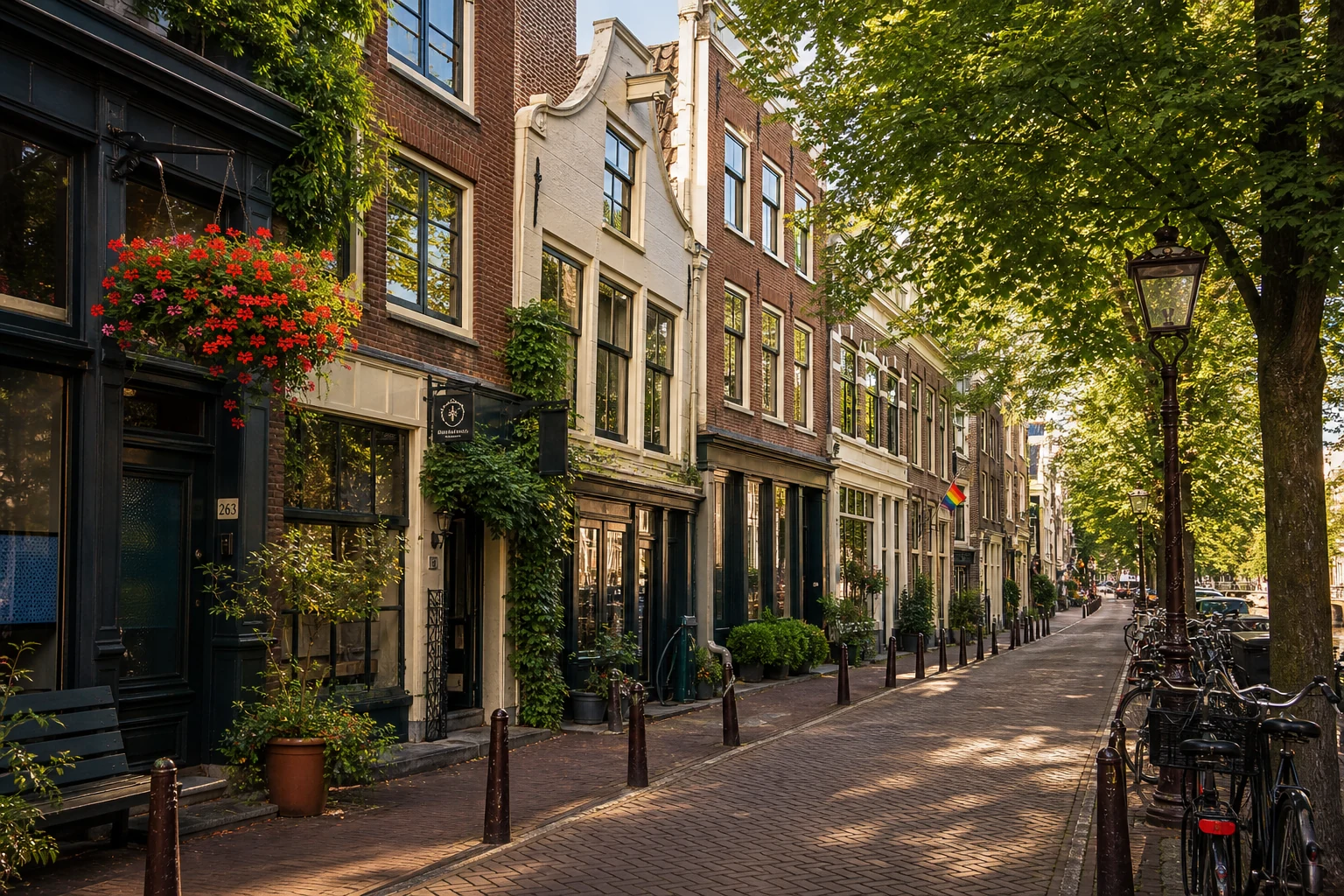
The Jordaan is the neighborhood immediately west of the main canal ring, roughly bounded by Brouwersgracht to the north and Leidsegracht to the south. It was Amsterdam’s working-class district in the 17th century and is now the city’s most genuinely pleasant neighborhood — narrow streets, independent shops, excellent cafes, neighborhood markets (Noordermarkt on Saturdays), and the kind of courtyard gardens (hofjes) that you find by accident and remember for years.
The Jordaan is also where you’ll find some of the best casual food in Amsterdam. Café ‘t Papeneiland on Prinsengracht — a brown café (bruine kroeg) that has been operating since 1642 — serves one of the better appeltaart (Dutch apple tart) in the city. The market at Noordermarkt on Saturdays has organic produce, cheese, bread, and the thing to do is eat breakfast there.
De Pijp
De Pijp is south of the canal ring, built in the late 19th century as workers’ housing, and now Amsterdam’s most ethnically diverse and food-interesting neighborhood. The Albert Cuyp Market — open Monday through Saturday from 09:30 to 17:00 and free to enter — sells everything from stroopwafels (€1.50 each) to Indonesian food to household goods. Lunch here runs €8–12 and is some of the best-value eating in Amsterdam.
Gerard Doustraat and Ceintuurbaan, the main streets running through De Pijp, are lined with independent restaurants and cafes. Surinamese, Indonesian, Turkish, and Dutch food coexist within a few blocks. If you’re in Amsterdam for more than two days, De Pijp deserves a half-day.
The Nine Streets (De Negen Straatjes)
The Nine Streets are nine short connecting streets that run perpendicular to the main canals between Raadhuisstraat and Leidsegracht. They’re compact, walkable in an hour, and contain most of Amsterdam’s good independent shopping — vintage clothing, Dutch design, specialist food shops, bookstores, and specialty coffee cafes.
Where to Eat
Dutch food does not have the global reputation of French or Italian cuisine. This is partly fair — traditional Dutch cooking is simple, heavy, and not particularly subtle. But Amsterdam as a food city is genuinely good, driven by its diverse population and the Dutch talent for importing and improving on other cuisines.
What to eat that’s specifically Dutch:
- Stroopwafel: Two thin waffles sandwiched around caramel syrup, best bought fresh at a market (€1.50) rather than from a supermarket bag
- Bitterballen: Deep-fried beef ragout balls, served with mustard, eaten at every bar in the city as a snack. Around €6–8 for a plate.
- Appeltaart: Dutch apple cake — denser and spicier than the French or German versions, usually served warm with slagroom (whipped cream)
- Haring: Raw herring, a Dutch institution. Eaten at a haringkar (herring cart) by holding it by the tail and lowering it into your mouth, or chopped with onions in a bread roll for €4–5. Try it at one of the stalls near the Stadsarchief on Vijzelstraat
For actual meals: De Wasbar in the Jordaan does a solid Dutch breakfast and lunch in an atmosphere that’s half laundromat, half cafe — which is exactly as good as it sounds. Restaurant Greetje on Peperstraat is the most serious Dutch cuisine restaurant in the city, making an honest effort to cook traditional Dutch food well (mains around €28–38). Warung Spang Makandra on Gerard Doustraat in De Pijp does Surinamese-Javanese food at prices that make the tourist-facing canal ring restaurants feel like a scam — full meal for €12–16.
For cheap lunch: the Albert Cuyp Market in De Pijp is the best option in the city. A full market lunch — Dutch cheese on bread, some stroopwafels, fresh juice — costs around €8–10.
"Amsterdam is one of the more expensive cities in Western Europe. The canal ring is worth it. The tourist restaurants on Leidseplein are not. The difference between eating smart and eating badly here is about €25 per day."
Where to Stay
Canal Ring (Grachtengordel) — Staying on or immediately next to the main canals is the obvious choice for a short trip. You’re walking distance from the museums and the Jordaan, and the setting is as good as the photos suggest. It’s also the most expensive: hotels here run €130–220/night for decent three-star accommodation, more in summer. Hostel dorms start around €40–50.
Jordaan — My preference for anything over a long weekend. Quieter than the canal ring at night, better cafes and local restaurants on the doorstep, and slightly more affordable (hotels €100–180/night). Still extremely walkable to everything.
De Pijp — The best value in a good location. Hotels here run €80–140/night for comparable quality to the Jordaan. It’s a 20-minute walk to the museum quarter and 25 minutes to the canal ring, or a quick tram ride. The neighborhood itself is lively enough that you don’t feel far from the action.
Amsterdam Noord — Across the IJ river from Centraal Station, connected by a free 24-hour ferry that runs every 5–15 minutes. Noord has developed significantly over the last decade — the Eye Film Institute, NDSM Wharf, and a good restaurant scene. Hotels run €70–120/night. The ferry is the commute; it takes 6 minutes. If you’re comfortable with that, Noord is the best budget option within genuine proximity to the center.
Search Amsterdam Hotels by Neighborhood
The difference in price between the Canal Ring and De Pijp for equivalent quality can be €40–60/night. Worth searching across neighborhoods before committing — the tram connections mean nowhere sensible is inconvenient.
What It Costs
Amsterdam is genuinely expensive. Use these as planning ranges rather than promises; accommodation and restaurant prices move with dates and demand.
Budget traveler (€80–110/day): Hostel dorm €40–50, meals mostly from markets and supermarkets (€15–20), GVB 72-hour pass spread over days, one paid museum per day.
Mid-range (€150–200/day): Hotel in De Pijp or Jordaan €100–150, sit-down meals twice a day (€15 lunch, €25–35 dinner), two or three museum admissions across the trip, a canal tour.
Specific verified 2026 prices:
- Anne Frank House (adults): €16.50
- Rijksmuseum (adults): €25
- Van Gogh Museum (adults): €25
- GVB 72-hour transit pass: €21.50
- Canal cruise (standard 1-hour): €15–25
- Beer at a brown café: €5–7 for 0.5L
- Lunch at Albert Cuyp Market: €8–12
- Bitterballen plate at a bar: €6–8
- Stroopwafel at a market: €1.50
- Hostel dorm: €40–55/night
- Mid-range hotel in De Pijp: €90–150/night
- Mid-range hotel on the Canal Ring: €140–220/night
Practical Info
When to visit: April and May are the spring version, with tulips and longer days. Late May through June usually gives you a good balance of mild weather and time outside, while September and early October are equally sensible. July and August are the busiest; accommodation prices spike and the major museums are at maximum capacity.
Language: Dutch. English is widely spoken, and you will not need Dutch to navigate Amsterdam as a tourist. That said, “dankjewel” (thank you, informal) is always appreciated.
Currency: Euro. Contactless card payment is widely accepted, but bring a backup card and check your bank’s foreign-transaction policy. For public transport, contactless check-in and check-out is useful when you are not using a GVB or Amsterdam Travel Ticket.
Visa: The Netherlands is in the EU and Schengen Area. US visitors can generally travel visa-free for up to 90 days in any 180-day period, but check current entry requirements before booking.
Cannabis: The Netherlands does not broadly legalize cannabis; coffeeshop sales are tolerated under strict conditions. The national policy sets an 18+ minimum age and a maximum small-quantity sale, while municipalities can add rules and residency enforcement varies. Do not assume that every coffeeshop serves every visitor, and check local guidance if this matters to your trip.
Tourist tax: In 2026, Amsterdam charges 12.5% of the overnight price excluding VAT. Cruise day visitors are charged a separate €15 per passenger day tax. For a hotel or short-stay booking, check whether the overnight tax is already included in the quoted total.