Quick Links — Budapest
Everything you need to plan and book the trip.
In This Guide
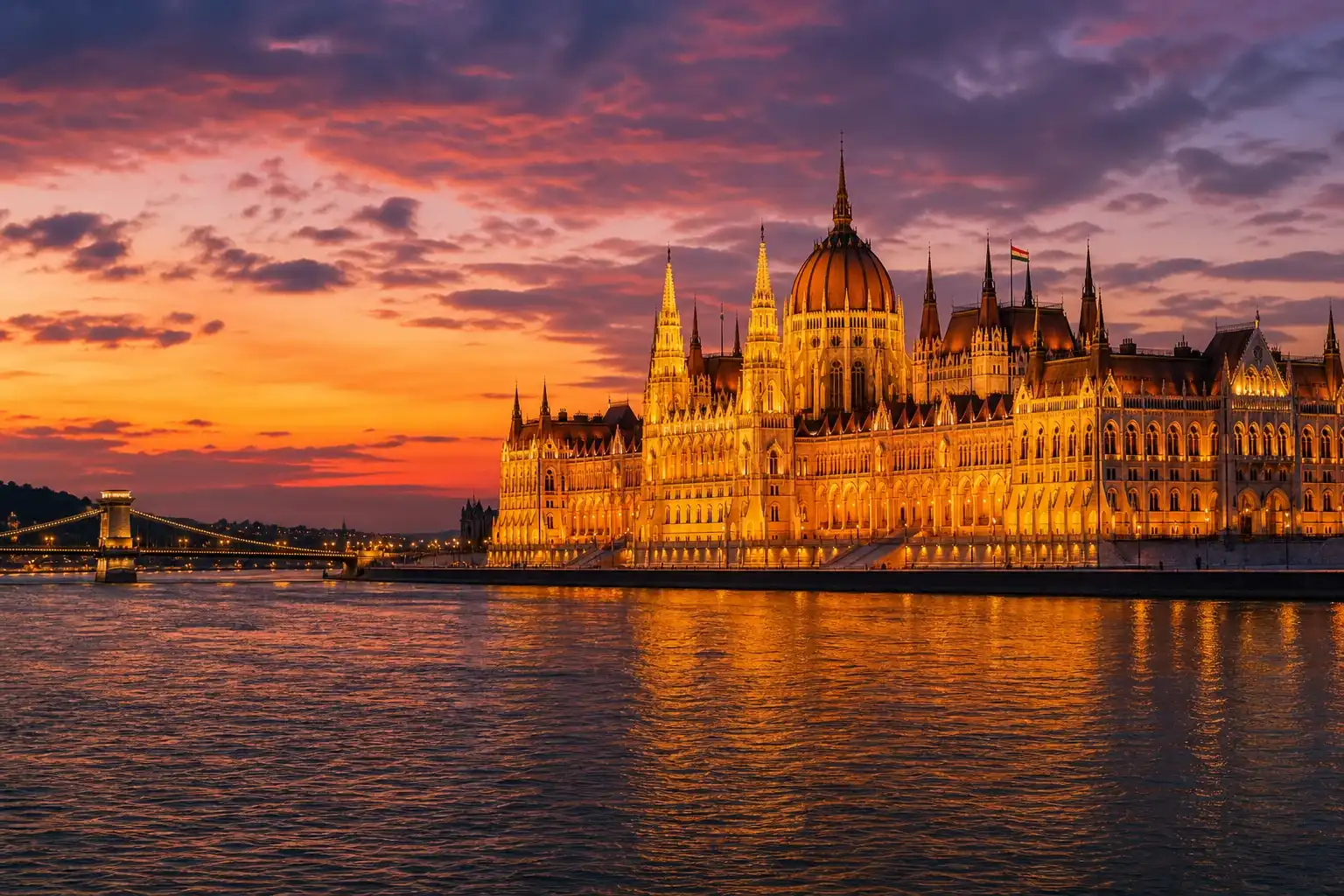
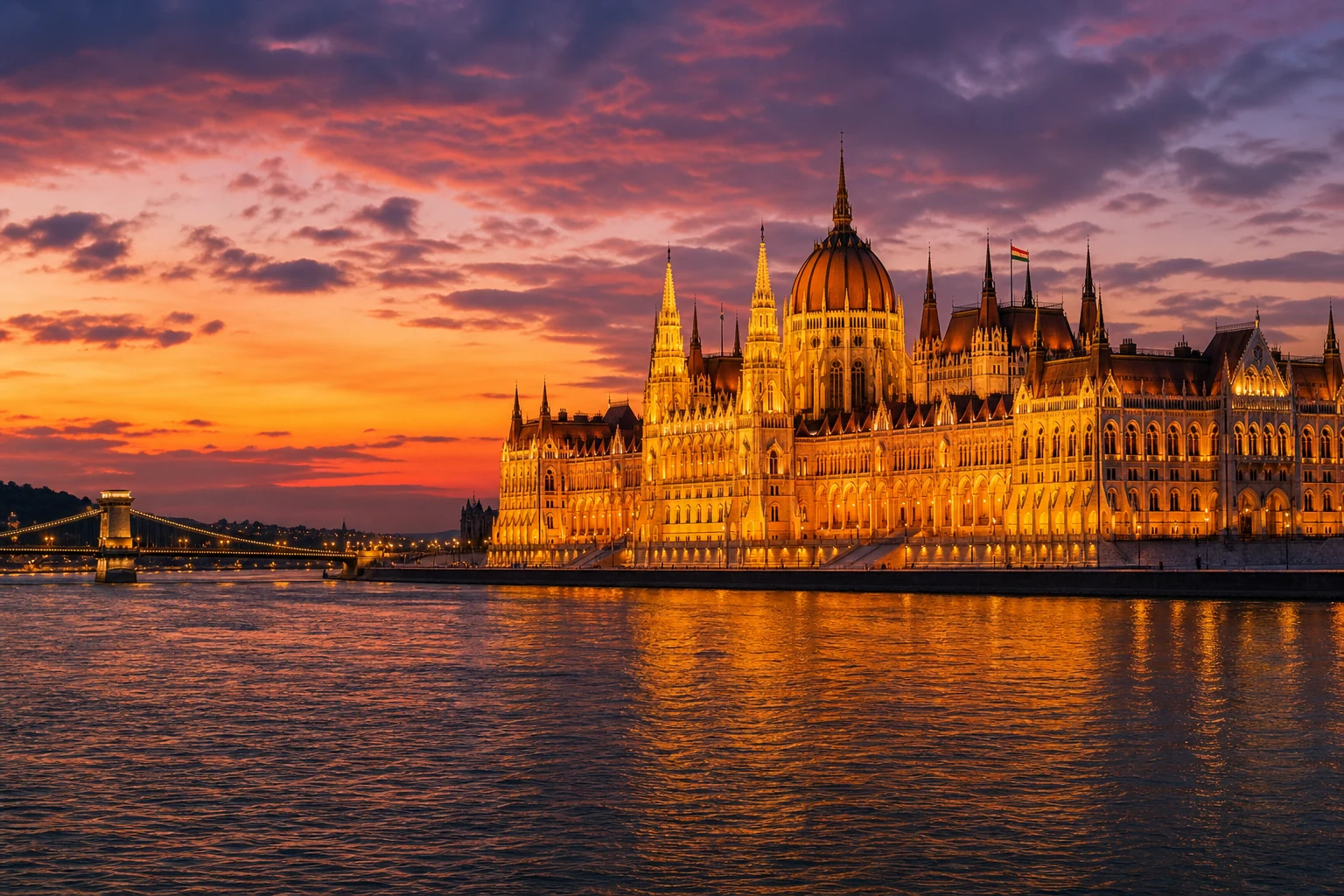
Most cities that get described as “underrated” are underrated for a reason. Budapest is the exception. It has one of the most dramatic skylines in Europe — the Hungarian Parliament building alone is worth the train ride — and a price level that still makes Vienna and Prague feel expensive by comparison. A weekday lunch with soup, a main, and a beer at a neighborhood restaurant: around 2,400 HUF (~€6). That’s not a backpacker trick. That’s just how Budapest works if you avoid the tourist-trap circuit around Váci Street.
I’ve been to Budapest twice now, once as a stopover on a Vienna–Budapest rail trip and once for a long weekend specifically to revisit it. The city aged well between visits. The ruin bars in District VII are still going strong, Kádár Étkezde has reopened after a four-year break, and the Parliament tour remains one of the most impressive 45 minutes you can spend in Central Europe. Here’s what you actually need to know.
Getting There
By Train (Example: Southern Germany)
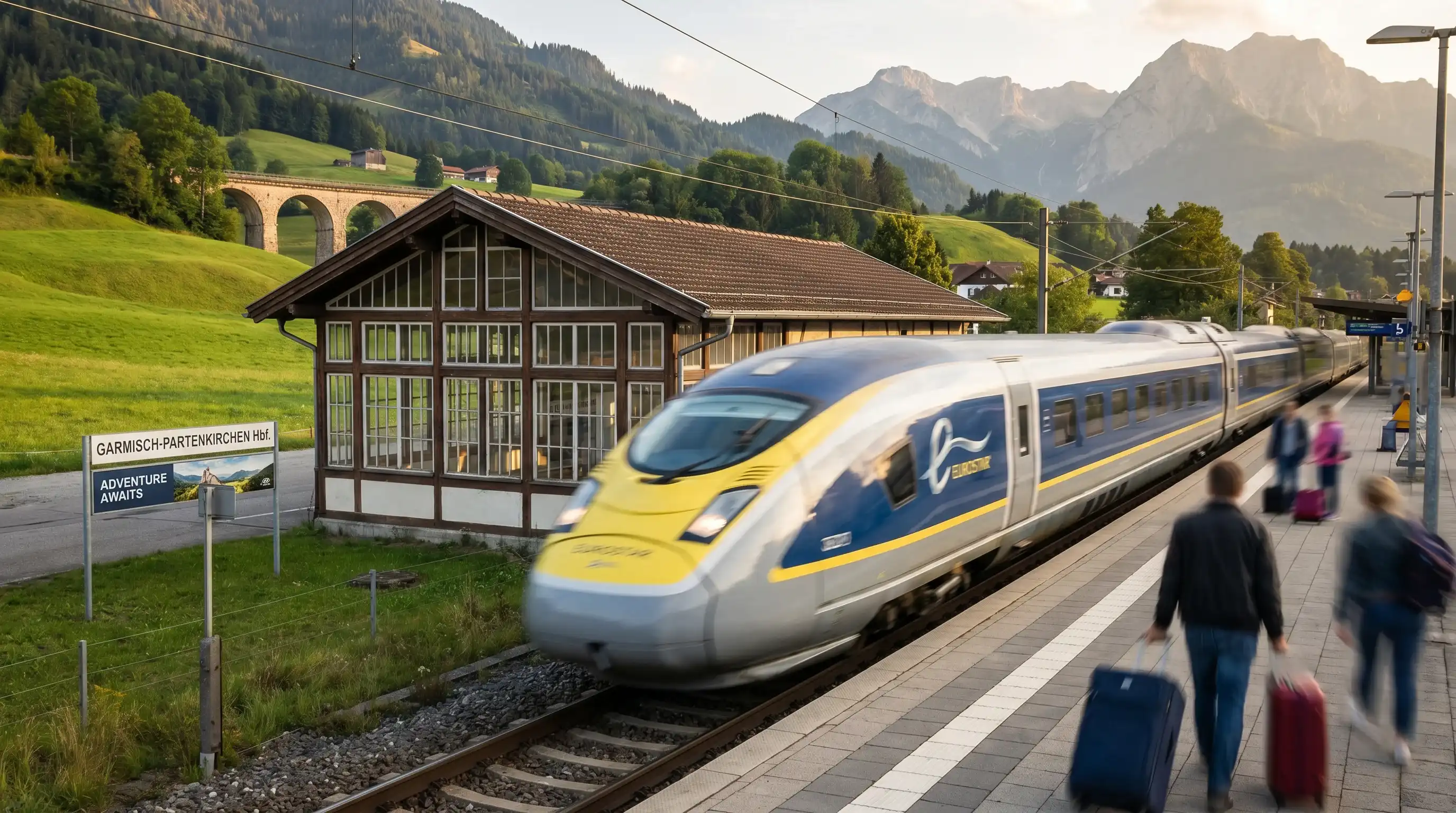
From southern Germany, the cleanest rail option is often the overnight EuroNight sleeper operated by ÖBB. A typical example is the Stuttgart Hbf departure at 20:29, passing through Vienna and arriving at Budapest Keleti at 09:19 the next morning, or about 13 hours door to door. Fares can start around €67 for a couchette. Leave after work, wake up in Budapest, and skip a hotel night in transit.
The daytime alternative is usually routed via Vienna. Using Stuttgart as an example, you’re looking at roughly 3.5–4 hours to Vienna Hauptbahnhof, then about 2.5 hours onward to Budapest Keleti by RegioJet or MAV, with Vienna departures running roughly every 1–2 hours. Total travel time with a reasonable connection lands around 7 hours. Book the Vienna–Budapest leg through Omio or directly with RegioJet if you want the lowest fares.
From Vienna
Vienna to Budapest is one of the easiest day trips or add-ons in Central Europe. RegioJet’s low-cost tickets start around €16 and the journey takes about 2.5 hours to Budapest Keleti station. MAV, the Hungarian national rail operator, runs the same route with fares varying by booking time and class. Budget about €15–35 depending on how early you book.
RegioJet's trains on the Vienna–Budapest route tend to be newer, more reliable, and cheaper than MAV on the same corridor — especially when booked a week or more out. The Business class on RegioJet (which costs about the same as MAV second class) includes a seat reservation, coffee, and more legroom. Book directly at regiojet.com or via Omio.
Getting Around
Budapest’s public transit network — metro, trams, and buses — covers the city well and costs very little. Verified 2026 prices from the BKK (Budapest transit authority):
- Single ticket: 500 HUF (~€1.30) — valid for one continuous journey including metro transfers
- 24-hour pass: 2,500 HUF (~€6)
- 72-hour pass: 5,500 HUF (~€14.50)
- Block of 10 singles: 4,000 HUF (~€10)
For a 3–4 day trip the 72-hour pass is the obvious call. Buy it via the BudapestGO app (slightly cheaper than physical tickets) or at any station kiosk.
Tram 2 along the Danube riverbank between the Great Market Hall and Margaret Bridge is one of the more scenic public tram routes in Europe — it runs the full length of the Pest embankment with Parliament on the opposite bank. Worth taking at least once even if you have no particular destination.
The Thermal Baths
Budapest has dozens of thermal baths. The city sits on a geothermal fault, which means hot mineral water has been piped into elaborate public bath complexes since the Roman era. You don’t have to be a spa person to appreciate them.
Széchenyi is the most famous and the most photogenic — a Neo-Baroque palace in City Park with outdoor pools, indoor baths, and a Saturday night spa party that’s been running for years. Current weekday prices (from the official Széchenyi website): 13,200 HUF for a daily ticket with locker (€33). Weekends are slightly more at 14,800 HUF (€37). Online fast-track tickets run about 15,200–16,800 HUF (~€38–42) and skip the often-long queue at the cashier — worth it on a Saturday in summer.
Gellért is the more architecturally spectacular option — an Art Nouveau thermal complex built in 1918, attached to the Gellért Hotel on the Buda side. Prices are similar to Széchenyi. The indoor main pool with its vaulted glass ceiling is one of the more genuinely impressive rooms you’ll walk into in the city.
Rudas is the oldest, a 16th-century Ottoman bath with an original octagonal pool under a domed roof with star-shaped skylights. It’s smaller, darker, and more atmospheric than Széchenyi — less Instagram, more actual history. Rudas also runs a rooftop pool with Danube views that’s worth checking out in the evening.
Book Széchenyi Tickets in Advance
In June, July, and August, Széchenyi weekends sell out regularly. Pre-booked fast-track tickets also skip the queue, which can run 30–45 minutes on busy days. Book directly through the official Széchenyi website or GetYourGuide.
What to See
Hungarian Parliament Building
The Parliament is the most impressive building in the city and one of the larger Gothic Revival structures in Europe. Interior tours are guided, 45 minutes, and mandatory — no independent wandering. Ticket prices in 2026: 4,000 HUF for EU/EEA citizens (€10.50), 8,000 HUF for non-EU visitors (€21). English-language tours run several times daily and include the Crown Jewels room, the Grand Staircase, and the Dome Hall. Book online well in advance for peak season (April–October); tours do sell out, especially morning slots.
Buda Castle and Castle Hill
The castle district on the Buda side is the historic upper town — cobblestone streets, the old palace complex, Fisherman’s Bastion (free to walk around, 1,500 HUF if you want the upper terrace (€4)), and the Matthias Church. The views across to the Parliament from here at dusk are the city’s best. Most people take the funicular from Clark Ádám tér to avoid the uphill climb; it’s 2,200 HUF one way (€5.50). Alternatively, tram 19 or bus 16 gets you close to the top for standard transit fare.
Jewish Quarter (District VII)
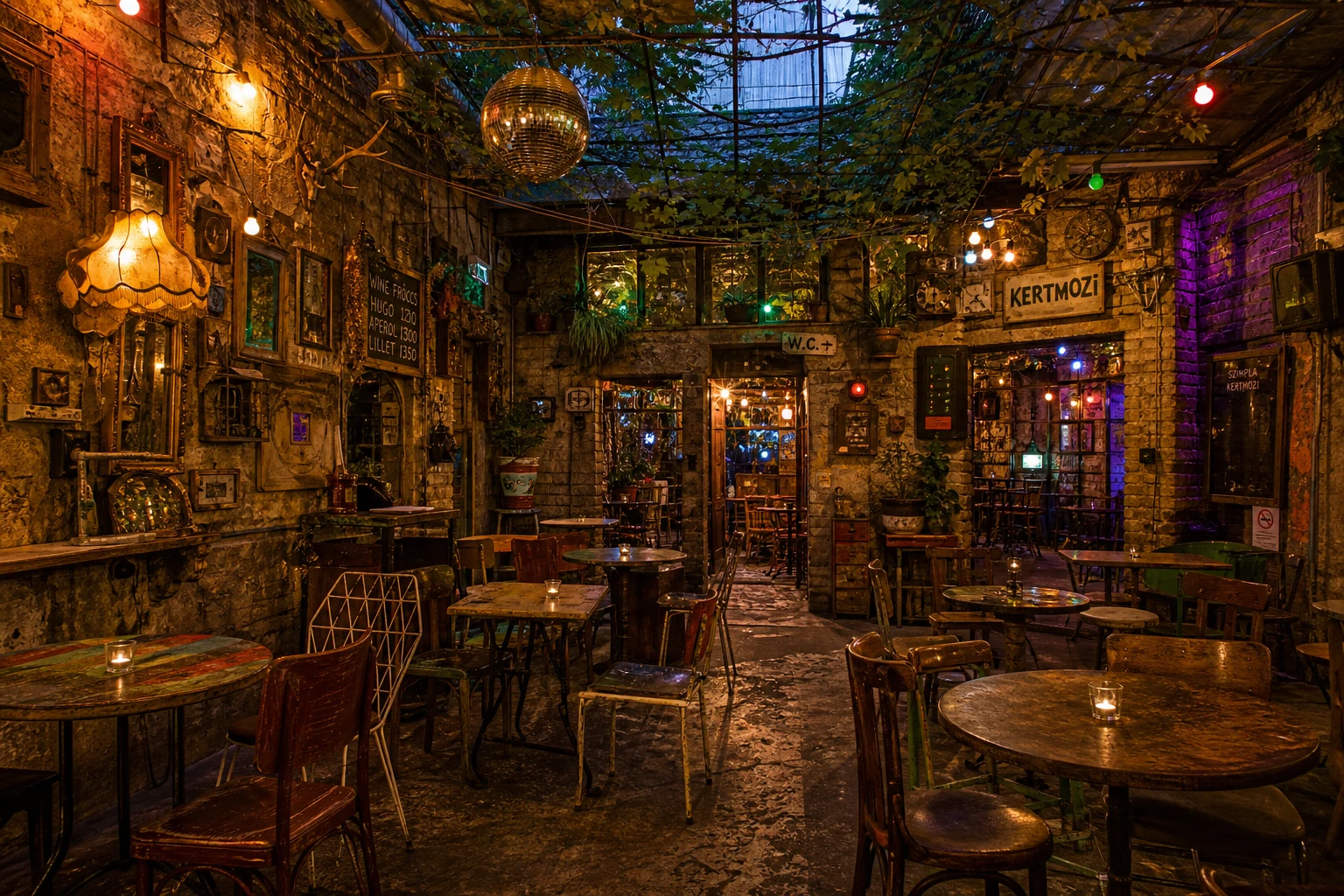
The Jewish Quarter is one of the most historically significant and architecturally complex neighborhoods in Central Europe. The Great Synagogue on Dohány Street is the largest synagogue in Europe and worth the admission (around 5,000–6,000 HUF including the museum, or ~€12.50–15). The area survived WWII and the Soviet era in a kind of unintentional preservation — the streets still have the texture of 1930s Budapest, which is why the ruin bars work so well there aesthetically. Szimpla Kert on Kazinczy Street is the original and still the most interesting: a multi-level labyrinth of mismatched furniture, graffiti, bicycle parts hanging from ceilings, and genuinely good draft beer. Go earlier in the evening if you want a table; go later if you want the crowd.
Kádár Étkezde on Klauzál tér has reopened after a four-year hiatus — a traditional Jewish-Hungarian eatery that had been anchoring the square since the 1950s, checked tablecloths and all. Stuffed cabbage on Wednesdays for around 4,800 HUF (~€12). Get there at noon; it fills fast.
Gellért Hill and the Liberty Bridge Walk
The walk from the Great Market Hall, across the Liberty Bridge, up through Gellért Hill, and back down to the Chain Bridge takes about two hours and costs nothing. The view of the Parliament and the full Danube panorama from the top of Gellért Hill is one of the best free viewpoints in Europe. Go at dusk.
Where to Eat
Hungarian food is heavier than you’d expect and better than you’d think. The core of it is pork, paprika, stewed meat, and bread dumplings. The thing to eat: lángos (deep-fried dough with sour cream and cheese, sold at markets for around 800–1,200 HUF, or ~€2–3), gulyás (goulash soup, not stew — the stew is called pörkölt), and töltött káposzta (stuffed cabbage in a tomato-paprika sauce that makes the version you’ve had elsewhere taste like a rough draft).
The napi menü is the daily lunch special offered by most non-touristy restaurants — typically two courses for around 2,400–3,000 HUF (~€6–€7.50). This is how locals eat lunch. It’s the single best value decision you’ll make in Budapest. Available until 2–3pm at most places.
For specific restaurants: Retek Bisztró in the Castle District (District I) is consistently rated the best traditional Hungarian spot in the city on current review platforms — excellent stews, small room, no tourist nonsense. Café Kör near St. Stephen’s Basilica is a long-running all-day spot with a blackboard menu that changes with the market; arrive at noon on weekdays or reserve. Stand25, the casual sibling of the Michelin-starred Stand, serves proper Hungarian dishes at regular prices at the foot of Buda Castle — the kind of place that defies the usual castle-district tourist markup.
"The napi menü — two courses, a beer, and a coffee — can still come to under €8 in Budapest if you eat where the office workers eat and not where the tour groups end up."
For the Great Market Hall on Vámház körút: free to enter, open Monday 6am–5pm, Tuesday–Friday 6am–6pm, Saturday 6am–3pm, closed Sunday. The upstairs gallery stalls sell tourist items at tourist prices. The ground floor vendors selling produce, paprika, and pickles are the real market. Buy a bag of sweet paprika to take home; it’s better than anything you’ll find outside Hungary.
Where to Stay
District V (Belváros/Inner City) is the most convenient base — walkable to the Parliament, chain bridge, and Great Market Hall. It’s also the most expensive. Expect €80–€130/night for a decent hotel.
District VII (Jewish Quarter) is my preference for anything over a long weekend. You’re in the middle of the ruin bar scene, the Great Synagogue is steps away, and the transit connections to the rest of the city are direct. Hotels here run €50–€90/night for comparable quality to District V. Hostel dorms from €15.
District VI (Terézváros) — the stretch around Andrássy Avenue and the Opera House — has excellent café culture, some of the best coffee in the city, and a slightly quieter nightlife scene than District VII. Good mid-range option.
The Buda side (Districts I, XI, XII) is more residential, quieter at night, and better if you’re spending serious time around the castle and baths. The trade-off is that you’re a tram or metro ride away from the Pest action.
Find a Hotel in Budapest
Prices vary significantly between districts. District VII and VI consistently offer better value than the Inner City (V) for equivalent comfort. Worth searching across neighborhoods before settling.
What It Costs
Budapest is still genuinely affordable, though it’s no longer the €30/day city it was five years ago. Honest 2026 daily budgets:
Budget traveler (€45–€65/day): Hostel dorm from €15, napi menü lunches, street food and markets for other meals, 72-hour transit pass spread across days, one paid attraction per day.
Mid-range (€80–€120/day): A decent hotel in District VII, sit-down dinners at non-touristy restaurants, a thermal bath visit, and a couple of admission tickets.
Actual prices verified for 2026:
- Beer at a local pub or ruin bar: 700–1,000 HUF (~€1.75–€2.50)
- Napi menü lunch (2 courses): 2,400–3,000 HUF (~€6–€7.50)
- Sit-down dinner at a mid-range restaurant: 4,000–8,000 HUF/person (~€10–€20)
- Széchenyi Baths weekday: 13,200 HUF locker ticket (~€33)
- Hungarian Parliament (EU citizen): 4,000 HUF (
€10.50); non-EU: 8,000 HUF (€21) - 72-hour transit pass: 5,500 HUF (~€14.50)
- Lángos at a market stall: 800–1,200 HUF (~€2–€3)
The currency is Hungarian forint (HUF). Budget roughly €1 = 395–400 HUF at fair-market rates in early 2026. Avoid Euronet ATMs entirely — they add aggressive dynamic conversion fees. Use ATMs at OTP Bank, Raiffeisen, or K&H for better rates.
Practical Info
When to visit: May and June are excellent — warm, not yet at peak heat, and the city’s outdoor terraces and parks come alive. Late September and October are equally good. July and August are the busiest months and the baths get crowded.
Language: Hungarian. It is famously one of the harder languages for English speakers to get any traction in, so don’t bother trying to read menus at speed. “Köszönöm” (thank you, roughly “KUH-soh-nohm”) and “kérem” (please) will get you far with locals who appreciate the effort.
Visa: Hungary is in the EU and Schengen Zone. EU/EEA passport holders need nothing. US and most Western visitors enter visa-free for up to 90 days under the Schengen agreement.
Tipping: Round up to the nearest 500 HUF (~€1.25) or add 10% at sit-down restaurants where service was good. At ruin bars and pubs, tipping per drink is not expected but rounding up the tab is normal.
Safety: Budapest is safe for tourists by European capital standards. The main thing to watch: overpriced taxis hailed off the street. Use the Bolt app (yes, same name as this blog — unrelated) or the FőTaxi dispatch line. Street hails near the tourist areas around Váci Street and Deák tér can quote you €20 for a €5 journey.