Quick Take
What you should know before you book
Choose Cinque Terre if you want a shorter, simpler, train-friendly coastal stop that fits cleanly between Florence, Milan, or Genoa. Choose the Amalfi Coast if you want a more dramatic, more expensive, more logistically demanding trip that feels like a destination in itself.
- Best quick stop: Cinque Terre, especially for 2 nights and rail-heavy northern or central Italy routes.
- Best full coastal trip: Amalfi Coast, especially for 3-5 nights with ferries, Ravello, beach time, and slower evenings.
- Easier logistics: Cinque Terre, because the five villages sit on the rail line between La Spezia and Levanto.
- Bigger payoff if planned well: Amalfi Coast, but only if you pick the right base and do not treat Positano as the default.
In This Guide
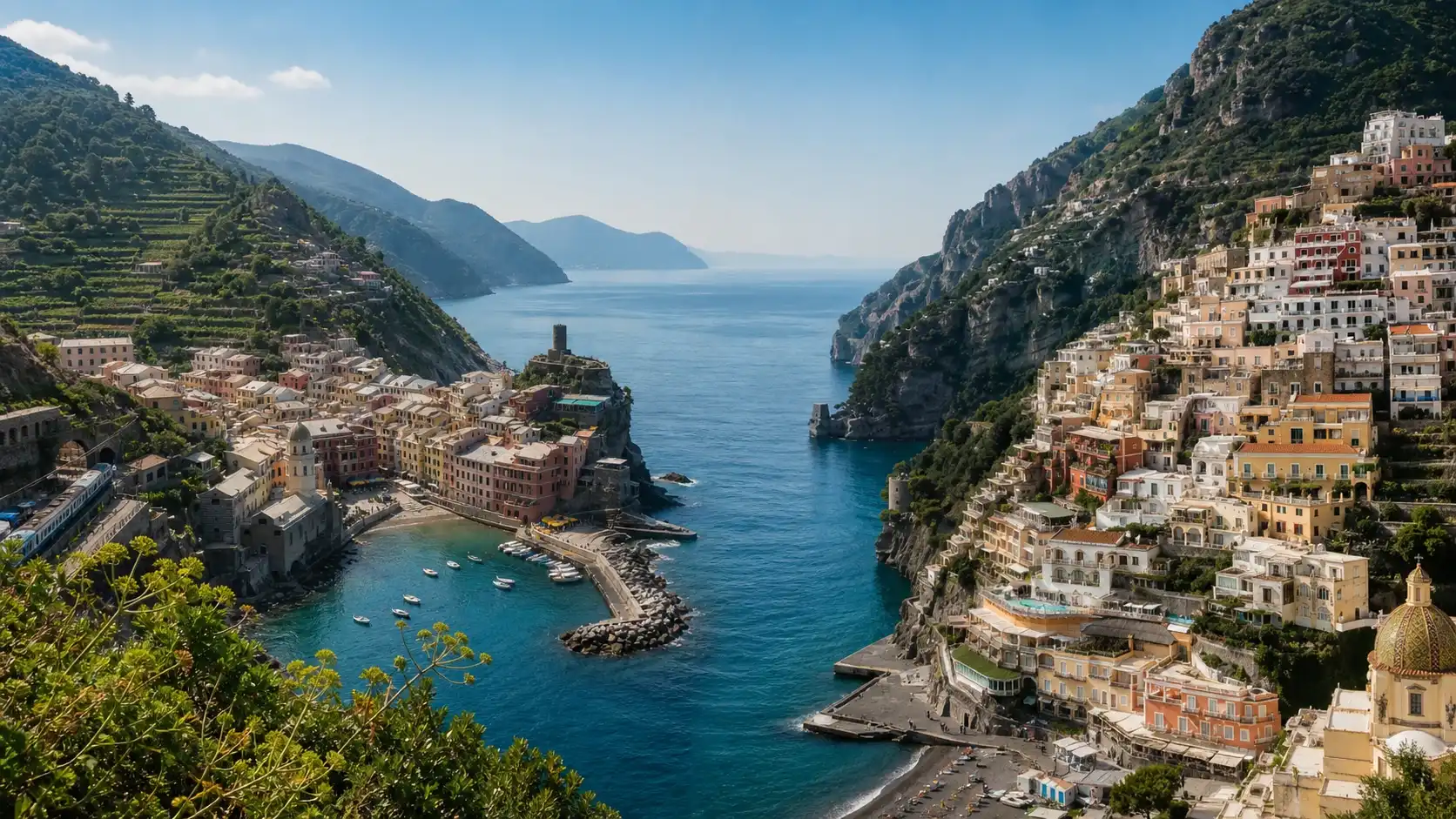
Cinque Terre and the Amalfi Coast get shoved into the same mental folder because they both offer the fantasy version of coastal Italy: steep villages, bright water, too many stairs, and the kind of view that makes otherwise sensible people start using real-estate vocabulary about hotel balconies.
But as actual trips, they are not the same purchase.
Cinque Terre is compact. It is five villages on the Ligurian coast: Monterosso al Mare, Vernazza, Corniglia, Manarola, and Riomaggiore. The practical appeal is that you can move between them by train, hike between some of them when trails are open, and fold the whole thing into a wider Italy route without detonating your itinerary.
The Amalfi Coast is bigger, more dramatic, and more demanding. It is not one neat destination with one easy transport spine. It is a chain of towns and decisions: Positano, Praiano, Amalfi, Ravello, Maiori, Minori, Salerno, and the question of whether you are using buses, ferries, taxis, or your own increasingly fragile patience.
I like both. I would not plan them the same way, and I would not recommend them to the same traveler for the same trip.
If your Italy route already includes Florence and Rome, this comparison matters because both coasts can look like the obvious scenic add-on. One is the cleaner short stop. The other is the better full coastal chapter. Confusing those two ideas is how good trips become expensive logistics exercises.
The Core Difference
The blunt version is this: Cinque Terre is easier to add. The Amalfi Coast is easier to remember.
Cinque Terre works best as a concentrated scenic stop. You arrive, sleep in or near one village, use trains to move between the others, hike if the official trail conditions make sense, and leave after 2 or 3 nights feeling like you saw a very specific piece of Italy. It does not require a week. It does require restraint.
The Amalfi Coast works best when you give it enough time to stop being a transfer puzzle. The beauty is obvious, but the payoff depends heavily on your base, ferry timing, crowd tolerance, and willingness to admit that Positano may not be the smartest place to sleep.
That is the first decision:
- Choose Cinque Terre if your trip needs a beautiful, efficient coastal stop.
- Choose the Amalfi Coast if your trip can afford a slower, more involved coastal stay.
- Do not choose Amalfi if you only have 1 rushed night and a fantasy of effortless cliffside movement. That is not a plan. That is an invoice with scenery.
"Cinque Terre is the better coastal insert. The Amalfi Coast is the better coastal commitment."
Logistics
Cinque Terre wins logistics for most travelers, especially if they are already moving around northern or central Italy by rail.
The five villages sit on the rail corridor between La Spezia and Levanto, which makes the structure simple: arrive through one of those gateways, use regional trains between villages, and check the official Cinque Terre National Park information before assuming a specific hiking trail is open. The park is also very clear that the Cinque Terre Card is the planning tool to understand before you arrive, because trails, trains, and included services are not one generic free-for-all.
That does not make Cinque Terre frictionless. Trains can be crowded. Platforms are small. Corniglia sits above the station, which means stairs or shuttle logistics. The famous blue-path sections can close after weather damage or maintenance. But the system is understandable within a few minutes, which is more than I can honestly say for a lot of Italian coastal planning.
The Amalfi Coast is more complicated because there is no train running along the coast itself. You normally enter from Naples, Sorrento, or Salerno, then switch into buses, ferries, taxis, or private transfers. The full Amalfi Coast guide goes deeper, but the short version is:
- Salerno is often the cleanest rail-and-ferry gateway.
- Sorrento can work better for Positano and the western side.
- SITA buses matter, but crowds and luggage can make them less pleasant than the map suggests.
- Travelmar ferries are useful, but think of them as route-specific hops, not a magic coast-wide shortcut that solves every movement problem.
For practical anchors I trust: Naples airport’s Alibus is still the simple cheap link into Napoli Centrale, and the official PID-style neatness people expect from a rail city does not exist once you are actually moving along the Amalfi Coast. The coast can work beautifully. It just does not reward vague timing.
My logistics verdict:
| Question | Better choice |
|---|---|
| Easiest to add to a rail itinerary | Cinque Terre |
| Easiest for a 2-night stop | Cinque Terre |
| Better if arriving from Naples or southern Italy | Amalfi Coast |
| Better if you hate transfers | Cinque Terre |
| Better if ferries are part of the fun | Amalfi Coast |
Book the Easy Part First
If you are still deciding whether this coast segment fits the route, price the train legs first. Cinque Terre usually wins when you want the cleaner rail add-on; Amalfi usually wins when your route already runs through Naples or Salerno.
If you are choosing purely on logistics, be honest about your route. Florence to Cinque Terre is a natural add-on. Rome or Naples to the Amalfi Coast is a natural add-on. Forcing the wrong coast into the wrong part of the trip can burn a full day for no meaningful upgrade.
Scenery and Towns
The Amalfi Coast wins on scale and drama. Cinque Terre wins on compactness and the pleasure of seeing several distinct villages without rebuilding the day around transport.
Cinque Terre is all color, terraces, train tunnels, small harbors, and footpaths. Vernazza and Manarola are the obvious postcard villages. Monterosso has the best classic beach setup. Riomaggiore is dramatic and vertical. Corniglia is the odd one out because it sits up above the sea rather than directly at water level, which makes it less convenient but also less interchangeable.
The risk with Cinque Terre is that people treat the villages like collectible objects. They rush through all five in one day, photograph the harbor, buy something lemon-adjacent, and leave feeling vaguely disappointed because the whole place became a checklist. Cinque Terre is better when you let the train do some work but still slow down in 2 or 3 villages.
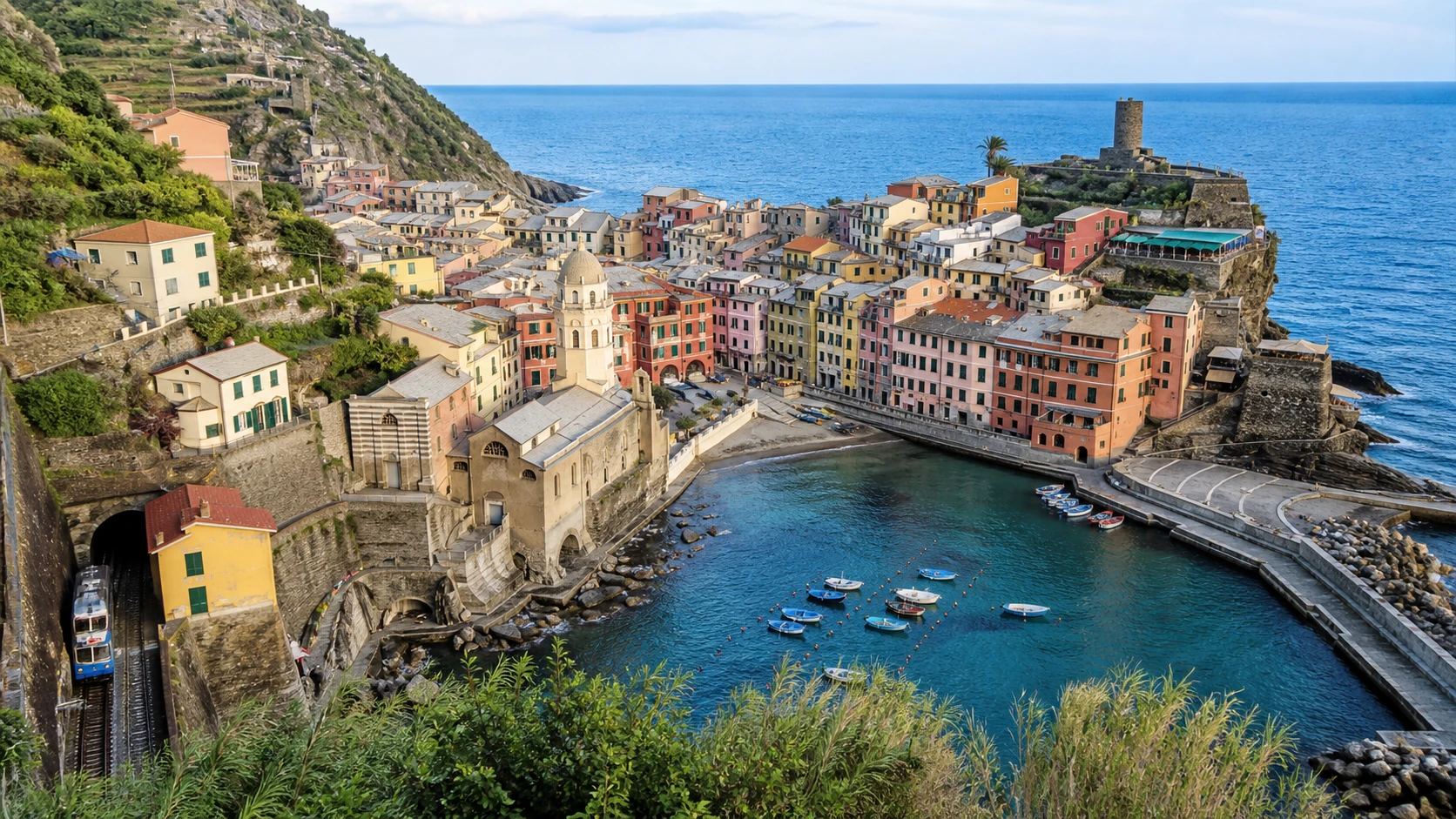
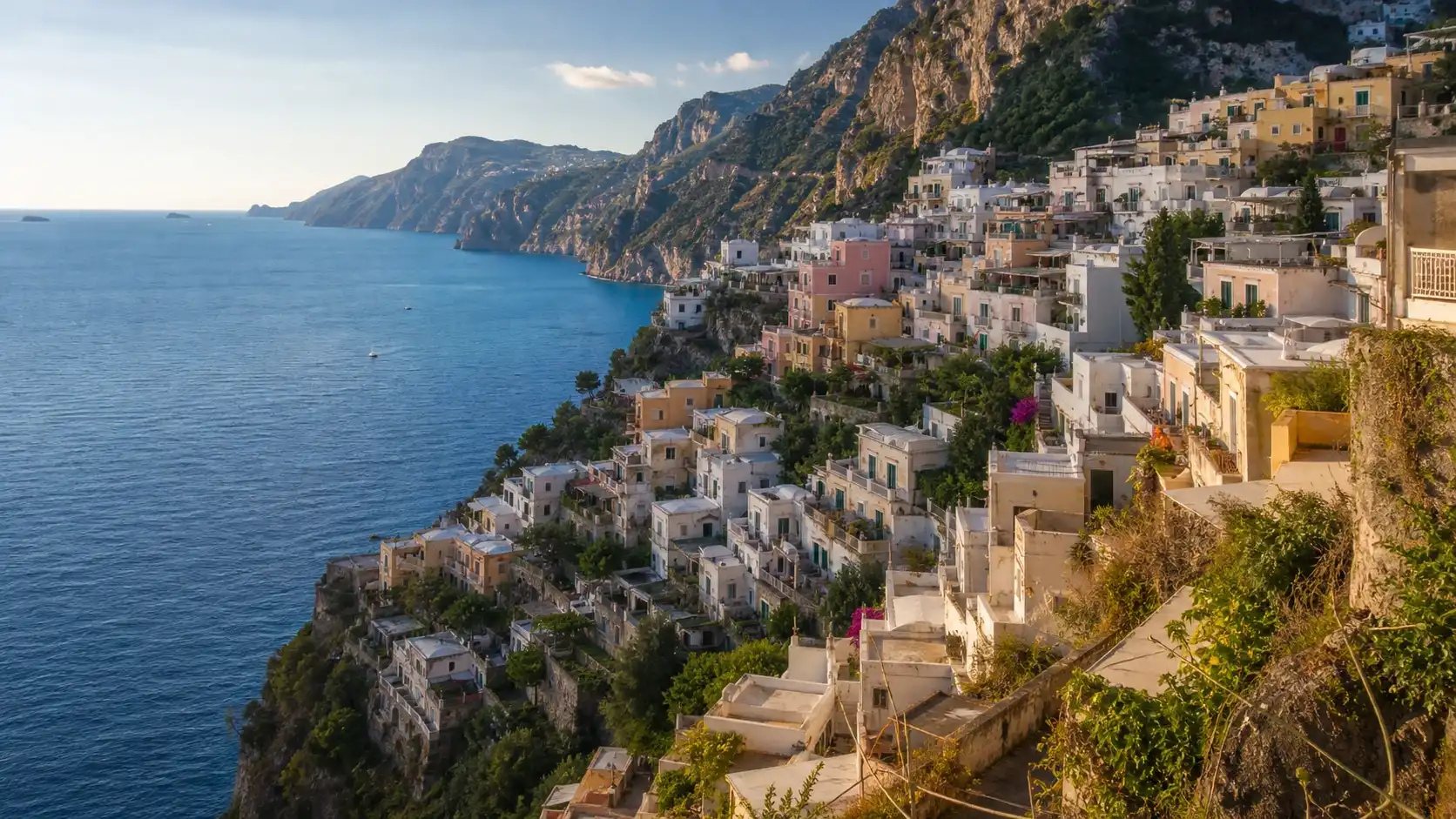
The Amalfi Coast has a stronger sense of occasion. Positano spilling down the cliff is famous for a reason. Ravello gives you the elevated garden-and-terrace version of the coast. Amalfi town has the cathedral, the port, and actual transport utility. Praiano is quieter and, to me, often more livable than the famous name next door.
The risk with Amalfi is the opposite: not checklist speed, but fantasy overreach. People book the most famous town, underestimate the cost and steps, then spend too much of the trip fighting the geography.
If you want the stronger visual punch, choose Amalfi. If you want the easier series of small coastal moments, choose Cinque Terre.
Where to Stay
This is where the comparison gets practical.
For Cinque Terre, I would first decide whether you want to sleep inside the five villages or just outside them.
Monterosso is the easiest Cinque Terre village for many first-timers because it has the most beach-town feel, more accommodation range, and less vertical punishment than the others. If you want the coast to feel like a stay rather than a photography route, start here.
Vernazza or Manarola are better if you want the classic village atmosphere and are willing to pay for it. They are beautiful, but rooms can be small, stairs can be annoying, and the charm is less charming when you arrive with too much luggage.
Riomaggiore can work well for a short stay with dramatic scenery and easy rail access, though it is still steep.
Corniglia is the one I would choose only if you know you want quieter evenings and do not mind being above the water.
La Spezia is the practical outsider base. It is not the fantasy, but it is easier, cheaper, and more useful for rail connections. For travelers on a tighter budget or a fast itinerary, La Spezia can be the correct unromantic answer.
For the Amalfi Coast, the base decision has higher stakes.
Positano is the dream and often the worst value. Stay there if the splurge is genuinely the point.
Praiano is the better compromise: still beautiful, less frantic, and usually more sensible than Positano.
Amalfi town is the best inside-the-coast logistics base because buses and ferries converge there.
Maiori and Minori are stronger for value, flatter movement, and a less performative version of the coast.
Salerno is the easiest base for trains, prices, and wider Italy routes, but it does not give you the same sleep-inside-the-postcard feeling.
My base verdict:
| Traveler type | Cinque Terre base | Amalfi Coast base |
|---|---|---|
| First-timer who wants ease | Monterosso | Amalfi town |
| Budget-conscious traveler | La Spezia | Salerno or Maiori |
| Romantic splurge | Manarola or Vernazza | Positano or Praiano |
| Luggage-heavy itinerary | La Spezia or Monterosso | Salerno or Amalfi |
| Quieter evenings | Corniglia | Praiano or Minori |
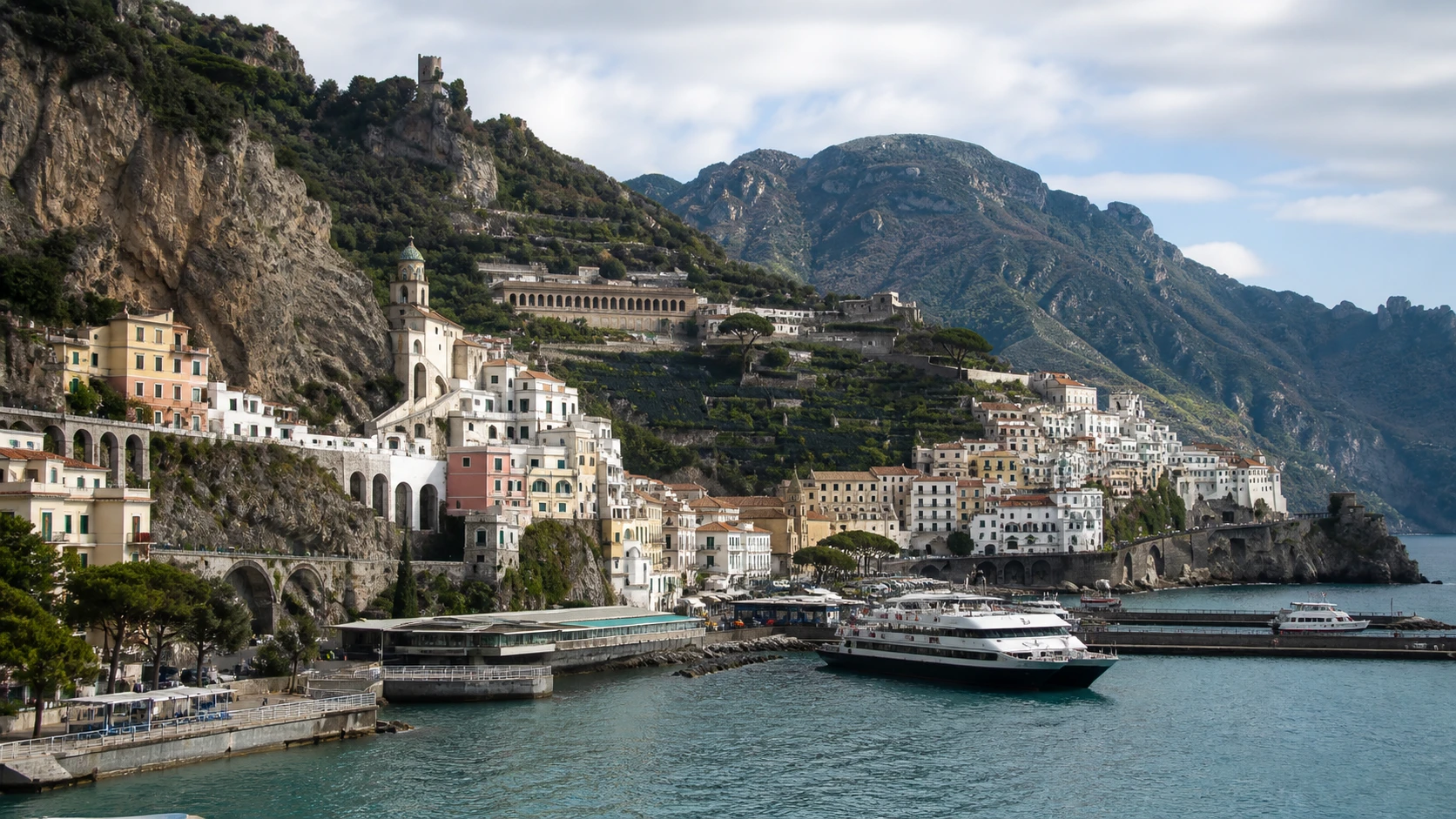
Compare the Bases, Not Just the Dream Version
If you are booking hotels, do not compare only Positano versus a random Cinque Terre village. Compare the sensible bases too: La Spezia, Monterosso, Amalfi town, and Salerno. That is where the value difference gets real.
What It Costs
Neither coast is cheap in peak season, but Cinque Terre is usually easier to keep under control.
Cinque Terre lets you save in three ways: sleep in La Spezia, keep the stay short, and use trains instead of transfers or taxis. Food can still be expensive in the villages, and accommodation inside the five towns is not a bargain, but the trip has fewer moving parts that trigger surprise costs.
The Amalfi Coast has more ways to leak money. A slightly better-located hotel, a taxi to avoid a crowded bus, a ferry day, a view restaurant, luggage help, a late-arrival transfer: each decision can be reasonable on its own. Together they can turn a coastal stay into a budget autopsy.
For a realistic first-timer budget, I would think in patterns rather than fake precision:
| Category | Cinque Terre | Amalfi Coast |
|---|---|---|
| Best-value base | La Spezia | Salerno, Maiori, or Minori |
| Expensive base | Vernazza or Manarola | Positano |
| Main transport cost | Trains and park/card products | Buses, ferries, taxis, transfers |
| Best length for cost control | 2 nights | 3 nights |
| Biggest budget mistake | Sleeping in the prettiest village with too much luggage | Defaulting to Positano for no reason beyond name recognition |
If you have a fixed budget and want less stress, I would pick Cinque Terre. If you have more room to spend and want the bigger coastal chapter, I would pick Amalfi, but I would spend the money on base quality and transport sanity before fancy dinners.
Beaches and Hikes
Cinque Terre is better for a trip built around village-to-village walking. The Amalfi Coast is better for bigger scenic hikes and a more varied coastal stay.
In Cinque Terre, hiking is part of the identity, but you need to treat official trail status as real information, not a suggestion. The national park maintains the trail network and card system, and sections can close. The mistake is assuming every famous path is open because an old itinerary said so.
The classic Cinque Terre experience is a mix of train hops, short walks, village wandering, and maybe one larger hike if the conditions line up. It is active without requiring you to make the entire trip a hiking vacation.
The Amalfi Coast has the stronger marquee hike: the Path of the Gods between the Agerola/Bomerano area and Nocelle above Positano. It is one of the few famous names in the region that does not feel like pure marketing. The views are genuinely excellent, and the day feels different from just moving between towns at sea level.
For beaches, neither is the simplest answer if your main goal is long, easy beach days. Cinque Terre has Monterosso, which is the most beach-forward of the five villages. The Amalfi Coast has more variety, but beach access often comes with geography, cost, or crowd tradeoffs.
My practical split:
- Choose Cinque Terre for short walks, train-linked villages, and a compact active stop.
- Choose the Amalfi Coast for the Path of the Gods, ferry scenery, and a more expansive coastal rhythm.
- Choose neither if your real dream is an uncomplicated beach week. Italy has better tools for that job.
Crowds and Timing
Both places are crowded because both places deserve attention and have been aggressively flattened by social media. The difference is how the crowds behave.
Cinque Terre crowds compress into small train platforms, narrow village lanes, famous viewpoints, and trailheads. The place can feel overloaded quickly because the villages are physically small. Day-trippers intensify that feeling, especially when the weather is good.
The Amalfi Coast crowds spread across a larger area, but the transport bottlenecks can feel more consequential. A crowded viewpoint is annoying. A crowded bus you cannot board can change your day.
The best windows for both are broadly similar: May, early June, September, and early October. July and August are workable only if you are honest about heat, prices, and crowd pressure.
I would give Cinque Terre the edge in shoulder season for short trips because you can adapt quickly. If one village feels slammed, move. If the weather is not ideal, shorten the hike plan. The Amalfi Coast can still be excellent in shoulder season, but bad ferry weather or weak transfer timing has bigger consequences.
Do not plan either coast as a same-day speed run if it is meant to be the scenic relief in your Italy trip. One night is usually too little. Two nights makes Cinque Terre workable. Three nights is my minimum for the Amalfi Coast.
The Verdict
Choose Cinque Terre if:
- you have 2 nights
- your route is already centered on Florence, Milan, Genoa, or northern Italy
- you want trains instead of coastal bus logistics
- you want village-hopping and short hikes more than a full resort-style stay
- you are trying to keep the trip simpler and less expensive
Choose the Amalfi Coast if:
- you have at least 3 nights
- your route already includes Naples, Rome, or southern Italy
- you want bigger scenery and a stronger sense of occasion
- you are willing to think carefully about your base
- you can spend enough to make the logistics comfortable without resenting every transfer
My personal recommendation for most first-time Italy travelers is this:
If the coast is an add-on, choose Cinque Terre. It is cleaner, shorter, and less likely to hijack the route.
If the coast is a main event, choose the Amalfi Coast. It has the bigger payoff, but it needs time and planning discipline.
The wrong answer is trying to force both into a normal first Italy trip. You can do it on paper. The paper will not show the transfer fatigue, the duplicated cliffside photo energy, or the moment when you realize you spent your Italy vacation optimizing between train platforms and ferry docks.
Pick one coast. Give it the amount of time it deserves. Then let the rest of the trip breathe.