Quick Take
What you should know before you book
For a first October trip, I would book Seville and Granada for outdoor days or Bologna and Florence for food, art, and a route that still works in rain. Vienna and Salzburg deliver the most recognizable autumn atmosphere. Munich belongs on the list only when the final days of Oktoberfest are the reason for going.
- Best for outdoor days: four nights in Seville and three in Granada; book the Alhambra first.
- Best all-weather route: three nights in Bologna and four in Florence; book timed museums and useful train departures first.
- Best for autumn atmosphere: four nights in Vienna and three in Salzburg; keep any mountain day flexible.
- Event exception: Oktoberfest runs through October 4 in 2026, so early-October Munich is peak demand, not shoulder season.
In This Guide
Europe in October is not one weather forecast or one kind of vacation. Seville can still revolve around tiled courtyards and dinner outdoors, while Salzburg may begin the day under mist with the Alps hidden behind it. I recommend choosing between four specific trips. The strongest options are southern Spain, Bologna and Florence, Vienna and Salzburg, or Munich for the final days of Oktoberfest. This guide explains who each route suits, the compromise that comes with it, what to reserve first, and how shorter days, rain, seasonal schedules, and event crowds change the trip after summer.
The short answer is that October can be excellent. The longer answer is that it rewards a smaller map and punishes anyone who books “Europe” as if Seville, Florence, Vienna, and Munich share a season.
Choose the October Trip You Actually Want
Start with the day you want to have, not the country you want to collect. If the picture in your head is a long lunch followed by another walk before dinner, choose Seville and Granada. If it is a market morning, handmade pasta, and an art museum when rain arrives, choose Bologna and Florence. If you want yellow leaves along a river, coffeehouses, concert halls, and a train into the Alps, choose Vienna and Salzburg.
Munich is the exception. In 2026, the official Oktoberfest calendar runs from September 19 through October 4. Go during those first four October days because you want the festival, not because you expect an inexpensive, quiet autumn weekend.
I would not combine these routes in one week. Spain plus Italy looks possible on a flight-search screen, but it spends the best part of a short trip checking out, reaching an airport, and finding another hotel. Pick one pair and let the contrast happen within the route: grand city and smaller city, plaza and palace, market and museum, imperial capital and Alpine edge.
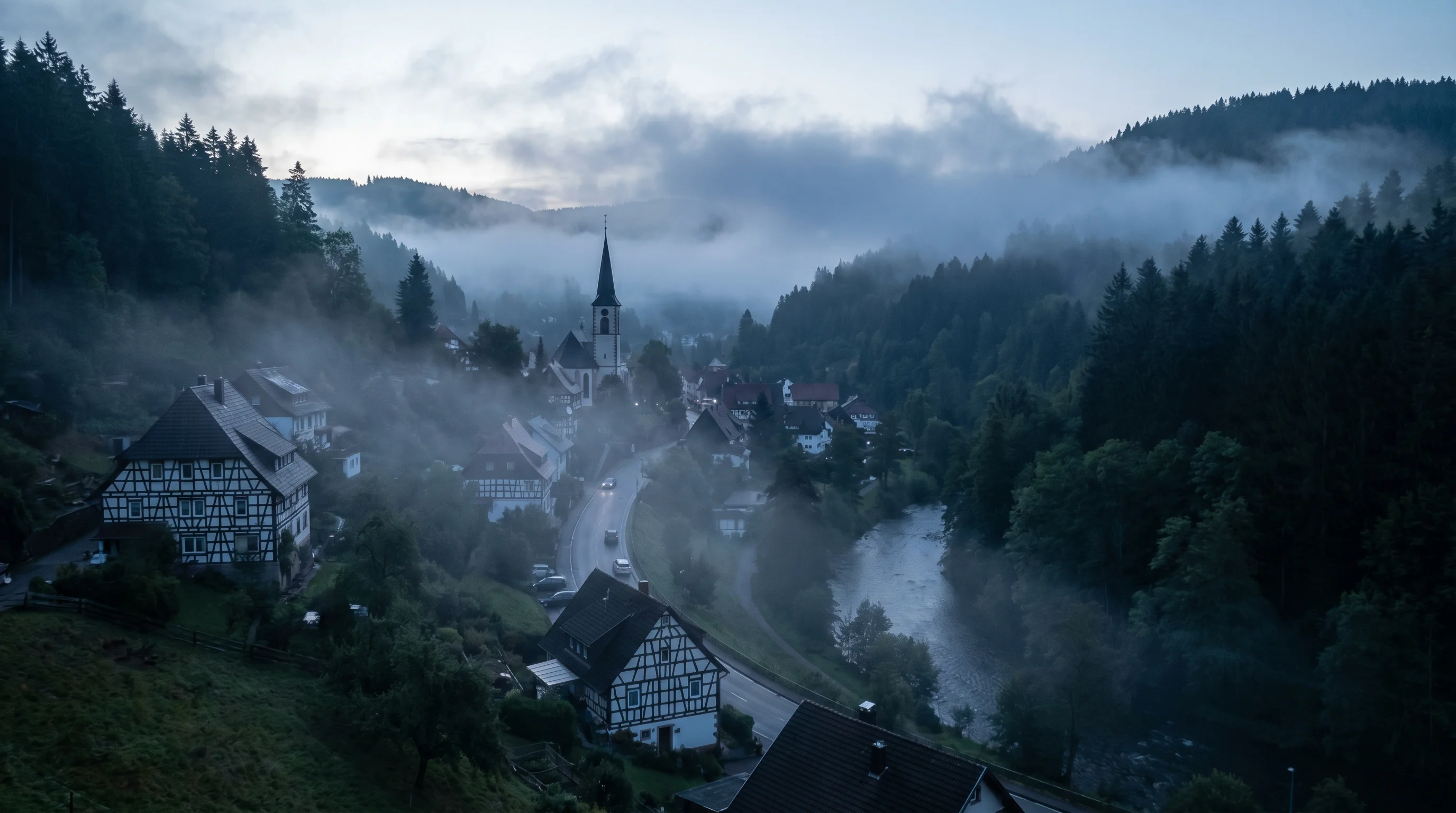
Seville and Granada for Outdoor Days
Choose Seville and Granada when the priority is being outside without building the trip around a beach. Seville gives you orange-tree courtyards, the broad Plaza de España, the lanes of Santa Cruz, and evenings that can continue over tapas in Triana. Granada adds the Alhambra above the city, the whitewashed slopes of the Albaicín, and a visible wall of mountains beyond the rooftops.
The pair works because each city has a clear reason to stay. Seville is not merely the airport for Granada, and Granada is not merely an Alhambra appointment. Give Seville four nights and Granada three. That leaves room for the Real Alcázar, the cathedral, a slow lunch, and one evening across the Guadalquivir before moving east.
Reserve the Alhambra through its official ticket site before you commit to a nonrefundable train or hotel plan. The Nasrid Palaces use timed entry, and that appointment should determine which Granada day stays clear. I would also reserve the Real Alcázar if the visit matters to you, then leave ordinary meals and neighborhood walks alone.
This is the route for travelers who dislike cold more than they dislike uncertainty. Southern Spain improves the odds of mild outdoor time, but October does not promise a week of dry skies. Rain on stone can turn an ambitious walking day into a series of café stops, and Granada feels cooler after sunset than Seville. Pack a light waterproof layer and choose a hotel you would be happy to return to for an hour, not a room an exhausting bus ride beyond the center.
The compromise is that this route looks less like the copper-and-gold autumn sold in seasonal travel photographs. Choose it for Moorish architecture, late dinners, and usable outdoor hours. Do not choose it because someone promised summer would continue on schedule.
Bologna and Florence for Food and Art
Bologna and Florence are my best all-weather October pairing. Bologna supplies the appetite: mortadella, tortellini, tagliatelle al ragù, market counters, and wine bars beneath miles of porticoes. Florence supplies the art and visual drama: the Duomo appearing at the end of a narrow street, the Arno under low evening light, and museums important enough to justify a rainy afternoon.
Start with three nights in Bologna. Walk from Piazza Maggiore into the Quadrilatero, then compare that old market district with Mercato delle Erbe. The official Italia.it guide to Bologna’s food experiences identifies the city as one of Italy’s gastronomic capitals and points travelers toward both areas. That is a better October plan than chasing a vague “harvest experience” into the countryside without a reservation or a way home.
Continue to Florence for four nights. Book the Uffizi or Accademia on the day that gives the week structure, then leave one afternoon open for the forecast. A clear day can become a climb, a garden, or a walk to Piazzale Michelangelo. A wet day can become Santa Croce, the Bargello, a longer lunch, and another glass of wine without feeling like the itinerary failed.
October makes this route feel coherent. Bologna’s porticoes are not merely decorative when rain starts, and Florence has enough indoor depth to absorb weather without reducing the city to a backup plan. The official Italia.it autumn overview also ties the season to vineyards, food, wine, and local products, but I would keep the city pair as the foundation. Add a winery or smaller town only after verifying its calendar and transport.
What should you book first? Reserve any Florence museum you would be genuinely disappointed to miss, then choose a useful train departure between the cities. Restaurant reservations matter for a specific celebrated dining room, but ordinary Bologna eating should retain some spontaneity. A market city becomes less enjoyable when every plate of pasta has been converted into an appointment.
The compromise is cultural density. Florence can still be busy, and famous museum rooms do not become private because the calendar says October. Bologna is calmer, but a food-centered trip requires curiosity beyond the first restaurant nearest Piazza Maggiore. Choose this pair when a gray sky should change the order of the day, not your opinion of the trip.
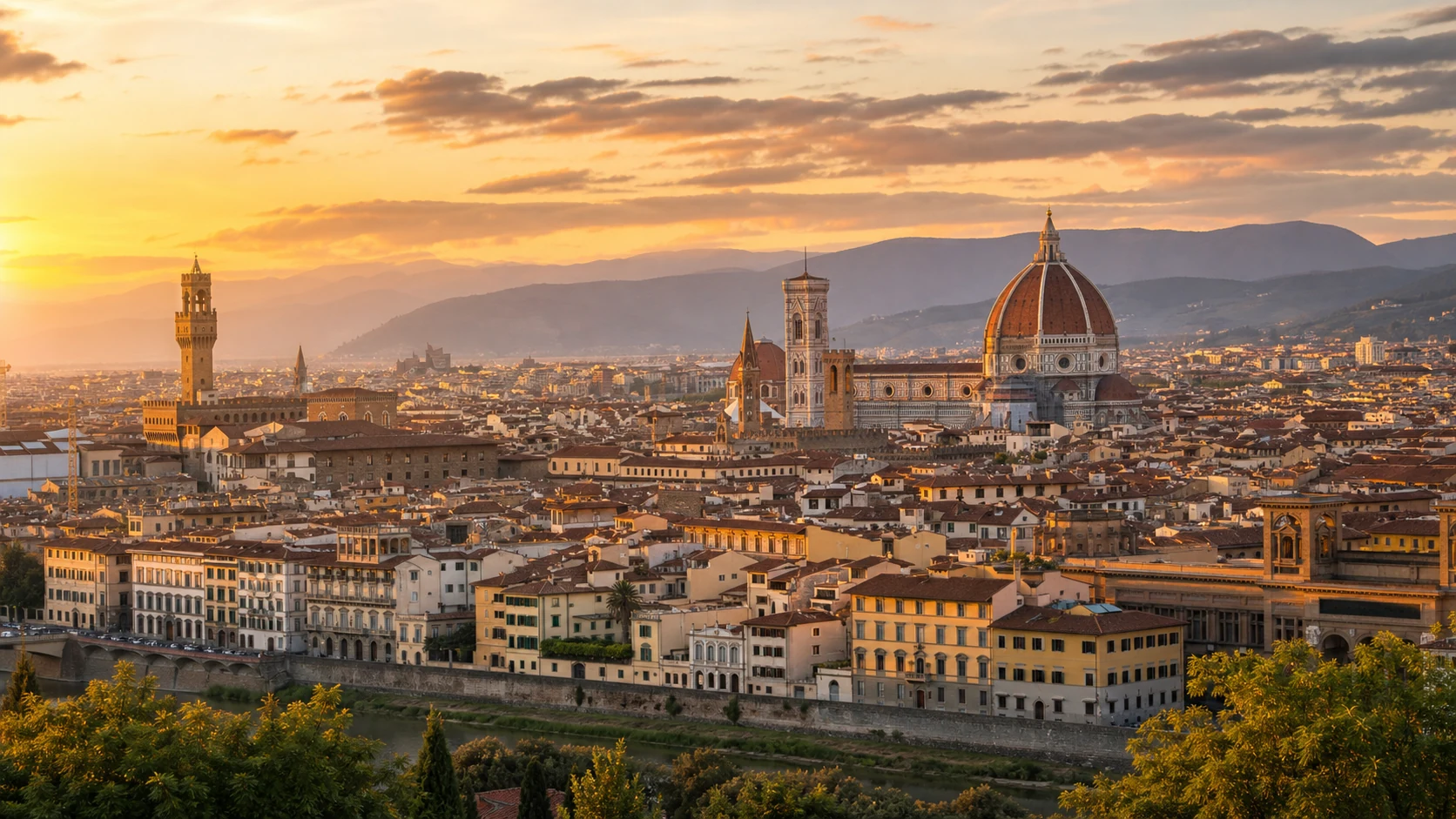
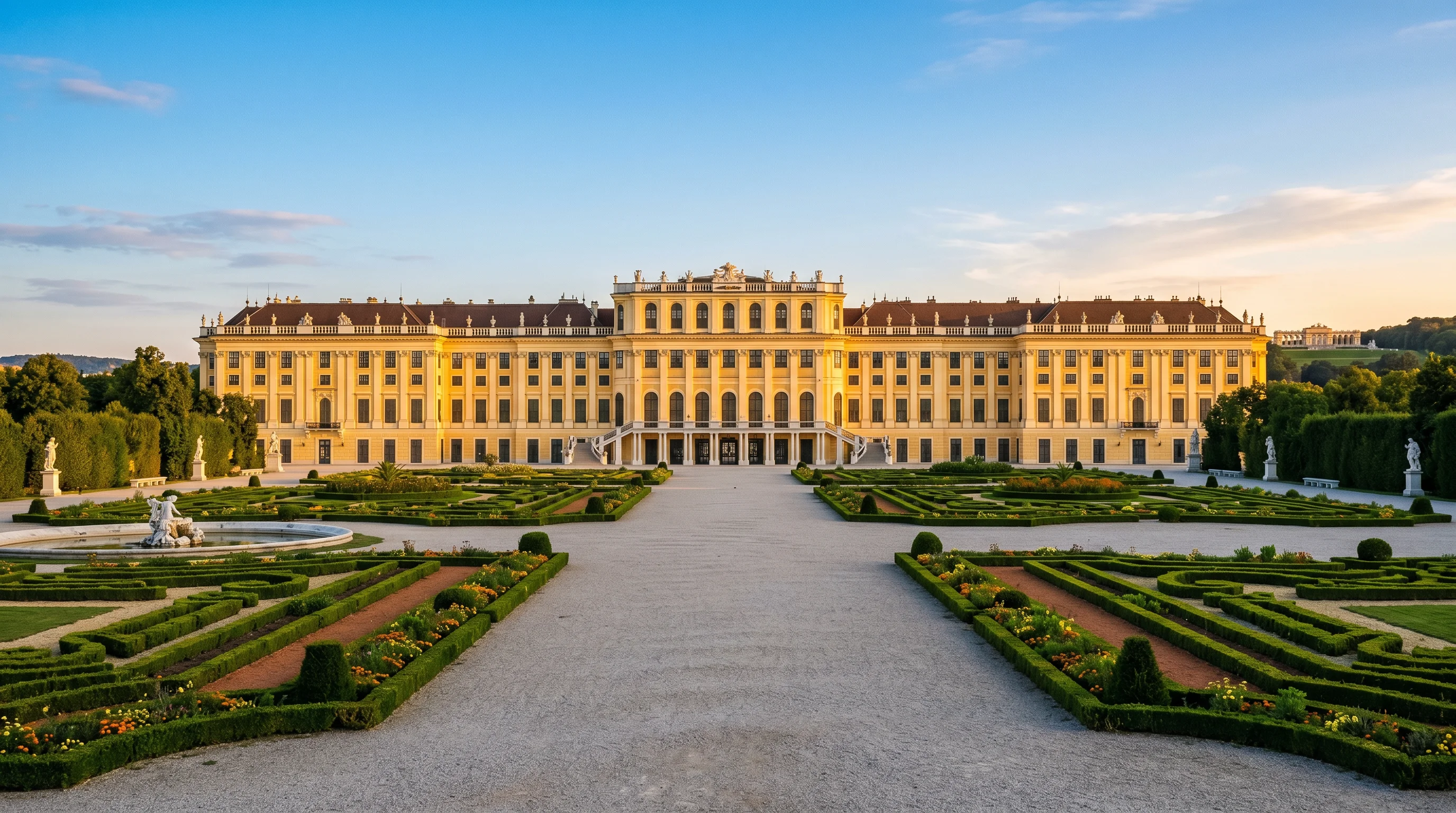
Vienna and Salzburg for Autumn
Choose Vienna and Salzburg when you want October to look and feel like October. Vienna gives you formal parks, grand museums, coffeehouses, and enough indoor culture to survive a cold front with dignity. Salzburg gives you a smaller old town along the Salzach, Hohensalzburg Fortress above the roofs, and mountains close enough to change the horizon whenever the clouds lift.
I would spend four nights in Vienna and three in Salzburg. In Vienna, pair one major museum with a neighborhood or park rather than marching between palaces until imperial wallpaper loses all meaning. The Kunsthistorisches Museum and a proper coffeehouse can fill a wet afternoon. On a clear day, the gardens at Schönbrunn or a walk through the Prater gives the trees a chance to be part of the trip rather than its entire purpose.
Salzburg needs two different plans. Plan A is the city itself: the fortress, St. Peter’s Abbey, Getreidegasse, Mozart sites if they interest you, and an evening when day-trippers have left. Plan B is one weather-dependent landscape day. The official Austria tourism guide to SalzburgerLand combines old-town culture with mountain and nature experiences, which is exactly the appeal. It is also why I would not prepay every outdoor excursion before seeing the operating calendar and forecast.
The train connection makes the two-base route straightforward, but the mountains should remain a bonus. Lifts, boats, and seasonal attractions can reduce hours or finish their season during autumn. Check the named operator for your date, then book only when the day still makes sense in poor visibility. Paying to reach a viewpoint inside a cloud is a very expensive way to inspect moisture.
The compromise is volatility. You may get sharp blue skies, luminous trees, and a clear Alpine rim. You may get rain and a mountain that declines to introduce itself. Vienna and Salzburg still work because their streets, museums, churches, cafés, and music do not require peak foliage. Book the cities; let the landscape surprise you.
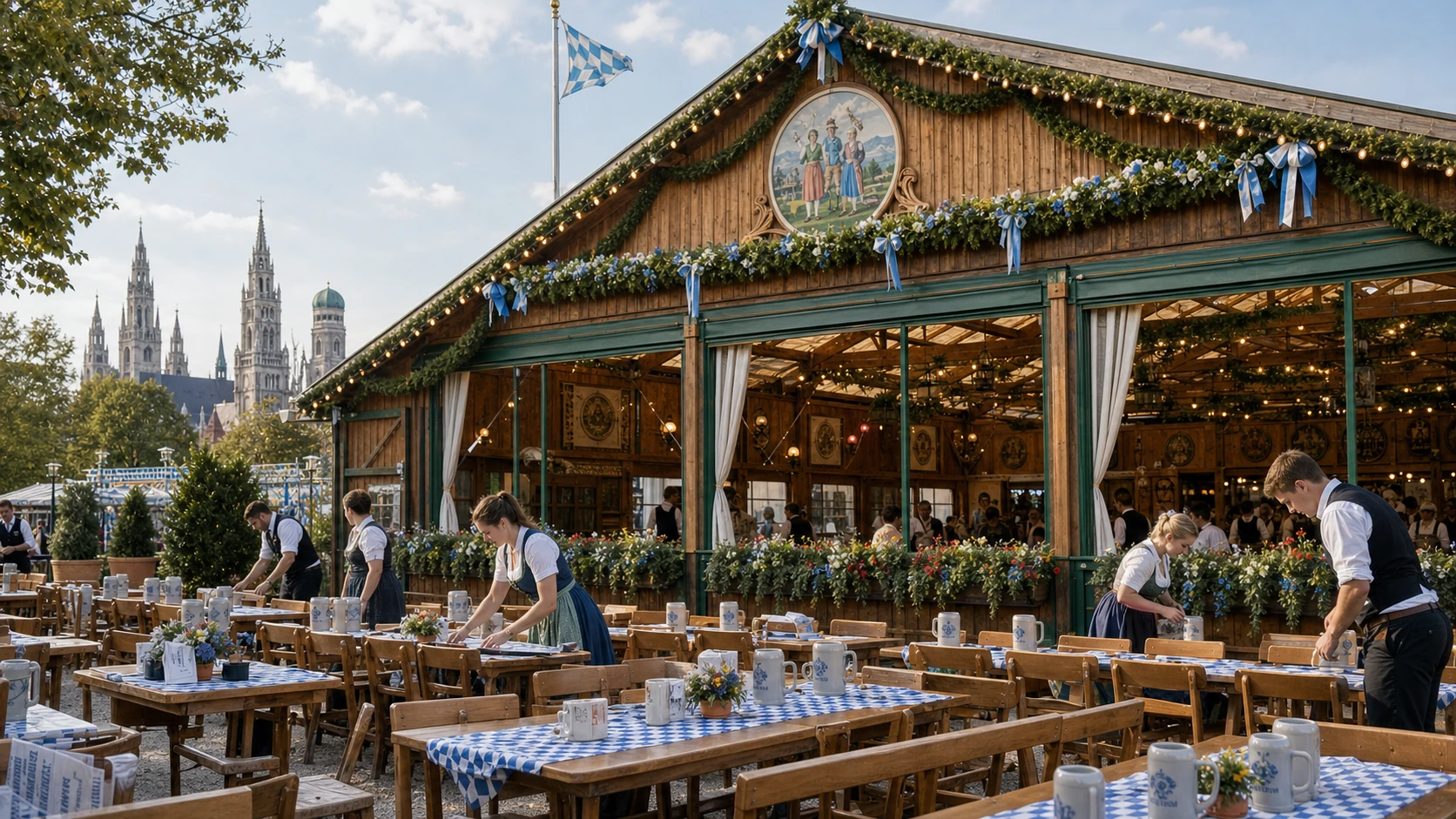
Munich When Oktoberfest Is the Point
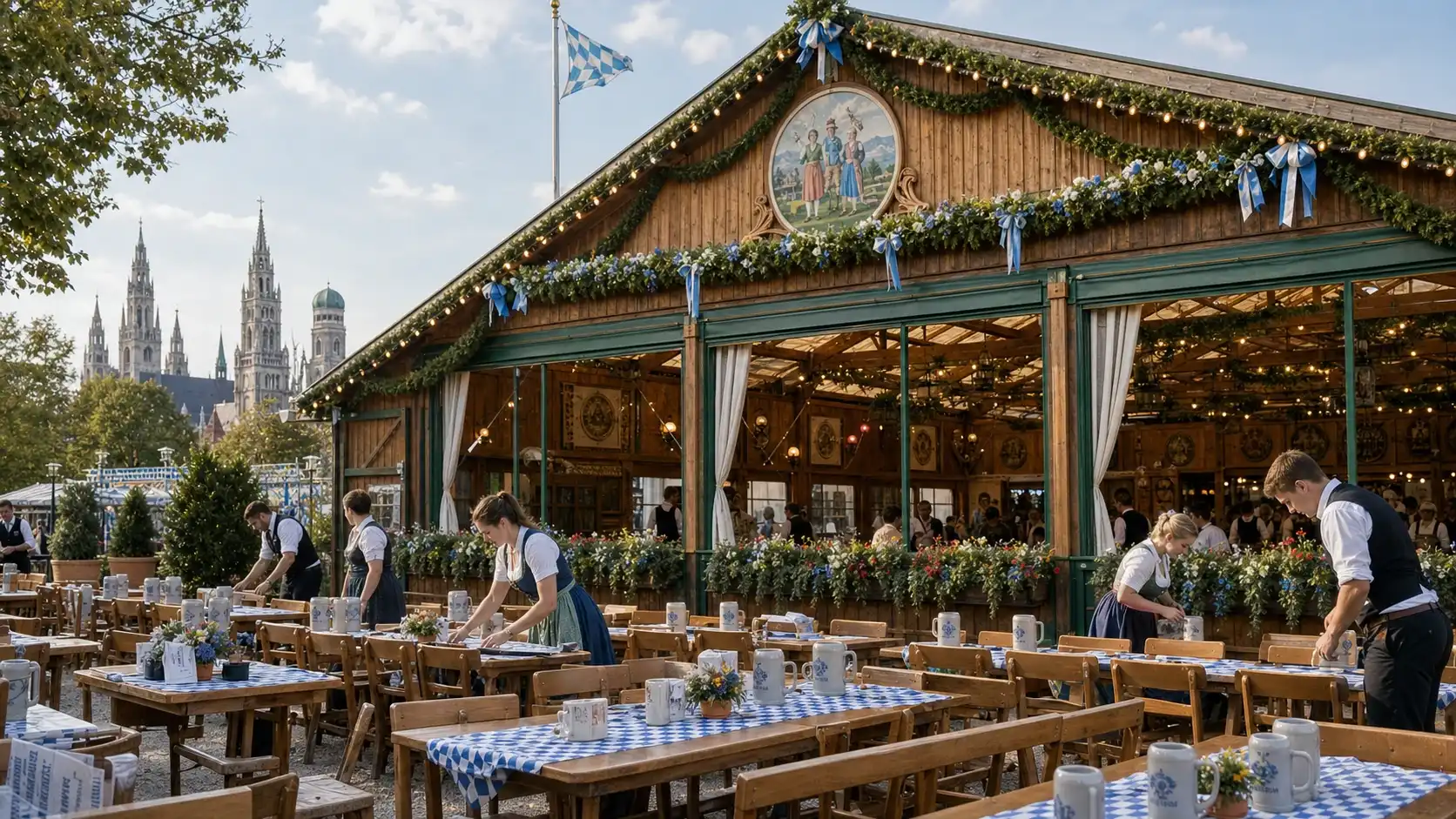
Munich belongs in an October guide because Oktoberfest is still running at the beginning of the month, not because the city becomes a shoulder-season bargain. The official Oktoberfest site lists the 2026 festival from September 19 through October 4 at the Theresienwiese. Hotels and trains around that final weekend should be treated as event inventory.
If you want the festival, I would book three nights in Munich and add four nights in Salzburg afterward. Munich provides the spectacle; Salzburg provides the exhale. Reserve a hotel with a simple U-Bahn or S-Bahn connection before worrying about a tent table, and avoid lodging that forces a late-night car journey after the transit system has already offered the sensible answer.
You can enter festival tents without converting the entire trip into a reservation project, but the experience needs deliberate planning. Read the current bag, opening-time, and reservation guidance in the Oktoberfest planning guide. If beer tents, brass bands, rides, and very large crowds sound like an obligation rather than a pleasure, skip Munich that weekend. Paying event prices to avoid the event is not sophisticated travel; it is a booking error.
What Really Changes After Summer
October is not summer with cheaper hotel rooms. The light, operating calendars, crowd patterns, and useful hours of the day all change. These differences should alter what you book and how much you attempt.
Daylight becomes part of the itinerary
In summer, you can lose an hour over lunch and still begin a scenic walk late in the afternoon. In October, that same delay can push a viewpoint, garden, or unfamiliar old-town walk into dusk. Put the outdoor priority first: the Alhambra grounds, Schönbrunn gardens, a Salzburg viewpoint, or Florence from above. Museums and long meals are better after the light begins to go.
This does not mean starting every day at dawn. It means refusing to schedule the one view you care about after two museums, a formal lunch, and a cross-city transfer. Check sunset for the actual destination and date, then work backward.
Rain changes the order, not necessarily the destination
A good October route contains places that become different in rain rather than useless. Bologna’s porticoes keep the city legible. Vienna’s museum collection can rescue more than one afternoon. Florence has churches, markets, and museums close enough to rearrange without crossing the region.
Carry a compact waterproof layer and build one movable indoor block into each city. Do not buy five timed museum tickets to manufacture certainty. One anchor reservation and two researched alternatives give you more control than an itinerary so rigid that a wet morning breaks it.
Seasonal transport and attractions stop being assumptions
Mountain lifts, lake boats, coastal ferries, gardens, and small seasonal restaurants do not share a universal closing date. Some run through October. Others reduce departures, close on certain weekdays, or finish for the year. A route can therefore be geographically possible and operationally foolish.
Check the actual operator, not a two-year-old listicle, before building a day around it. If the excursion has one daily return, treat that departure as the constraint. If a lift may close in high wind, know what you will do in town instead. For city-to-city rail, use the Europe train guide to understand operators and booking logic, then confirm the specific journey on the operator’s current timetable.
Event demand can erase the shoulder season
October hotel prices do not fall evenly across a continent. Munich during Oktoberfest, a city hosting a major congress, or a small town on a popular festival weekend can be expensive while another weekday city is comparatively easy. Search the official event calendar before concluding that a surprising hotel rate is normal.
This is especially important for small destinations with limited rooms. An event does not need to fill an arena to absorb the useful central inventory. If the event is not part of your trip, moving the stay by one night can matter more than changing hotels six times.
October can offer better value than summer, but “shoulder season” is not a coupon code. The largest savings usually come from choosing a sensible weekday and avoiding event pressure, not from sleeping far outside the city or accepting three inconvenient transfers. Compare the central room with one on a direct transit line, price the lost time honestly, and keep a small weather budget for a museum, a taxi in heavy rain, or flexible terms on a weather-exposed excursion.
Reservations matter, but fewer of them should control the day
Shoulder season reduces some queues; it does not abolish capacity. The Alhambra’s timed palace entry, a famous Florence museum, and a scarce direct train can still shape the trip. Book the things that are difficult to replace. Leave ordinary restaurants, neighborhood walks, and secondary museums flexible enough to respond to weather and energy.
That is the post-summer bargain. You receive more room to improvise, but you must check the few details that summer’s long hours and dense schedules allowed you to ignore.
My October Verdict
For a first October trip to Europe, I would book Bologna and Florence. The route is compact, the food feels inseparable from the season, and neither city becomes a consolation prize when rain arrives. Reserve the museum you care about, choose one good train between the cities, and leave enough room for a market, a long lunch, and a clear afternoon over the Arno.
Choose Seville and Granada instead if outdoor time matters more than autumn color. Choose Vienna and Salzburg if a cool morning, yellow trees, coffeehouses, and Alpine uncertainty sound like the point. Choose Munich in the first four days of October only when Oktoberfest is the reason you are opening the booking site.
What I would not book is a seven-day sampler of three countries. October already gives you contrast: warm stone and cool evenings, clear mornings and museum afternoons, busy event weekends and quiet weekday streets. Pick one route that uses those changes well. That is how Europe in October stops feeling like the compromised version of summer and becomes a trip worth choosing on purpose.