Quick Take
What you should know before you book
For a first trip, I would stay three nights in Monterosso if beach access, luggage, and an easy hotel base matter most. Choose Vernazza for the most dramatic village atmosphere, or La Spezia when value and wider Italy rail connections matter more than waking beside the coast. Two nights is workable; three gives you a weather margin and time to hike without turning all five villages into a checklist.
- Best first base: Monterosso for the broadest hotel choice, the only substantial beach, and the least punishing arrival with luggage.
- Best atmosphere: Vernazza for a tiny harbor and memorable evenings, with higher prices, stairs, and heavy midday crowds as the compromise.
- Best-value base: La Spezia for restaurants, useful hotels, and direct access to Italy's Pisa-Genoa rail line; the sacrifice is waking outside the five villages.
- Best trip length: three nights; use one day for Riomaggiore, Manarola, and Corniglia, and one for a hike between Monterosso and Vernazza when conditions allow.
In This Guide
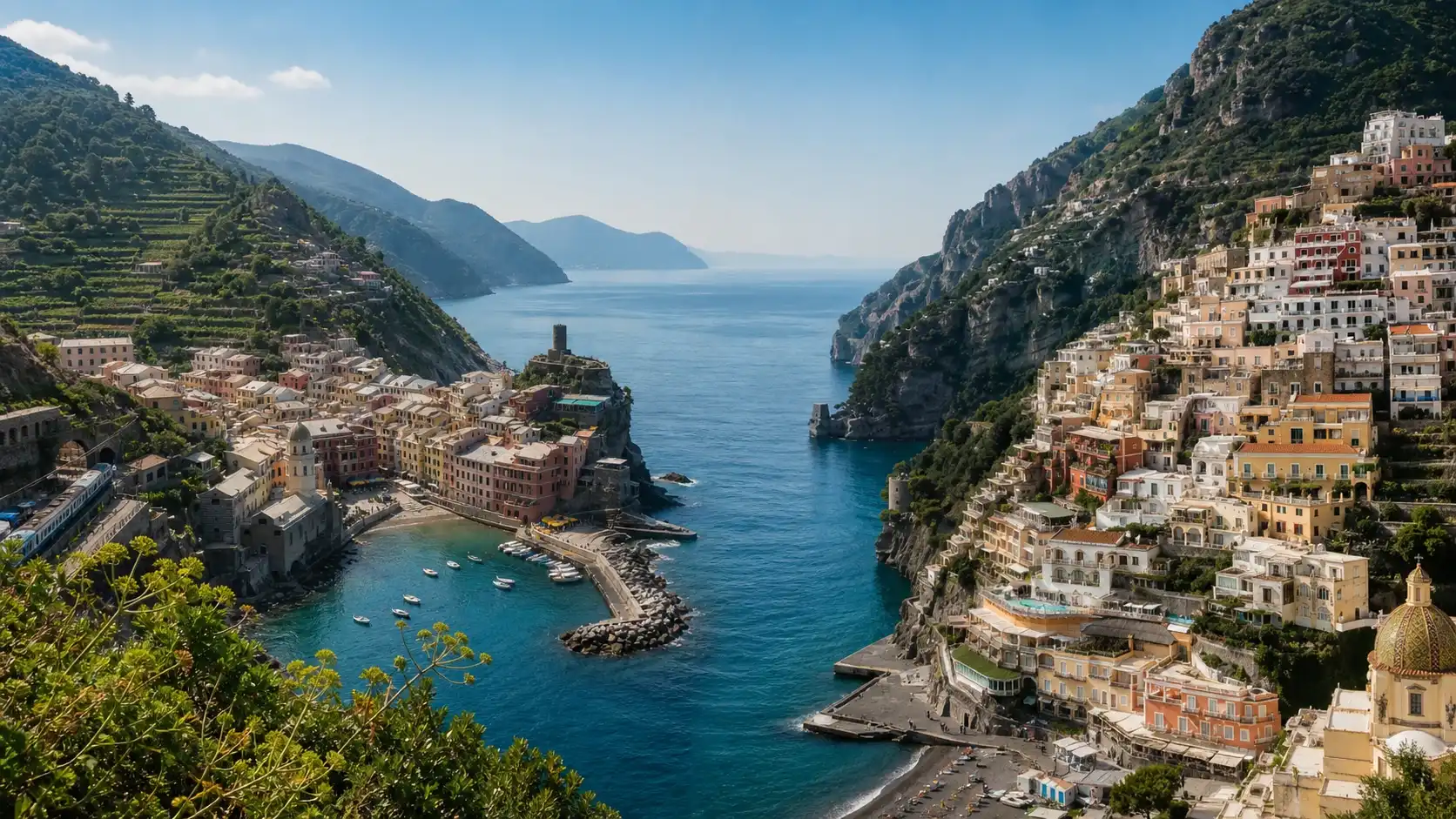
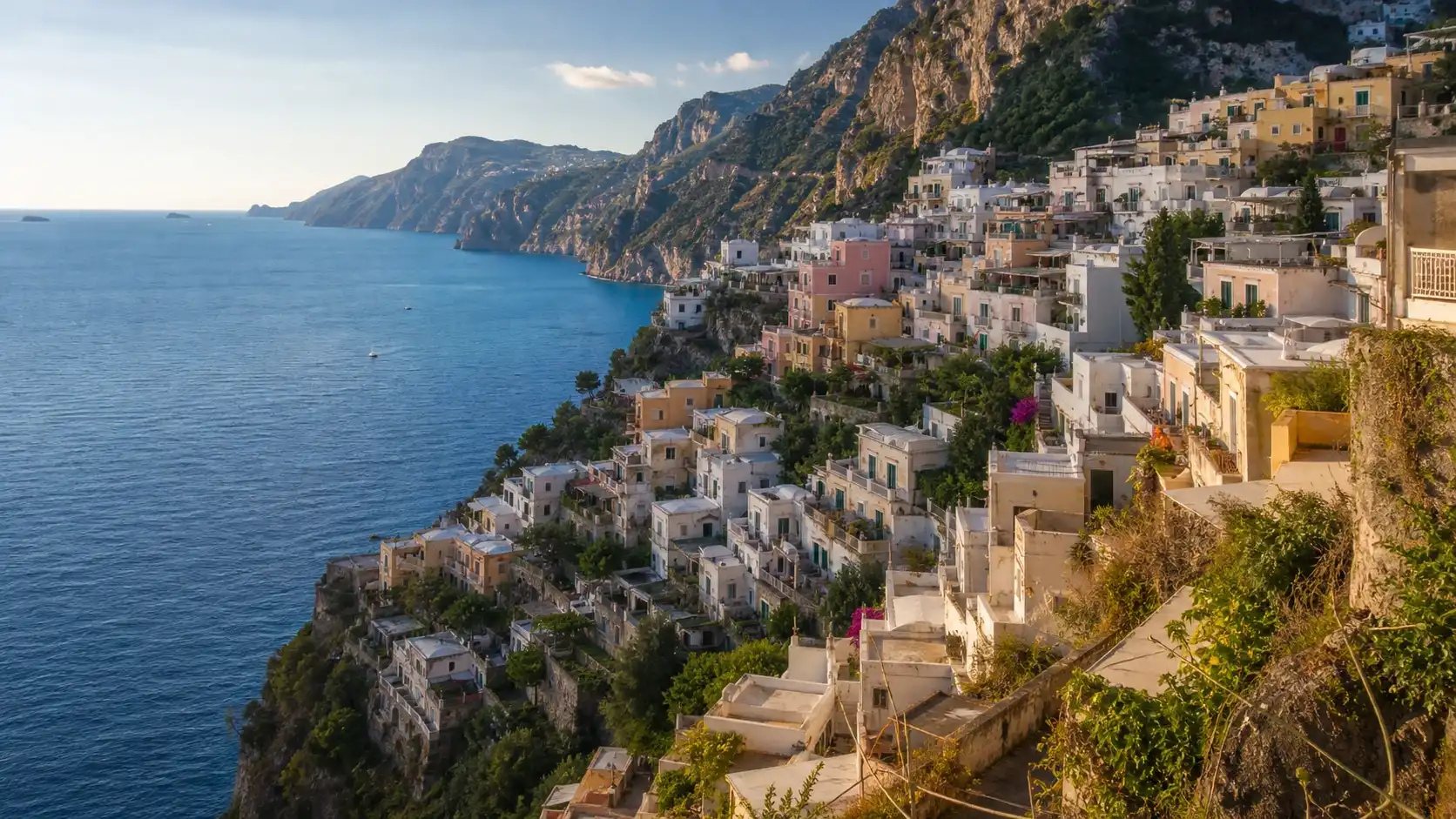
Cinque Terre is not a city. It is a national park and a chain of five small villages—Riomaggiore, Manarola, Corniglia, Vernazza, and Monterosso—pressed into the Ligurian coast between Genoa and Pisa. People come for harbors framed by tall painted houses, vineyards held above the sea by dry-stone walls, and footpaths where the next village appears around a headland.
The coast is every bit as beautiful as the photographs. It is also steep, crowded, and easy to rush. For a first trip, I recommend three nights in Monterosso: you get the easiest arrival, a real beach, and enough time to hike without making every train connection feel like an exam. This guide compares all five villages with La Spezia and explains the current card and trail rules. It also builds a two- or three-night plan that does not require collecting every harbor before lunch.
What Cinque Terre Actually Is
The name means “five lands,” but the landscape is what joins them. For centuries, people cut narrow terraces into slopes that fall sharply toward the Mediterranean, then supported those terraces with kilometers of dry-stone walls. The result is not untouched wilderness. It is a working cultural landscape of vines, olive trees, staircases, houses, rail tunnels, and footpaths. The national park describes about 4,000 residents spread across the five villages.
That distinction matters because Cinque Terre is best when you engage with the whole vertical place. If the trip consists only of stepping off a train, photographing a harbor, and stepping back on, the villages begin to blur into colorful versions of the same queue. Walk uphill until the laundry lines give way to vines. Order the fish that belongs to this coast. Stay for the hour when day-trippers leave and dinner tables replace camera positions.
You do not need to see all five villages. Three seen properly will tell you more than five visited at platform speed. I would make Monterosso and Vernazza non-negotiable, then choose Riomaggiore and Manarola together or Corniglia on its own according to your appetite for stairs.
Choose Your Base Before You Buy a Card
The hotel decision changes the entire trip. Stay in a village and you pay for the coast before breakfast and after dinner, when the lanes are quieter and the light has room to land. Stay in La Spezia and you trade that atmosphere for better value, easier luggage handling, more restaurants, and a station that connects directly to the rest of Italy.
For most first-time visitors, Monterosso is the best all-round base. It has the broadest accommodation choice, the only substantial beach, and more level ground than its neighbors. A rolling suitcase is still not a beloved object here, but in Monterosso it is less likely to become a personal enemy. The compromise is that it feels more like a small seaside resort and less like a tiny cliff harbor.
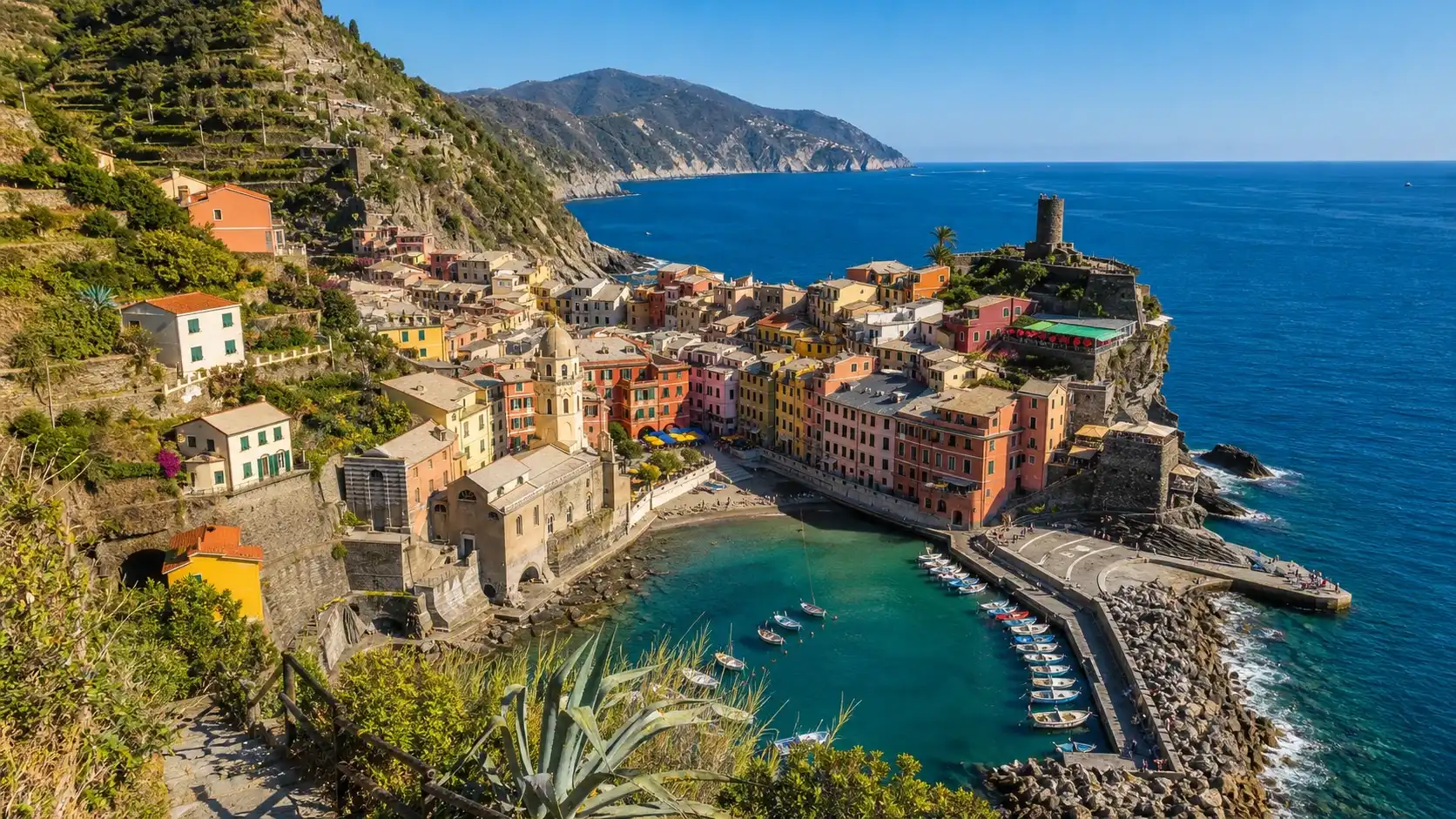
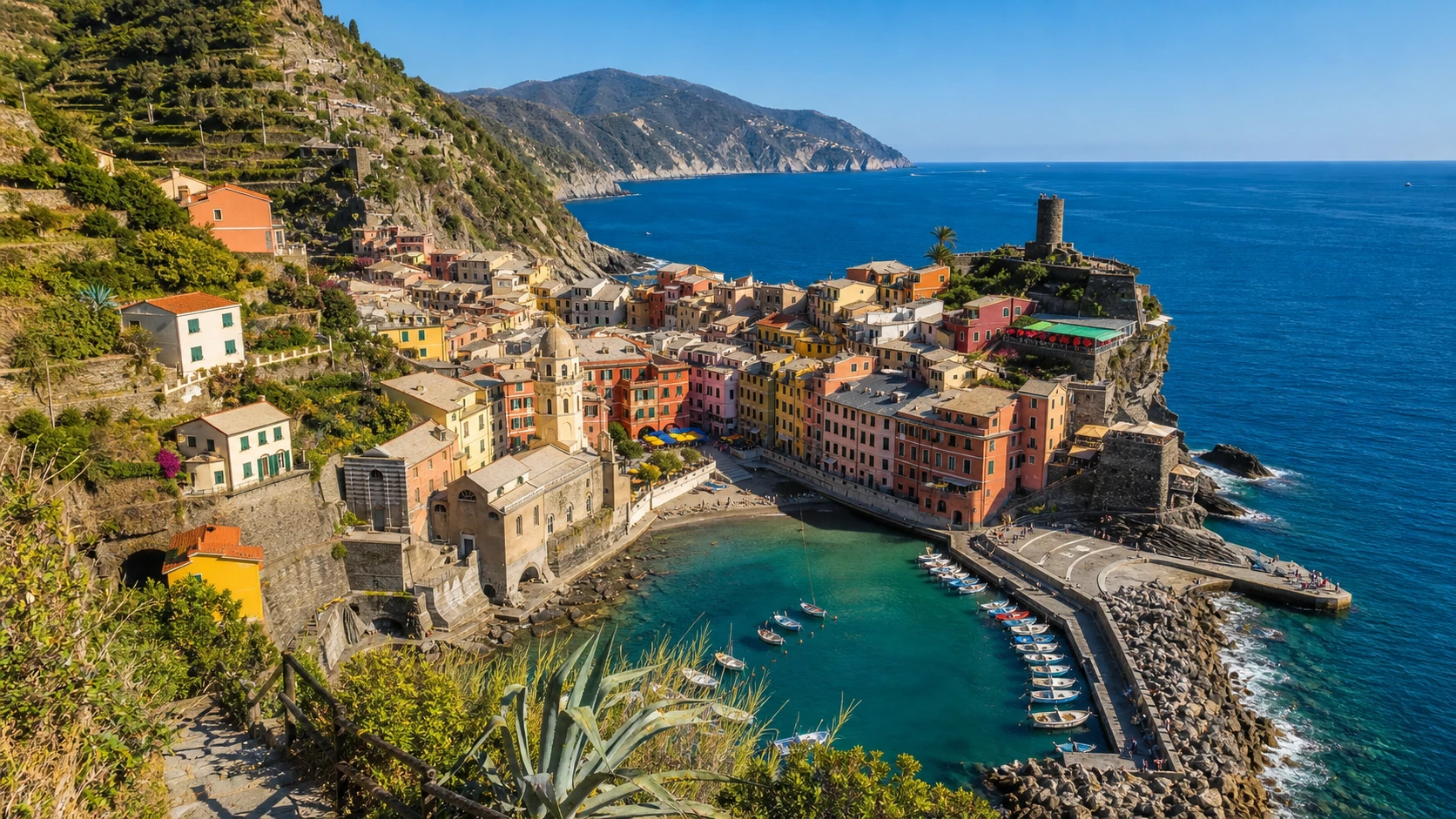
Choose Vernazza when the village itself is the reason for the trip. Its small harbor, church, castle tower, and tightly stacked houses create the most complete postcard scene. At breakfast and in the evening, that intimacy is wonderful. At midday, the same compactness concentrates everyone into a few lanes. Rooms are limited, stairs are common, and you should confirm exactly how far the accommodation sits from the station before booking.
Choose La Spezia when Cinque Terre is one part of a longer Italy trip, when room value matters, or when you want restaurants that are not arranged around a single harbor. Choose Corniglia only if quiet and a clifftop setting outweigh an inconvenient arrival. Manarola and Riomaggiore are both beautiful bases, but I would select them for a specific room or atmosphere rather than because they are automatically more practical.
Compare the Atmosphere Premium Before You Pay It
Price Monterosso or Vernazza against a hotel within an easy walk of La Spezia Centrale. The village premium buys quiet mornings and evenings; La Spezia buys space, choice, and a simpler connection to the rest of Italy.
The Five Villages, Honestly
Monterosso: the easiest place to stay
Monterosso is split between the newer Fegina side, where the station and broadest beach sit, and an older center reached through a pedestrian tunnel. This is where I would send a first-time visitor with luggage, children, swimming plans, or a strong preference for a conventional hotel. You can begin the exposed hike toward Vernazza early, return by train, and end the day with the sea a few steps away.
The warning is simple: do not book Monterosso expecting the most theatrical village. Its space is the benefit. If you want buildings stacked around a pocket harbor, Vernazza or Riomaggiore will make a stronger first impression.
Vernazza: the most memorable atmosphere
Vernazza’s main lane spills from the station toward a harbor barely large enough to contain its own popularity. The church sits at the water, fishing boats occupy the stones, and the castle tower gives the village a proper edge rather than a decorative backdrop. I would stay here for a romantic trip when the room budget can absorb the location and stairs are not a problem.
Arrive early or return near dinner. Between late morning and mid-afternoon, Vernazza can feel like a beautiful room with too many people standing in it. The village is not disappointing; the timing is.
Corniglia: the quiet clifftop exception
Corniglia is the only village without a harbor at its feet. The station sits below the village, and the famous Lardarina staircase climbs 377 steps to the center; a shuttle can spare your knees when it is running. Up top, the reward is a compact stone village, terraces, and a feeling of looking across the coast rather than up from the water.
I recommend Corniglia as a slow afternoon or a quiet base for confident walkers. I would not book it for a first visit with heavy luggage or a traveler who wants effortless evening movement. The calm is real because the inconvenience is real.
Manarola: the classic evening view
Manarola drops along one main lane toward a rocky swimming cove, with houses rising behind it and vineyards wrapping the slope. The celebrated view comes from the path on the opposite side of the harbor. Go late enough for the light to soften, but do not build the entire day around occupying one rail for sunset.
This is a strong choice for couples and photographers who accept stairs and small rooms. It is less convincing for beach time: people swim from rocks and concrete rather than a conventional strand. Pair Manarola with Riomaggiore because the two villages sit next to each other and the reopened Via dell’Amore now connects them under timed access rules.
Riomaggiore: the liveliest southern gateway
Riomaggiore is the first village north of La Spezia. Its main street climbs sharply above the station tunnel while a separate passage descends toward a tiny harbor framed by vertical houses. It feels energetic, compact, and more substantial than the single photograph usually suggests.
Stay here if you want quick La Spezia access and do not mind climbing home after dinner. Visit first thing if you are based elsewhere. The entrance to Via dell’Amore is beside Riomaggiore station, and the current route runs one-way from Riomaggiore to Manarola, so it makes sense to begin rather than end a south-coast morning here.
"Cinque Terre is not improved by winning a five-village speed run. Choose the three places whose differences you will actually notice."
When La Spezia Is the Better Base
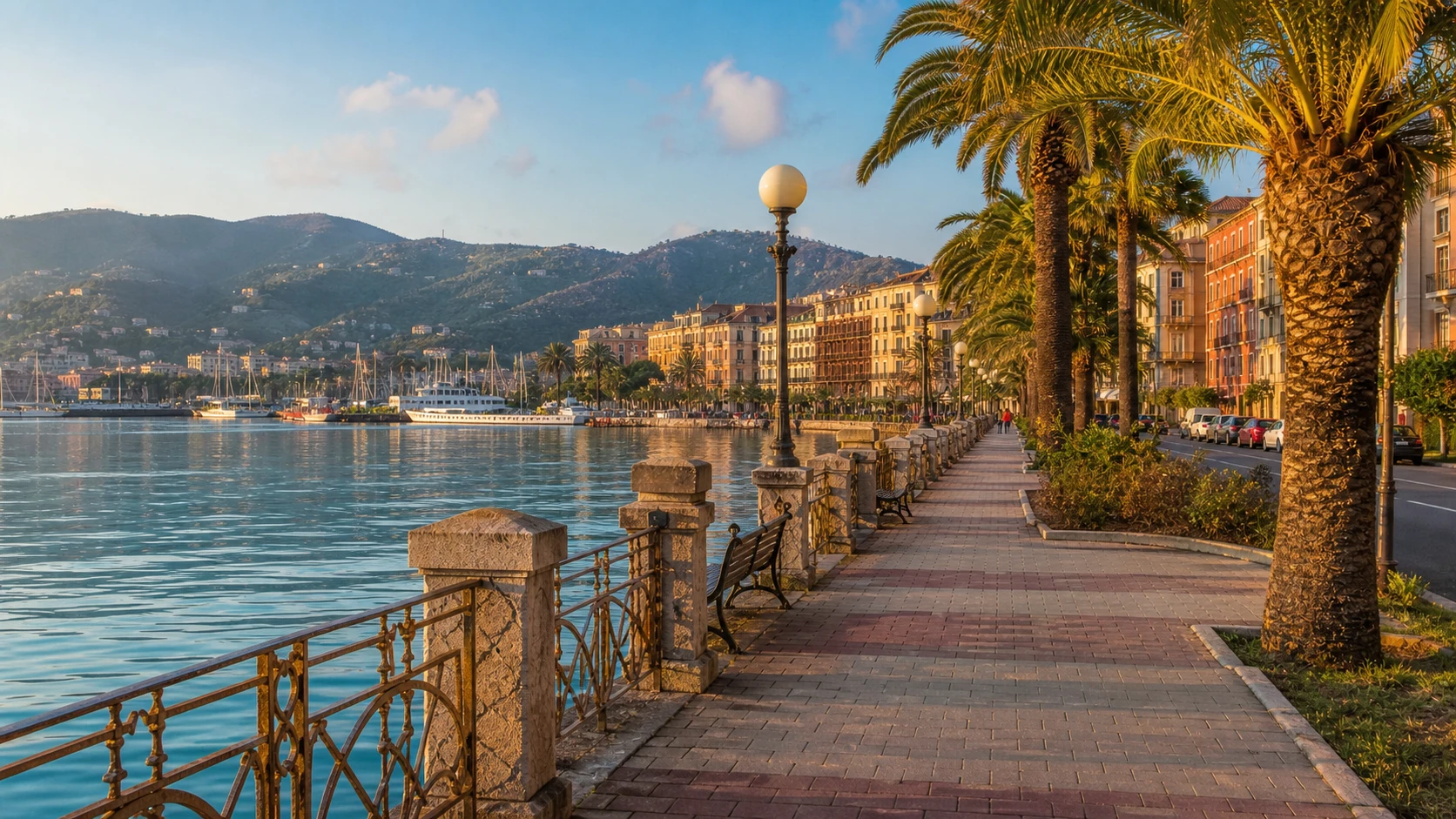
La Spezia sits just southeast of the five villages on the Gulf of Poets. La Spezia Centrale is on the Pisa–Genoa railway, which is why it works: longer-distance trains bring you to a proper city station, then short regional services enter the tunnels toward Riomaggiore, Manarola, Corniglia, Vernazza, and Monterosso. The park itself calls train the ideal way to arrive and identifies La Spezia as the line’s terminal and long-distance stop in its official visitor FAQ.
The practical advantages extend beyond the platform. You can find elevators, wider streets, supermarkets, pharmacies, and a larger restaurant market without hauling luggage up village stairs. La Spezia also gives you an easy exit toward Florence and Pisa or north toward Genoa. If the weather closes trails, you are in a functioning city rather than paying a harbor premium while staring at the rain.
What do you sacrifice? The first and last hours. You will not wake to church bells bouncing around a tiny harbor or walk home through lanes that have emptied after the last day-trippers. You also have to take a train before the coast begins, which makes an early start a decision rather than something that happens outside your door. I would choose La Spezia for value or a two-night stop inside a longer rail trip. For a three-night Cinque Terre-focused trip, I would pay more for Monterosso.
Trains, Cards, and Getting There
The train is not merely transportation here; it is the release valve that makes a steep coast manageable. In 2026, the seasonal Cinque Terre Express runs from March 14 through November 1. Trenitalia added 46 daily services between the La Spezia and Levanto corridor, producing roughly half-hour frequency during the operating season. Timetables still vary, and platforms can become intensely crowded, so check the actual departure rather than assuming a train will appear whenever you are ready.
For travel within the park corridor, 2026 single fares use demand bands: an adult direct trip is €5 on lower-demand dates, €8 on medium dates, and €10 on high-demand dates. The adult one-day Train MS Card is likewise banded at €22, €29.50, or €35. It includes unlimited second-class regional travel between La Spezia and Levanto plus park services. A card is not automatically cheaper. On a low-band day with two rail trips, individual tickets cost less; on a multi-village day, the card quickly becomes easier to justify.
The park simplified its system for 2026 to two main choices: Train and Trekking. Choose the Train Card when you expect several village jumps. Choose the Trekking Card when walking is the day’s spine and you need only limited rail. Both card types now include access to Via dell’Amore, but inclusion does not mean you can wander in at any time. A reservation is still required, entry is from Riomaggiore, and the 30-minute walk operates one-way toward Manarola in a selected time slot.
Buy from the official park or Trenitalia channel, then carry identification because the Train Card is named and non-transferable. If you are making only one or two hops, buy ordinary tickets and validate any paper ticket that requires validation. If you are arriving from outside the park, search the full origin-to-destination journey; the pricing rules differ from a trip entirely inside the Cinque Terre corridor.
Write down the villages you plan to enter by train. Compare those trips with the card price for your date's demand band. The card should solve a real movement problem, not become an expensive souvenir you purchase because the ticket machine made eye contact.
Which Trail Is Worth Your Morning
The trail between Monterosso and Vernazza is my first choice when it is open and the weather is sensible. It gives you the physical truth of Cinque Terre: stone steps, exposed slopes, vines, sea, and a first view of Vernazza that no train arrival can reproduce. Start early from Monterosso, carry water, and let the harbor be the reward at the end. In heat, that same walk can become a long argument with the sun.
The Vernazza–Corniglia section is another substantial hike, not a decorative promenade. The park’s guided 2026 itinerary lists about 1 hour 40 minutes of trail time, 269 meters of elevation change, and an expert-hiker classification for its program. Allow more time for photographs and congestion. Corniglia’s stairs still wait at the station end, so decide whether your knees want both the hike and the Lardarina in one day.
Via dell’Amore is different. It is a short, engineered coastal walk between Riomaggiore and Manarola, not a substitute for the rougher Blue Trail sections. Reserve it because it is beautiful, historic, and newly integrated into the 2026 cards. Do not present it to an eager hiker as the day’s great physical accomplishment.
Trail conditions can change after rain, heat, landslides, or crowd-control measures. The park reopened the Monterosso–Vernazza and Vernazza–Corniglia sections after temporary 2026 closures, but that is not a promise for your date. Check the official hiking map and notices on the morning you walk. Open shoes and smooth soles are prohibited on the trail network; proper hiking shoes, water, and a willingness to take the train instead are part of the plan.
What to Eat Beyond Pesto
Pesto belongs here, but it should not carry the entire meal. Order it with trofie or trenette, where the sauce can cling to the pasta instead of sitting politely on top. Focaccia is the correct train-platform lunch: salty, oily, portable, and far better than waiting until hunger forces you into the first menu facing a crowd.
Then look toward the sea and terraces. The park recognizes salted Monterosso anchovies as a traditional product, often served with olive oil, oregano, and garlic. Try them even if canned anchovies have made you suspicious; this is a local dish, not a punishment hidden on the appetizer list. Cinque Terre DOC white wine connects directly to the dry-stone vineyards above the villages. Sciacchetrà is the smaller, sweeter, more expensive passito made from grapes dried before pressing. Order a glass with dessert rather than buying an unresearched bottle because the label has a cliff on it.
I would plan one proper dinner in the village where you sleep and keep lunch simple. The harbor-view restaurant premium is easiest to resent at noon, when you are paying for a table surrounded by the same crowd you hoped to escape. A focaccia, fruit, and water create room for a better dinner after the lanes settle.
A Realistic Two- or Three-Night Plan
Three nights is the trip I recommend. On arrival day, check in and resist the urge to begin a five-village sweep. If you stay in Monterosso, walk between Fegina and the old town, swim if conditions allow, and eat there. If you stay in La Spezia, use the first evening for Riomaggiore after the busiest arrivals have begun leaving.
On the first full day, start at Riomaggiore with a reserved morning slot on Via dell’Amore, then continue into Manarola. Give the village time beyond the harbor viewpoint: climb into the upper lanes, look back at the terraces, and have an early lunch before the tightest midday crowd. Continue by train to Corniglia for the afternoon only if the stairs and slower pace appeal. Otherwise, return to your base and save your legs for the next morning.
On the second full day, hike from Monterosso to Vernazza when the official status, heat, and your footwear all agree. Eat in Vernazza, stay through the middle of the afternoon, and return by train. If the trail is closed or rain has polished the stone, take the train to Vernazza and spend the saved energy climbing to a legal viewpoint rather than trying to prove the weather wrong.
With two nights, choose one side of the coast. Arrival afternoon belongs to your base. Use the single full day for Monterosso plus Vernazza, with the hike if possible, or Riomaggiore plus Manarola and a reserved Via dell’Amore slot. Do not attempt the three-night itinerary at double speed. You will remember station tunnels better than villages.
The optional third night is not filler. It absorbs a wet morning, lets you move the hike, and gives the coast one evening when you are not checking tomorrow’s checkout time. If trails and atmosphere are the reason you came, that margin is worth more than adding another one-night stop elsewhere in Italy.
Timing and Costs
Late spring and early autumn offer the best balance for most travelers, but no month guarantees empty lanes or open trails. July and August bring swimming weather, longer days, exposed heat, and the heaviest pressure. The park specifically warns that the Monterosso–Vernazza–Corniglia trail sections have limited shade and advises avoiding the hottest hours during heat events. In cooler or wetter months, the trade changes from heat to fewer services and a greater chance that sea or trail plans will move.
Book accommodation first, especially for a village stay. Exact room prices age too quickly to print honestly, so compare your dates rather than relying on a generic “shoulder season” range. Price the room in Monterosso or Vernazza against a La Spezia hotel near Centrale, then decide what dawn and dusk are worth to you. A cheap La Spezia room across town is not a bargain if every early train begins with a taxi.
Transport is more predictable. Budget €5–€10 per adult for each direct park-corridor train in the 2026 Express season, or €22–€35 for a one-day adult Train Card according to the demand band. Add the current Trekking Card or card-inclusive trail access when you intend to use the paid Blue Trail sections. Boats are a separate, weather-dependent pleasure rather than the backbone of the trip; buy after checking the sea and current operator schedule.
Food can remain reasonable if breakfast and lunch do not both require a harbor view. Spend deliberately on one dinner, local anchovies, and a glass of regional wine. Save money with focaccia and water during the movement-heavy part of the day. Cinque Terre becomes expensive when every ordinary need is purchased at the most photographed corner.
My Cinque Terre Verdict
For a first visit, I would book three nights in Monterosso and hike to Vernazza on the first safe morning. Use the other full day for Riomaggiore and Manarola, add Corniglia only when its quiet clifftop setting sounds more appealing than another harbor, and let the train connect the pieces without turning it into the main event.
Choose Vernazza instead when atmosphere matters more than room value and stairs. Choose La Spezia when this is a shorter stop in a longer Italian rail trip. What I would not do is arrive from Florence at noon, race through all five villages, and leave that evening claiming Cinque Terre is beautiful but overrated. That itinerary has reviewed a timetable, not a coast.