Quick Take
What you should know before you book
Choose Venice if you want the more irreplaceable place and will sleep in the historic city. Choose Florence if you want a fuller three-night break built around Renaissance art, Tuscan food, and easy onward rail. If you have six nights, give each city three; a third base would make the route worse.
- Best for a singular first impression: Venice, but only when you stay overnight in the historic city.
- Best all-round three-night city: Florence for art, food, neighborhoods, and easier unplanned time.
- Most important booking: St. Mark's or the Doge's Palace in Venice; the Uffizi or Accademia in Florence, not every headline sight at once.
- Best combined route: three nights in Florence and three in Venice on the direct high-speed rail corridor.
In This Guide
At 07:00, Venice can be a narrow Dorsoduro canal holding a clean reflection while delivery boats work and shutters open. Florence wakes differently: bells over terracotta roofs, scooters around the historic center, and market counters preparing lunch before the museum queues have finished forming. That morning difference is the decision hiding underneath the famous names.
Venice, built across islands in a lagoon in northeastern Italy, is the more singular trip. Florence, inland in Tuscany, is the more generous three-night city. I would choose Venice if you want to experience a place that cannot be substituted and you will actually sleep there. I would choose Florence for Renaissance art, Tuscan food, a more forgiving daily rhythm, and easier onward travel. Ahead, I will show what earns three nights in each, where to stay, which reservations matter, what the current official fees look like, and when booking both cities improves the route.
The Choice Is Singularity or Generosity
Venice wins on singularity. Water changes how you arrive, move, hear the city, and understand distance. The route from Venezia Santa Lucia station does not begin with a taxi rank; it begins with the Grand Canal and the choice between walking bridges with luggage or boarding a vaporetto. A quiet fondamenta at dawn and Piazza San Marco at noon barely feel like the same destination. That variation by hour is why staying overnight matters so much.
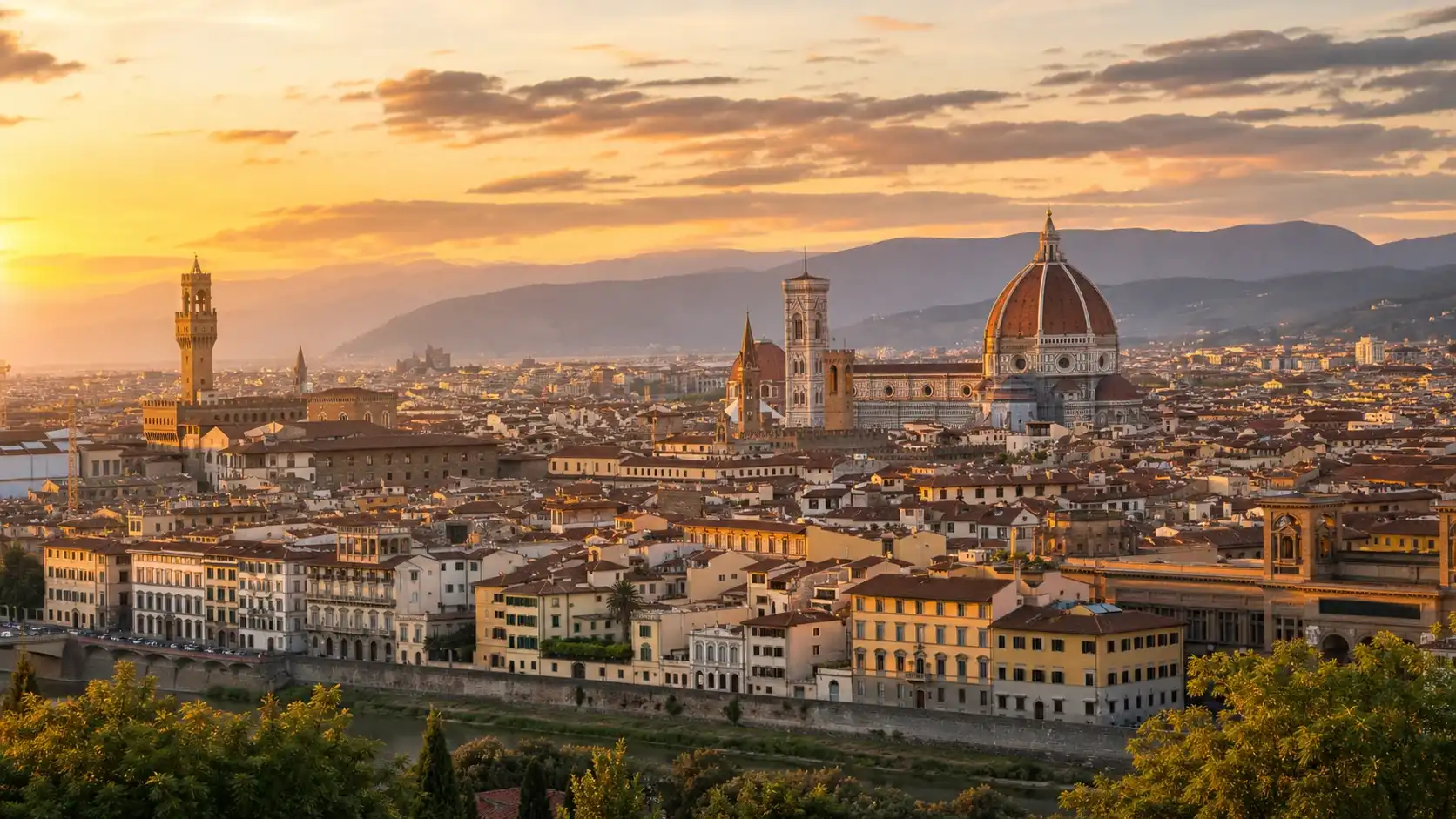
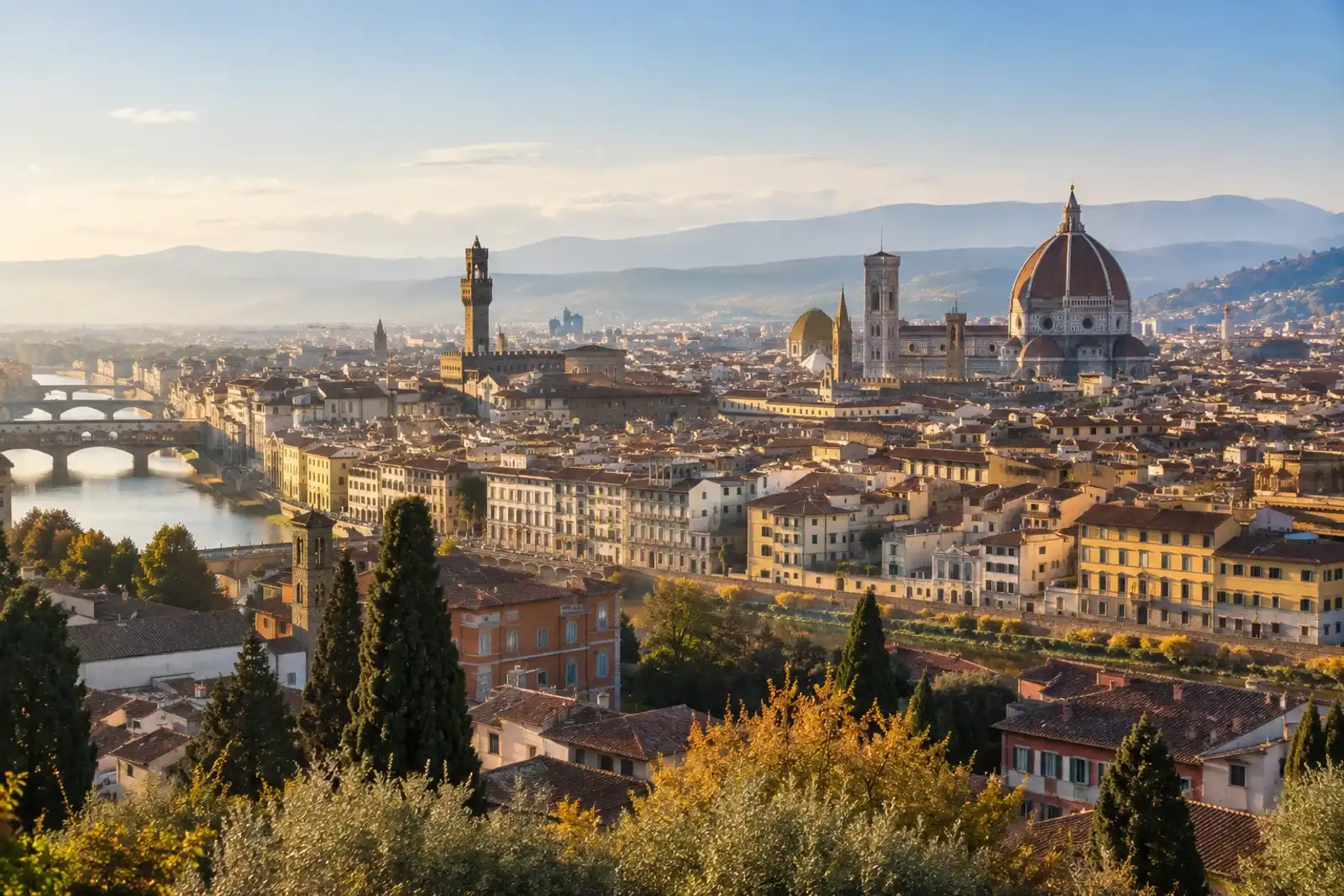
Florence wins on generosity. The Duomo, Uffizi, Palazzo Vecchio, Santa Croce, Sant’Ambrogio, Oltrarno, and the climb toward San Miniato fit into a compact city without making every hour a negotiation with water transport or crowd tides. When museum fatigue arrives, Florence gives you a market lunch, a neighborhood walk, a leather workshop window, or an evening across the Arno. Bad weather can rearrange the day without breaking the trip.
That does not make Florence ordinary or Venice exhausting by definition. It means the cities spend your attention differently. Venice asks you to accept inconvenience in exchange for a setting that no other Italian city can deliver. Florence gives you more ways to build a satisfying day, but its famous center can become a Renaissance checklist if every block exists only to reach the next reservation.
My decision test is simple: which city do you want before breakfast? If the answer is empty canals, stone steps, and lagoon light, choose Venice and stay in it. If the answer is a city where art, food, streets, and an unplanned afternoon share the day more evenly, choose Florence.
"Venice is the more irreplaceable place. Florence is the easier city to enjoy generously for three nights."
Choose Venice for the Place Itself
Venice earns three nights by changing character after the day-trip peak. Give one morning to San Marco: the Basilica’s gold, the Doge’s Palace courtyards and state rooms, and the waterfront before the square turns into a slow-moving negotiation. The official Basilica ticket office sells timed entry, and worship or special events can still affect access. The Doge’s Palace official site lists current hours and tickets. Book one of those first, then shape the other around it.
Do not spend the rest of the stay orbiting the same square. Dorsoduro gives you broad canals, quieter edges, the Accademia area, and a route toward Punta della Dogana. Cannaregio feels more residential once you move beyond the station corridor. Castello stretches east from San Marco into streets where laundry, boats, churches, and neighborhood bars carry more of the argument than another souvenir shop.
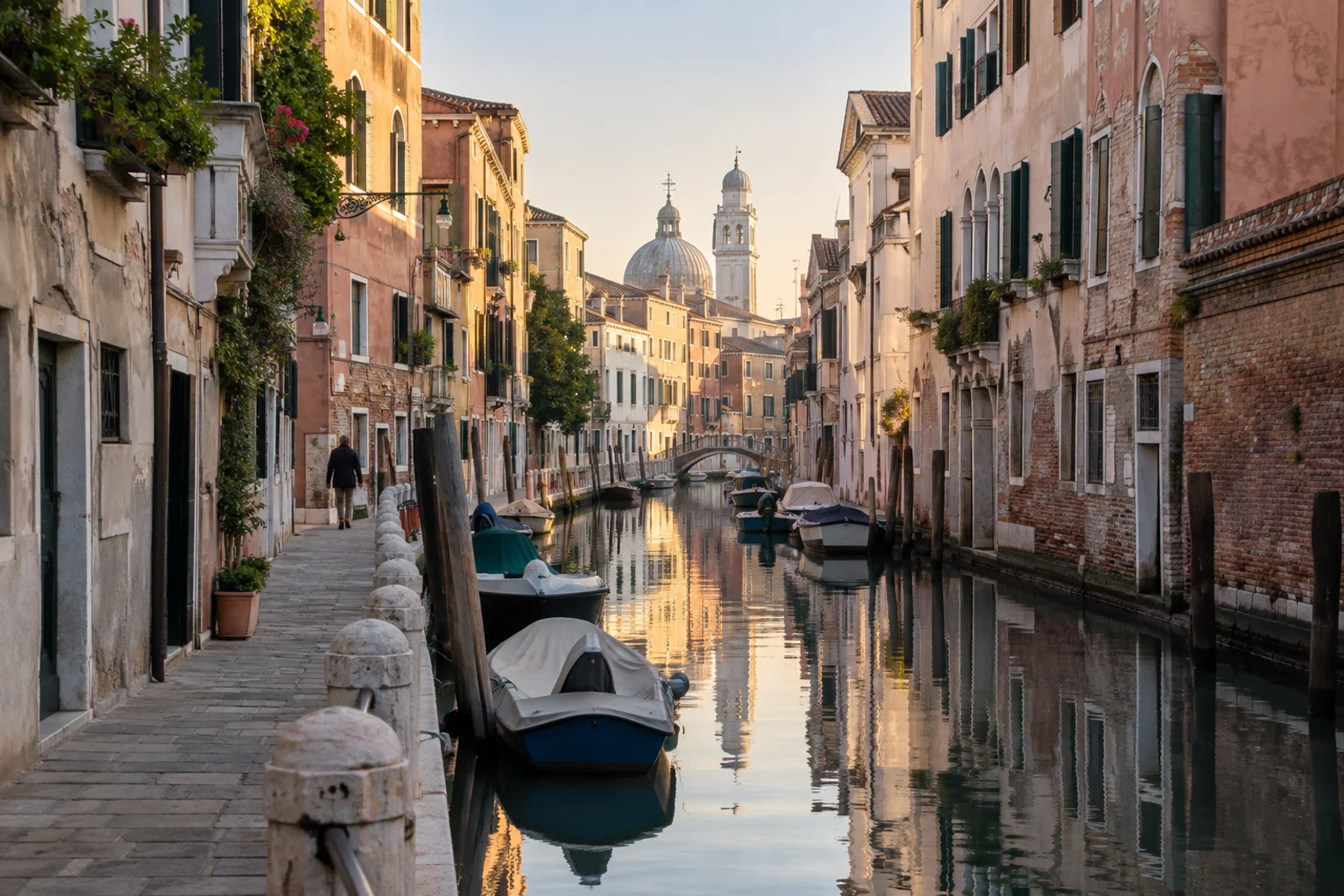
I recommend staying in Dorsoduro for a first visit that balances access and calm, or Cannaregio if evenings and a more lived-in atmosphere matter more. Mestre can reduce the room price, but it is not the same product. A mainland bed removes the easy dawn walk and requires a timetable check after every late dinner. If Venice is already your one chosen city, saving a little while surrendering its best hours is an odd bargain.
Three nights fill naturally: an arrival evening without a monument target, one San Marco and Castello day, one Dorsoduro day, and a Cannaregio or lagoon-edge morning before departure. That is enough time to get lost without pretending every wrong turn is profound. It is also enough to see why a rushed day trip produces such polarized opinions: visitors often meet Venice at its busiest, most expensive, and least subtle.
Prioritize the Basilica or Doge’s Palace, one long neighborhood walk, and at least one early or late hour with no reservation. Skip the gondola if the price matters more than the ritual; a vaporetto ride on the Grand Canal provides movement and views without asking you to treat transport as theater. Venice is famous and still worth it. The warning is about timing, not the place.
Choose Florence for a Fuller City Break
Florence earns three nights because the city keeps working after the masterpiece quota has been met. The Duomo rises above nearly every first walk, but the better trip is not a relay between the dome, David, and Botticelli. It is the change from a Uffizi morning to lunch near Sant’Ambrogio, from a crowded central street to an Oltrarno workshop, and from late light on the Arno to the climb toward San Miniato al Monte.
Choose one major museum reservation first. The Uffizi’s official ticket page lists a €25 same-day full ticket and €29 advance ticket in 2026, with a later-entry discount after 16:00. The Accademia’s official site lists full admission at €20 and strongly recommends reservations because unreserved waits can be long. The Uffizi deserves the longer art block; the Accademia is the more focused David decision. Booking both back-to-back on the same day may look efficient, but efficiency is not the reason to visit Florence.
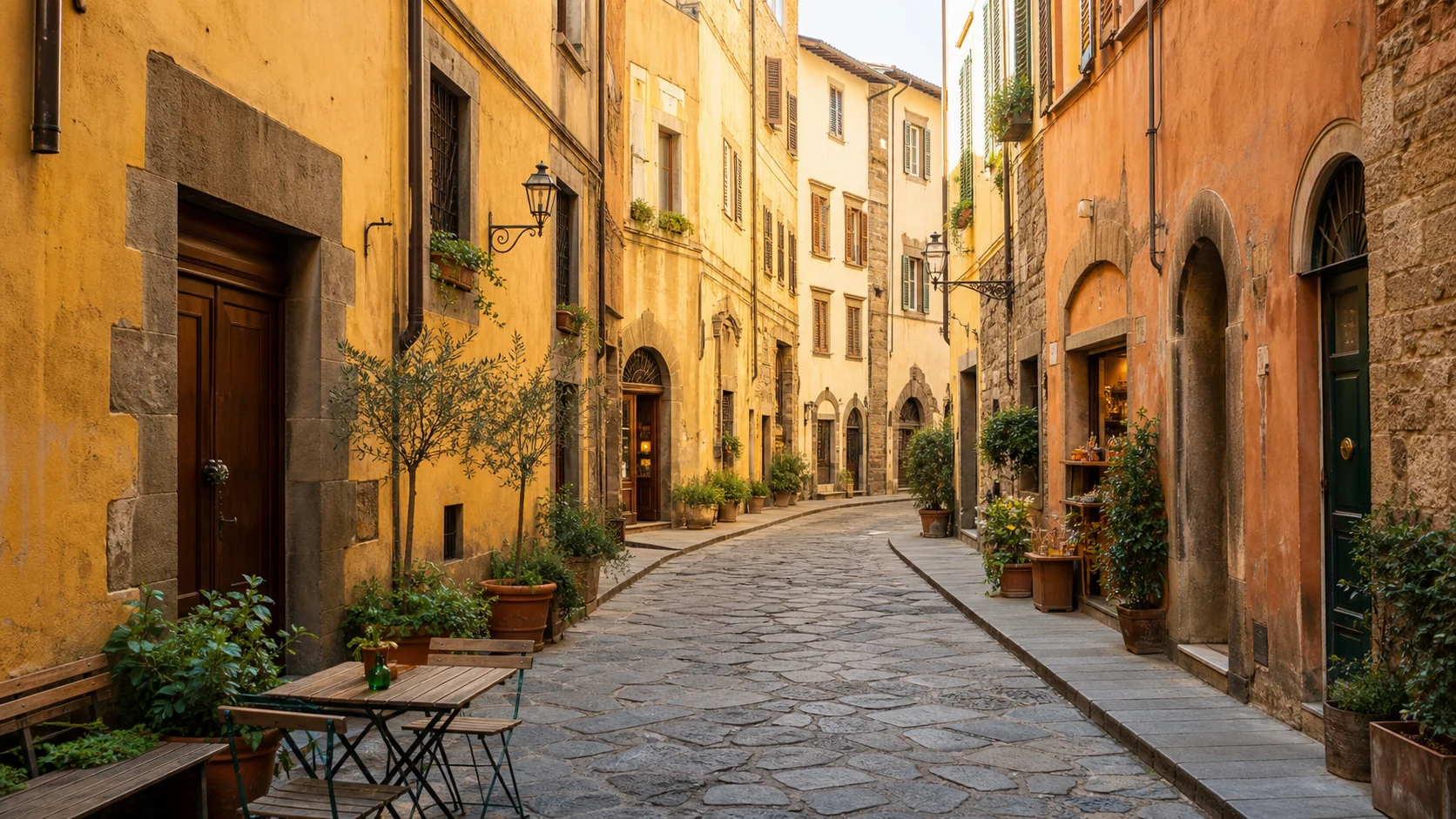
For a rail-heavy Italy route, stay near Santa Maria Novella. You can walk into the historic center while keeping arrival and departure simple. For more evening texture, Sant’Ambrogio puts a market, local streets, and good eating within reach without exiling you from the major sights. Oltrarno suits travelers who would rather cross the Arno for museums than cross it for dinner. A room beside the Duomo is not automatically a mistake, but paying the highest central premium to hear rolling luggage at dawn is not a cultural experience.
The three-night rhythm is comfortable: arrive, walk the center, and eat without a ticketed objective; give the next day to the Uffizi and Oltrarno; use the third for the Accademia or Bargello, Sant’Ambrogio, and San Miniato. If another church, palace, or museum calls, there is room. If your appetite for painted saints quietly expires, there is also room for ribollita, lampredotto, a long aperitivo, or simply doing less.
Florence is the better choice for travelers who want art but not only art, food that organizes the day, and a city that opens naturally into a longer Tuscany route. The warning is saturation. Renaissance importance arrives so frequently that another gilded room can become wallpaper. Choose fewer interiors and let the streets do some work.
Costs and Reservations
Neither city is a cheap break, and hotel dates will move the total more than a few euros of museum difference. Venice usually charges more for the privilege of staying where the experience is strongest. Florence makes it easier to find a useful central base and build large parts of the day on foot. The budget question is therefore not simply which room is cheaper. It is what the room location buys back in time and atmosphere.
| Decision | Florence | Venice |
|---|---|---|
| Best value from location | Santa Maria Novella for rail; Sant’Ambrogio for evenings | Dorsoduro or Cannaregio inside the historic city |
| Headline booking | Uffizi or Accademia | St. Mark’s Basilica or Doge’s Palace |
| Transport pressure | Low; most central days work on foot | Higher; bridges, luggage, and water transport affect the plan |
| Cost trap | Stacking museums and eating on the busiest central streets | Saving on a mainland hotel, then losing the quiet hours that justify Venice |
Venice’s official rules deserve a live check, not an old blog post. The city’s Access Fee portal states that the 2026 trial ended after July 26 and that any measure for later years requires a further city decision. Do not assume a 2026 calendar or price applies to a future trip. Check the portal once dates are fixed. Overnight guests were treated differently during the trial, but future procedures should also be verified rather than inherited from stale advice.
For water transport, the official ACTV fare page lists a €25 Venezia daily pass in the current integrated fare system. That can make sense on a day with several boat journeys. It is poor value when your plan is mostly a long walk and one ride. Venice rewards grouping movement by area; Florence rewards choosing a base that lets you walk until the next rail day.
My booking order would be hotel first, then one headline sight, then the intercity train if you are combining them. Anything beyond that should earn its fixed hour. A short Italy trip should not arrive preloaded with so many timed entries that lunch becomes an operational risk.
When Florence and Venice Both Fit
Florence and Venice make a coherent six-night route when each receives three nights. Trenitalia’s official Frecciarossa network places Venice, Padua, Bologna, Florence, Rome, Naples, and Salerno on the same high-speed corridor. The transfer is direct enough to support the pair without turning the middle day into airport choreography.
Give Florence an arrival evening, a major-art day, and a second city day that reaches Sant’Ambrogio, Oltrarno, or San Miniato. Give Venice a first lagoon evening, a San Marco morning, and a full neighborhood-led day before departure. Those are not indulgent allocations. They are what allow the cities to become more than their most photographed square and most famous museum.
A third base inside the same six nights makes the route worse. Bologna looks temptingly close. Rome is famous enough to make restraint feel irresponsible. Neither changes the arithmetic: another checkout, another arrival, and at least one city reduced to its busiest surface. Add Bologna or Rome when the total trip grows, not because the rail map makes every station look collectible.
If you only have three nights total, choose one. Do not sleep in Florence, race to Venice for the day, and call the comparison settled. You will have compared a full city break with a peak-hour sample. If you must see Venice from a Florence-based route, treat that as a glimpse and keep expectations honest; the early and late city will remain missing.
The pair works especially well because the experiences contrast. Florence gives dense art, terrestrial streets, markets, and Tuscan appetite. Venice gives water, disorientation, reflected light, and the mild inconvenience of a city that refuses to behave like the mainland. Three nights in each preserves that contrast. Another stop mostly preserves your ability to say you were there.
Florence vs Venice: The Verdict
Choose Venice if the trip needs one place that feels impossible to replace. Stay inside the historic city, wake before the day-trip peak, reserve St. Mark’s Basilica or the Doge’s Palace, and let Dorsoduro, Cannaregio, or Castello carry the hours between famous sights. Venice is less convenient and more vulnerable to poor timing. That is not a reason to avoid it; it is a reason to do it properly.
Choose Florence if you want the stronger all-round three-night city. Reserve the Uffizi or Accademia, stay near Santa Maria Novella or Sant’Ambrogio, and protect enough open time for food, streets, Oltrarno, and the view from San Miniato. Florence asks less logistical patience and gives you more ways to recover when the art becomes too much.
If the answer is still unclear, return to the morning. Choose Venice for the canal you want to see before breakfast. Choose Florence for the day you want after the museum. Then make one official reservation and stop planning long enough to want the trip.