Quick Take
What you should know before you book
Salzburg is best as a three-night stay: arrive in time for an evening along the Salzach, give the fortress and Old Town one clear morning, use a second city day for Mirabell, Mozart, and Mönchsberg, then keep the regional outing flexible for the weather. Stay in Andräviertel for the best balance of station access, food, quiet, and walkability.
- Best stay: three nights, with two distinct city days and one flexible regional or weather-proof half/full day.
- Best base: Andräviertel for station access and local life; the Old Town for atmosphere after day-trippers leave.
- Best first booking: a refundable central room, followed by the specific Mozart museum or concert you would regret missing.
- 2026 reality: overnight guests receive the Guest Mobility Ticket, while a Salzburg Card costs €35-49 depending on season and duration.
In This Guide
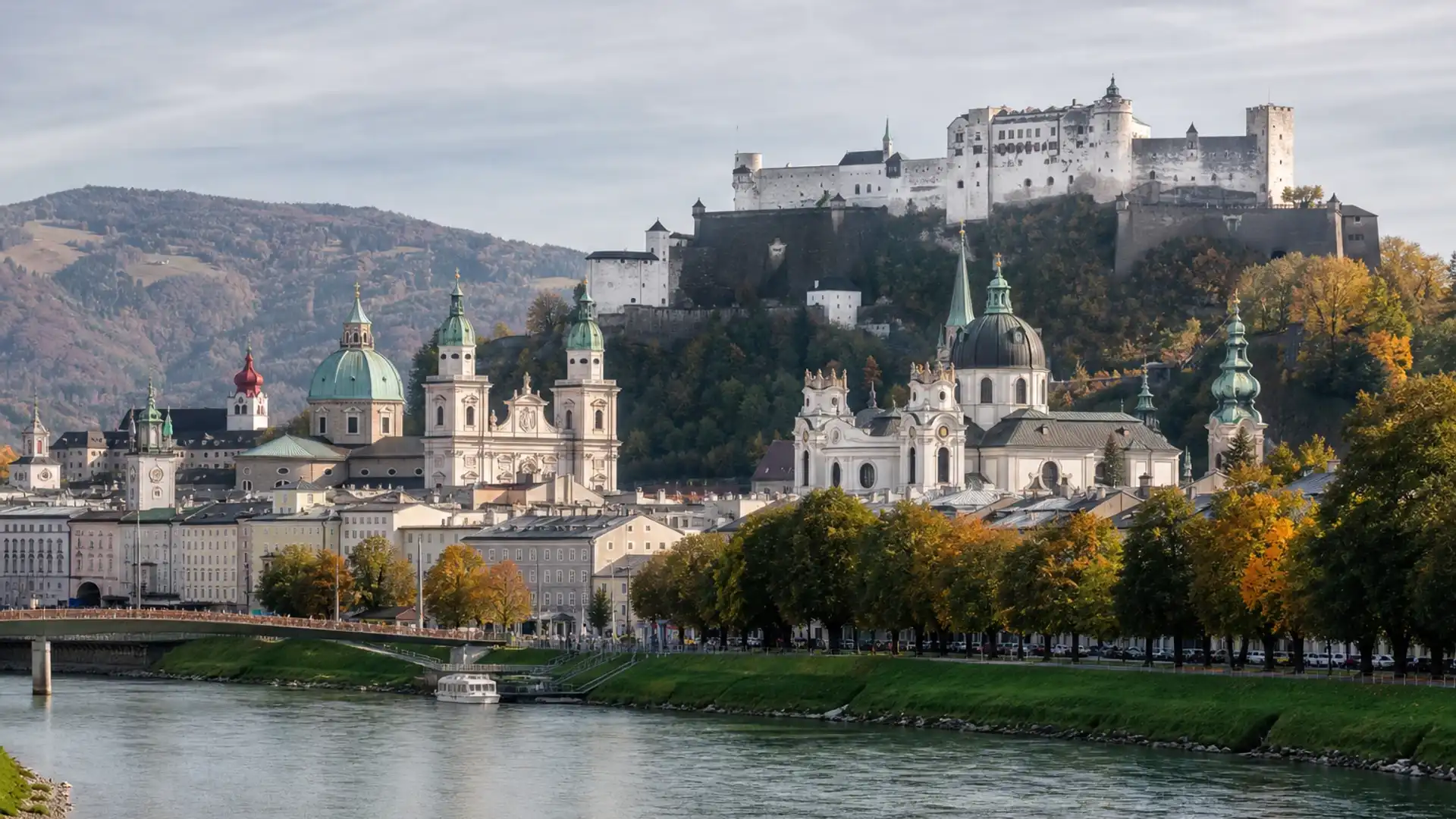
Salzburg is a small Austrian city near the German border, set along the Salzach with Hohensalzburg Fortress above the Old Town and the Alps close behind it. That geography is the reason to come. Church domes, steep lanes, wooded ridges, music history, and mountain weather all fit inside one compact stay. I recommend three nights, based in Andräviertel or the Old Town, with two different city days and one regional outing kept flexible for clear skies. This guide shows how to pace the fortress, St. Peter’s, Mirabell, Mozart, and Mönchsberg; where to stay; when the Salzburg Card pays; and which excursion is worth the time. Book a refundable central room first, then reserve only the museum, concert, or excursion you would genuinely hate to miss.
Why Three Nights Changes Salzburg
A rushed visit usually meets Salzburg at its busiest. Coaches arrive, Getreidegasse tightens into a slow-moving queue, and the same few Mozart storefronts absorb everyone at once. The city becomes easier to understand before breakfast and after dinner, when Domplatz has space for footsteps and the river reflects the lit fortress without a tour group between you and the view.
Three nights in Salzburg earns an arrival evening along the Salzach, one substantial day from Hohensalzburg through the Old Town, and another day for Mirabell, a chosen Mozart museum, and the Mönchsberg ridge. The remaining daylight can support Wolfgangsee, Untersberg, Hellbrunn, or an indoor alternative when cloud erases the mountain views. Salzburg’s official 72-hour itinerary makes a similar case through the fortress, churches, museums, city mountains, and nearby region.
Keep the regional day movable. Alpine weather can hide the entire horizon by breakfast and reveal it after lunch. A rigid excursion ticket may force you toward an expensive gray view while the city museums, coffeehouses, and churches are doing exactly what rainy-day Salzburg needs. Reserve a refundable room, protect the fixed cultural booking, and let the forecast decide the landscape.
Another hotel stop improves the trip only when you have enough time to experience a genuinely different base. Inside this three-night plan, moving to Hallstatt consumes the flexibility Salzburg gives you. Stay put, use the evening, and make the lake district an excursion rather than a luggage exercise.
Start With the Fortress and Old Town
Give the first clear morning to Hohensalzburg. From the fortress, Salzburg stops looking like a pile of famous names and becomes a readable place: the Salzach divides the historic center from the right bank, green domes gather below, Mönchsberg runs west through trees, and the mountains explain why the weather matters. Take the funicular if you want to save your legs for the ridge walk later; climb when the ascent itself sounds appealing.
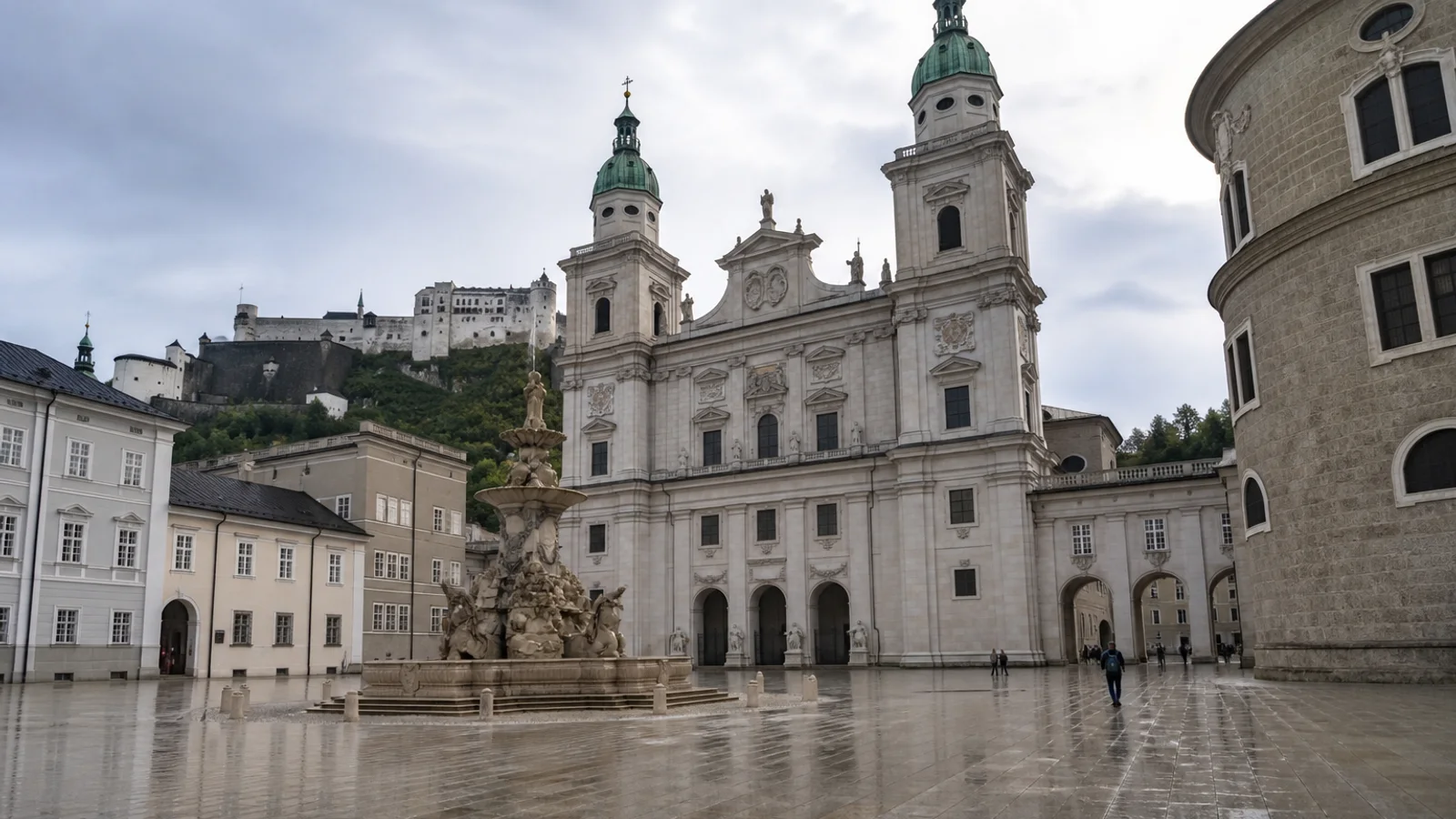
Descend toward Kapitelplatz and Domplatz, then enter Salzburg Cathedral before the midday groups compress the square. Continue into St. Peter’s cemetery, where dark iron markers, cliff-side arcades, and the abbey complex give the Old Town a quieter register. I would protect this sequence ahead of Getreidegasse because it moves from the city’s broadest view into its oldest spaces without turning the morning into a souvenir route.
Getreidegasse is still worth walking. The iron guild signs, narrow passages, and tall medieval plots are distinctive even when the retail mix feels more international than local. The warning is simple: do not let the lane decide lunch by trapping you at the nearest menu board. Step into the passages, cross toward quieter streets, or continue to the market stands around Universitätsplatz when they are operating.
Choose one major paid cultural experience for this day. The fortress can be enough. If Mozart is central to the trip, keep his Birthplace for the second city day instead of stacking it after a long morning. The action is to decide what you want to remember: the military and civic view from above, the religious center below, or a detailed music museum. Buying every recognizable ticket rarely produces a better Salzburg.
Mirabell, Mozart, and the Right Bank
The second city day should begin across the river. Mirabell Gardens opens the view back toward the fortress with clipped hedges, marble figures, and a formal axis that makes Salzburg appear almost suspiciously well composed. Go early enough to see the garden rather than a chain of posed photographs, then continue into Andräviertel, where ordinary apartment blocks, bakeries, cafés, and the weekly Schranne market add a useful counterweight to the Old Town.
This is also the day to make a deliberate Mozart choice. Mozart’s Birthplace on Getreidegasse focuses on the family, the rooms where he was born, and objects including his childhood violin. The International Mozarteum Foundation says a visit takes about one hour; 2026 adult admission is €18, or €25 for a combined Birthplace and Residence ticket. The Birthplace is the stronger first choice if you want the origin story and can manage its stairs. It is not barrier-free.
The Mozart Residence on Makartplatz has more room to explain the family’s later Salzburg life and is barrier-free through the Theatergasse entrance. I would choose the Residence for accessibility, a calmer museum experience, or deeper interest in the family as working musicians. Choose the Birthplace for the emotional force of the original rooms. Skip both without guilt when Mozart is only a familiar name attached to the city; spend the hour walking Kapuzinerberg, entering another substantial museum, or sitting down for coffee and cake.
After the museum, leave an unstructured hour. Cross Makartsteg, follow the Salzach, or sit somewhere that does not market a powdered-sugar fantasy at the door. Salzburg is compact enough that an unscheduled detour rarely threatens the day. The reader action here is wonderfully small: book the specific Mozart museum if it matters, and stop treating every other hour as inventory.
Where to Stay
Andräviertel is my default recommendation. It sits between Salzburg Hauptbahnhof, Mirabell, and the river, so arrival is straightforward and the Old Town remains an easy walk. The neighborhood also gives you more ordinary restaurants and cafés than the tightest historic lanes. Search around Linzer Gasse, Franz-Josef-Strasse, and the streets north of Mirabell, then check the exact walking route rather than trusting a broad neighborhood label.
Choose the Old Town when atmosphere is the priority. Waking near Domplatz or Getreidegasse gives you Salzburg at the hours when it is most persuasive, and an evening walk home beneath the fortress can justify a higher room rate. Check access carefully if you are driving. Salzburg tourism says the Old Town has been largely closed to regular vehicle traffic since July 1, 2026, with limited exceptions. A romantic address becomes less romantic when the arrival instructions are vague and the car is full of luggage.
Elisabeth-Vorstadt near the station can save money and simplify an early departure. Inspect the street and sound reviews closely; convenience changes block by block. I would avoid a remote bargain that requires a bus for every Old Town evening. Salzburg is compact, and paying a little more to walk home preserves the quiet hours that made the extra nights worthwhile.
Reserve a refundable room before the Salzburg Festival, summer weekends, and Advent compress the market. Then revisit the rate. The useful booking is the room you can keep, improve, or cancel once the rest of the trip is firm.
Walk Mönchsberg to Mülln
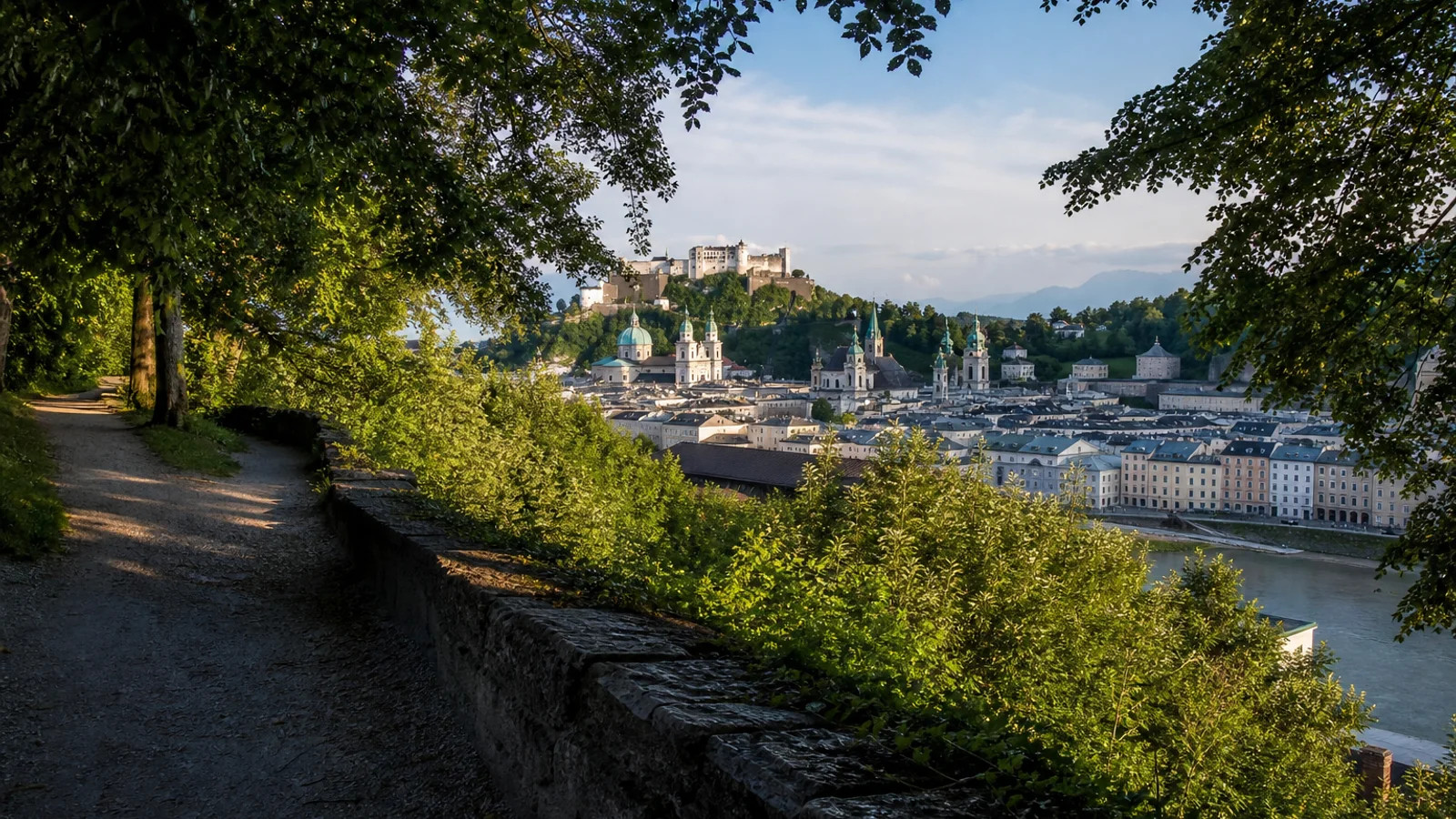
Mönchsberg is the experience that turns Salzburg from a preserved center into an Alpine city. The official city-mountain route starts near Mozartplatz, climbs by Nonnberg and the fortress area, then follows the ridge toward the Museum der Moderne and Augustiner Bräu. Salzburg tourism measures the core walk at 4.8 km and about 1.5 hours, before viewpoints, museum time, or a long stop at the end.
Go in dry weather with enough daylight. The path moves through woods and meadow edges, then opens repeatedly over church towers, the river, and fortress walls. Those changing views do more for the trip than another hour inside a crowded lane because they show how quickly Salzburg gives way to green slopes. Low cloud can still make the woods appealing, but steady rain and slick paths are a sound reason to use the Mönchsberg lift and Museum der Moderne instead.
Continue toward Mülln and Augustiner Bräu when a beer-hall evening suits you. Long tables sit under chestnut trees in good weather, and the food stalls let the stop remain informal. This is not a quiet fine-dining recommendation. It is a social, self-directed finish with heavy mugs, roast chicken, sausages, bread, and the occasional moment of uncertainty about where everyone acquired the correct token. Watch first, then join the system.
If beer halls hold no appeal, reverse the route or descend earlier for dinner on the right bank. The recommendation is the ridge, changing light, and slower pace. Your action is to check the forecast, wear shoes with grip, and begin early enough that the descent does not become a race.
The Salzburg Card and Getting Around
Salzburg presents two different visitor products that are easy to confuse. The Guest Mobility Ticket is provided to overnight guests and covers public transport across the province for the stay. According to Salzburg tourism, that includes city transit, regional buses, S-Bahn trains, regional trains, and long-distance trains within the province. It is funded by a mobility fee of €0.50 per person per night for guests aged 15 and older in 2026.
The Salzburg Card is an attraction pass with public transport inside the city and included or discounted sights. In 2026 it costs €35, €41, or €44 for 24, 48, or 72 hours from January through March and November through December. From April through October, the same durations cost €38, €45, or €49.
Buy the card for admissions, not for ordinary transport. A fortress visit, Mozart museum, Mönchsberg lift, and another included sight can make the arithmetic work. A day built mostly around streets, churches, gardens, and a long ridge walk probably will not. List the paid places you actually want, verify they are included, and compare their current total with the card for the hours you will use it. Do not add attractions simply to defeat the price of a pass you have already purchased.
Arrival by rail is particularly easy because Salzburg Hauptbahnhof sits within walking distance of Mirabell and Andräviertel, with buses onward. Drivers should read their accommodation’s access and parking instructions before entering the center; the 2026 Old Town restriction makes improvisation a poor plan. Use a garage or Park & Ride arrangement that leaves the car alone while you walk.
Choose One Regional Day
Salzburg can point you toward lakes, cable cars, salt mines, ice caves, palaces, and two countries before you finish breakfast. Choose one landscape or one historical theme. A sampler tour that photographs several names through a bus window spends the day proving the region exists.
For water and an easy Alpine horizon, choose Wolfgangsee and the Salzkammergut. St. Gilgen, St. Wolfgang, the lake boats, and the Schafberg railway can build a satisfying day when seasonal operations align. Check each operator rather than assuming every boat and mountain train follows the same calendar. This is my recommendation for travelers whose picture of Salzburg includes a real lake day, not merely the Old Town with mountains in the distance.
Choose Untersberg when the forecast is clear and you want a shorter mountain commitment. Salzburg tourism classifies Untersberg and Gaisberg as useful half-day trips. The cable car gives quick altitude, which also means cloud can erase the reason for going. Look at summit conditions, bring a layer even when the city is warm, and leave room to abandon the plan without feeling cheated.
Werfen suits a full day built around Hohenwerfen Fortress or the ice caves. It asks for more movement and seasonal verification, but it creates a stronger contrast with the city than another palace. Hellbrunn is the lower-risk family choice closer to Salzburg, especially for the palace, trick fountains, and zoo. It can also rescue a day that never offered the mountain visibility you wanted.
Hallstatt is famous, visually clear, and often the default answer. It is also farther, busier, and more transport-heavy than many readers expect. Go because the lakeside village is the specific priority. If the real wish is simply water, mountains, and a pleasant day outside Salzburg, Wolfgangsee may give the day more breathing room.
Make any weather-sensitive excursion refundable, or wait until the forecast is credible. That decision is more valuable than filling every day before arrival.
My Salzburg Verdict
Salzburg earns three nights because its strongest moments belong to different conditions. The fortress wants a clear morning. Domplatz and St. Peter’s improve when the crowd thins. Mönchsberg asks for dry light and time to keep walking. The lake or mountain day depends on a horizon you cannot reserve.
Book Andräviertel for balance or the Old Town for atmosphere, then choose one Mozart museum instead of collecting the name. Put the Salzburg Card against your real admission list, remembering that overnight transport is already handled by the Guest Mobility Ticket. Keep one regional idea ready and let the weather promote it.
The first booking should be a refundable room within an easy walk of the river. The next should be the concert, museum, or seasonal excursion that defines your version of Salzburg. Leave the remaining hours open enough for bells after rain, a ridge path above the roofs, and an evening that lasts longer than a day trip allows.