Quick Take
What you should know before you book
Ljubljana is best as a three-night stay: arrive in time for the riverfront at dusk, give the castle and Central Market one full day, then use a second for Plecnik's city, Krakovo, Trnovo, and Tivoli. Stay near the river for immediate access or in Trnovo for quieter evenings. If Lake Bled is essential, add a fourth night or move to the lake instead of sacrificing Ljubljana's second layer.
- Best stay: three nights, with an arrival evening and two genuinely different city days.
- Best base: the central riverfront for ease; Trnovo for quiet, neighborhood meals, and a short walk into the core.
- Best first booking: a flexible central room, followed by only the castle, museum, or tour you care about most.
- 2026 reality: the airport bus costs €4, a one-zone LPP fare costs €1.50, and adult Ljubljana Cards cost €41-54.
In This Guide
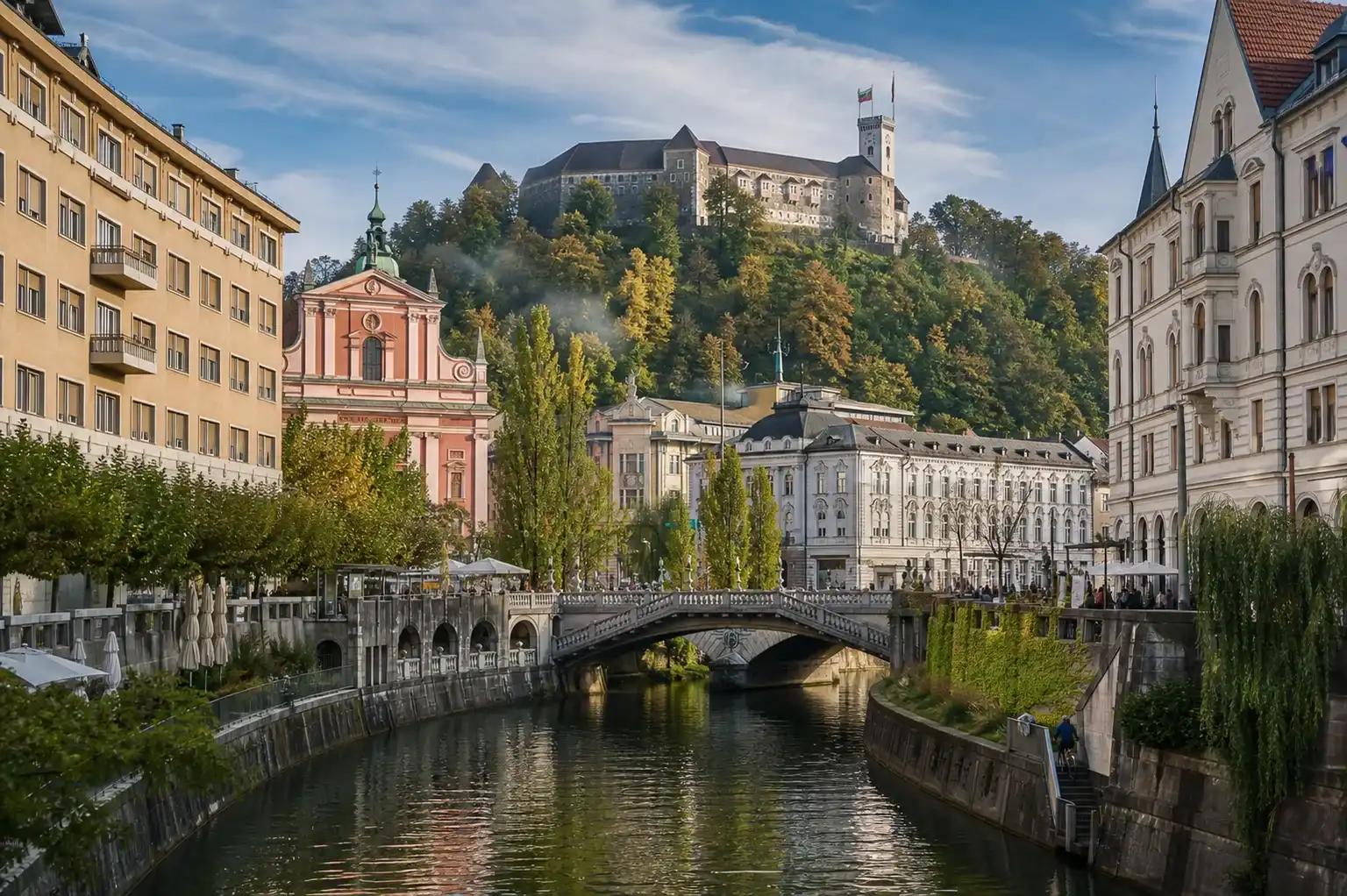
The Ljubljanica is quietest before the riverside tables fill. Cyclists cross Triple Bridge, produce arrives beneath Jože Plečnik’s market colonnades, and Ljubljana Castle watches from a wooded hill that looks far more dramatic than the climb requires. This is Slovenia’s small, river-centered capital, set between Alpine routes and the Adriatic. I recommend three nights: an arrival evening, one full day for the castle and historic center, and another for Plečnik’s everyday city, Trnovo, and Tivoli. Stay near the river for immediate access or in Trnovo for quieter nights. This guide explains the 2026 airport bus, city fare, Ljubljana Card, castle tickets, neighborhoods, and whether Lake Bled belongs inside the stay. Book a flexible room first. If Bled is essential, protect a fourth night instead of cutting Ljubljana down to a polished half-day.
Why Ljubljana Earns Three Nights
Ljubljana can be crossed quickly. That is not the same as seeing it well. A hurried stop usually walks from Prešeren Square across Triple Bridge, photographs Dragon Bridge, rides to the castle, and leaves with the accurate impression that the center is compact. It misses the more persuasive city: market morning, the south-bank gardens, a wet Tivoli path, and the river after office workers replace tour groups.
Three nights creates an arrival evening and two full days. Use the first for the Central Market, cathedral lanes, castle hill, and the riverfront core. Use the second to follow Plečnik toward the National and University Library, Krakovo, and Trnovo before turning west into Tivoli. The distance stays manageable, but the mood changes from formal facades to vegetable gardens, willows, low houses, and parkland.
That second day is why I would not trade one of the nights for another fast stop. Ljubljana is not selling spectacle by the hour. Its appeal accumulates through short walks, coffee, architecture that organizes daily movement, and an evening when you can choose dinner without checking tomorrow’s departure platform. Reserve three nights and keep both full days in the city.
Another base improves a longer Slovenia trip when it changes the landscape. Bled, Bohinj, the Soča Valley, or the coast can do that. Inside a three-night Ljubljana stay, another hotel mostly adds a checkout and removes the quieter half of the capital. Add time before adding a key.
Build the First Day Around the Castle and Central Market
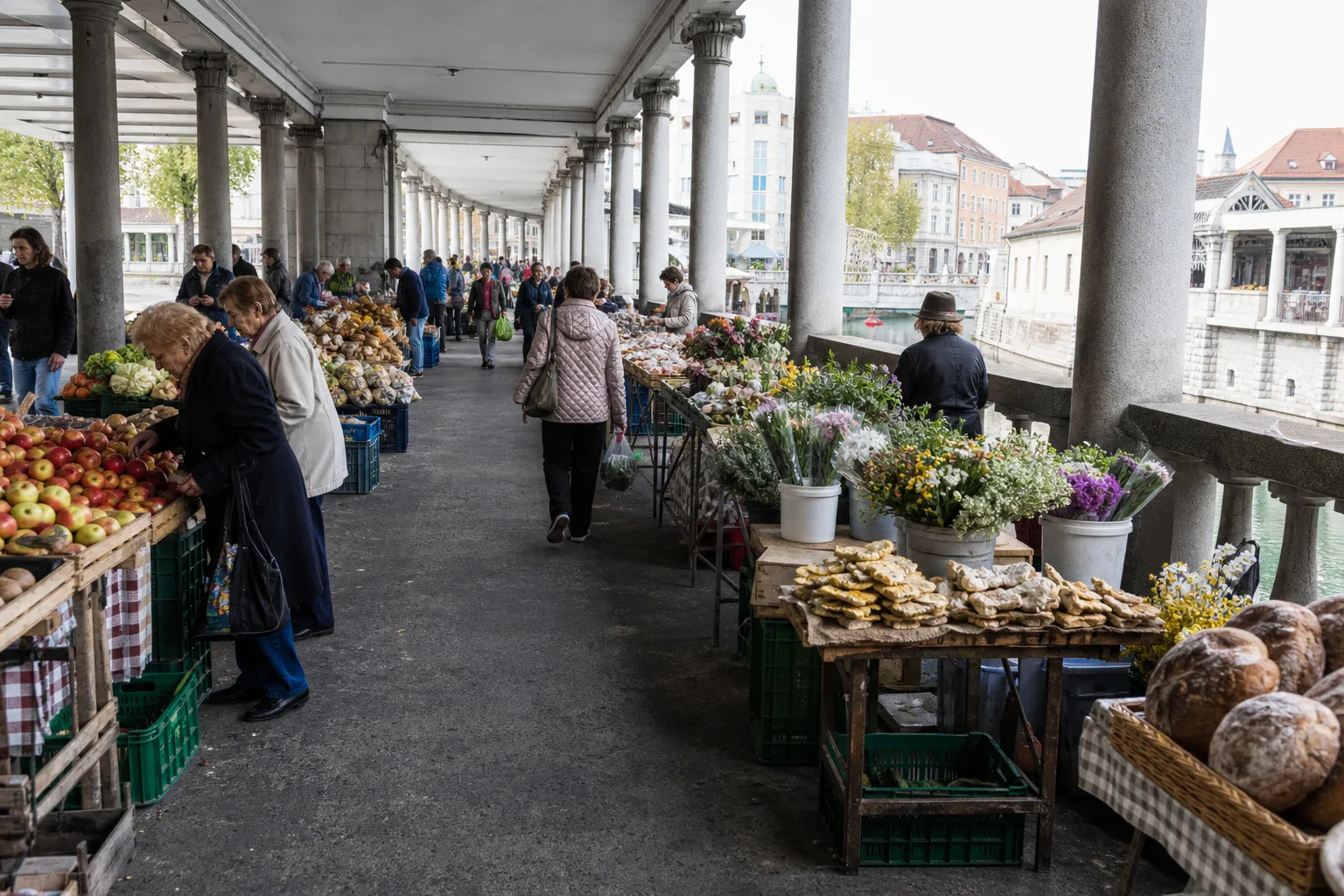
Start at the Central Market while it still behaves like a market. Apples, mushrooms, bread, flowers, and seasonal vegetables sit beneath Plečnik’s pale riverside arcades; the Ljubljanica runs just beyond the columns. This is a better introduction than beginning with a museum because it shows the capital working at human scale. Check the operating day before building breakfast around it, then give the stalls and colonnades time instead of treating them as scenery between bridges.
Continue past St. Nicholas Cathedral and the medieval lanes toward the lower funicular station. The official funicular takes about 60 seconds and costs €3.30 one way or €6 return for an adult. That is a convenience purchase, not an essential Ljubljana rite. Walk up when dry weather and your knees agree; ride when the short ascent protects energy for the rest of the day.
The castle decision needs the same discipline. An adult package combining return funicular travel with the viewing tower, Slovenian history exhibition, Museum of Puppetry, and other castle content currently costs €19. Buy it when those interiors matter. If the attraction is mainly the hill, skyline, and walk, do not let a bundle manufacture interest.
From above, the city finally explains itself: red roofs close around the river, Tivoli opens to the west, and mountains appear on clear days without promising to perform on schedule. Put this view on the first clear morning. Low cloud does not ruin Ljubljana, but it does flatten the one sight whose value depends on distance.
Descend for lunch away from the tightest river tables. The central embankments are lovely, and some are priced as if the chair itself were the attraction. Walk a few streets before choosing. Look for Slovenian dishes such as štruklji, jota, or Carniolan sausage when they suit the season, and judge the kitchen rather than the uninterrupted view of passing boats.
Follow Plečnik Into Krakovo and Trnovo
Triple Bridge is the famous photograph, but Plečnik’s value is easier to understand as a route. His bridges, market arcades, embankments, library, and public spaces keep connecting parts of the city that would otherwise feel like separate attractions. Begin at Prešeren Square, follow the river past the market, then turn toward the National and University Library. Its dark brick and stone facade feels heavier than the riverside work, which is precisely why the transition is useful.
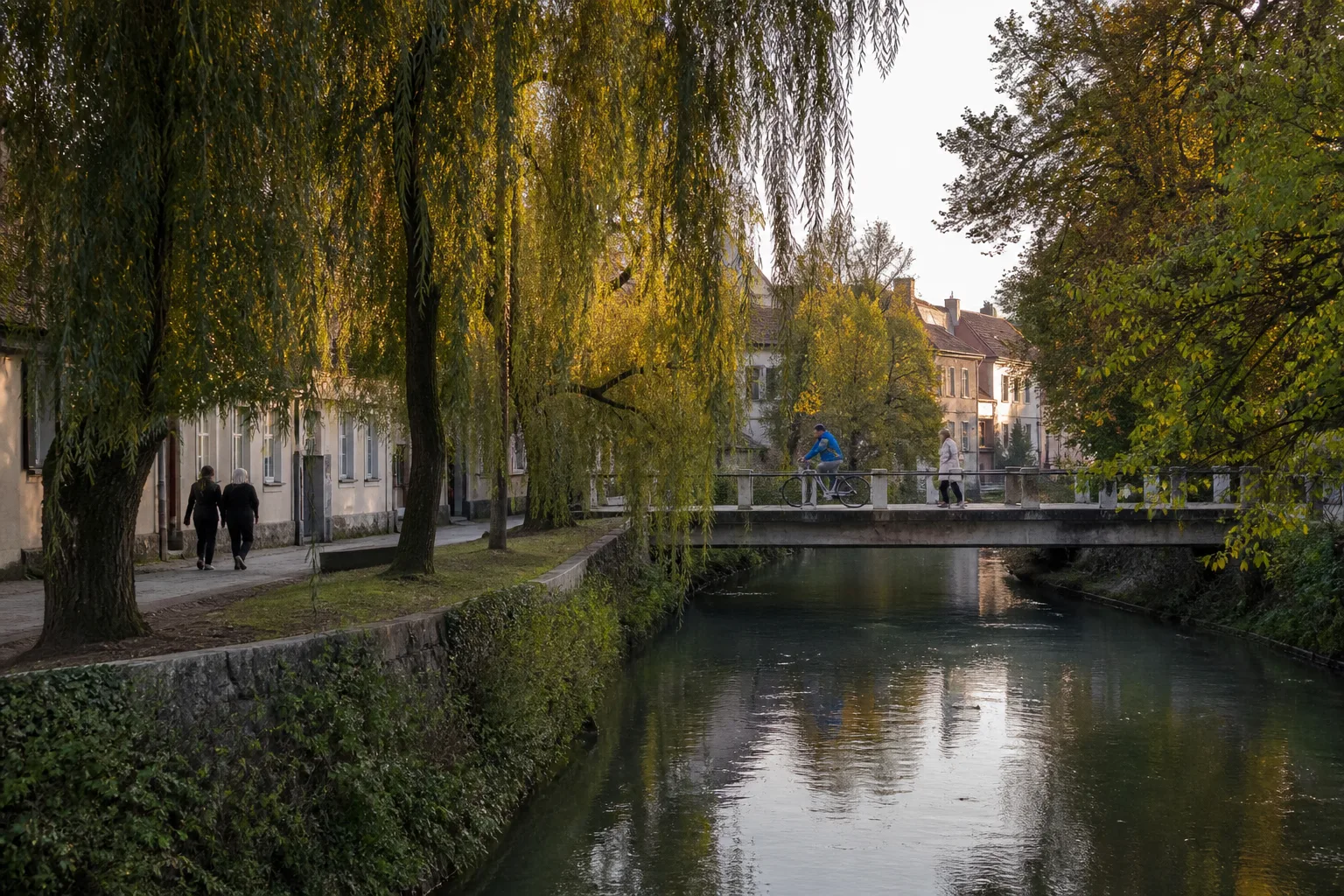
Continue south into Krakovo. Gardens and low houses reduce the scale again, and Trnovo begins to feel residential without becoming inconvenient. The Gradaščica River passes beneath willows and small bridges; bicycles and dog walkers matter more than landmark queues. This is the section that proves Ljubljana has a second day.
I would plan one dinner here or on the walk back toward the center. The reason is practical as much as atmospheric: leaving the narrowest tourist corridor widens the restaurant choice and gives the evening a destination of its own. Reserve only when a specific kitchen matters. Otherwise, walk the neighborhood, read the menu, and choose a room that looks occupied by people who did not arrive in the same group.
Rain changes the texture without destroying the route. Wet stone suits the library facade and the river trees; heavy weather makes the longer garden section less appealing. In persistent rain, shorten the neighborhood loop and move one museum from the next day forward. The reader action is simple: put the south-bank walk on the drier afternoon, not at a fixed hour three months in advance.
Give the Second City Day Room for Tivoli
Tivoli Park is the correct answer when another church facade starts feeling like homework. The broad paths begin close to the center and lead into lawns, mature trees, cultural venues, and the wooded slope beyond. It is not an Alpine substitute. It is where Ljubljana stops asking you to notice architecture every thirty seconds.
Walk the Jakopič Promenade, then decide whether the weather and your interests point toward a gallery, a longer park circuit, or simply a bench and lunch. The recommendation is to choose one cultural interior rather than stacking several because they happen to sit nearby. A city this compact tempts visitors to over-collect. The consequence is a technically complete day with no memorable hour.
Pair Tivoli with the right-bank city rather than crossing the historic core repeatedly. An easy second-day shape is a morning around Tivoli, lunch toward the center, then an afternoon on the Plečnik-to-Trnovo route. Reverse it in hot weather so the park takes the softer late light. In rain, use the park as the adjustable part and keep one museum ready.
This is also the day for a long cafe stop. Ljubljana’s riverfront works because sitting beside it does not feel like time stolen from a giant attraction list. Choose the table for the view once; choose the next one for coffee, pastry, or shelter. The point is not to perform slowness. It is to leave enough unassigned time for the city to feel larger than its map.
Stay by the River or in Trnovo
For a first visit, the central riverfront is the easiest base. Prešeren Square, the market, castle access, restaurants, and most central sights are within a short walk. The compromise is predictable: the prettiest blocks can carry the highest room rates and the most evening noise. Read recent room-specific reviews, especially for weekend stays, and do not assume a historic facade includes effective soundproofing.
Trnovo is my stronger recommendation for travelers who value quiet and neighborhood texture. You give up the instant postcard outside the door and gain willow-lined walks, local evenings, and a pleasant approach into the center. Keep the property within a comfortable walk of the river. A bargain that requires a bus for every dinner misses the reason to choose Ljubljana’s south side.
The station area works for a late arrival or early train. It is practical rather than romantic, and the walk to Prešeren Square remains manageable. Book there when departure mechanics genuinely control the night. Otherwise, move closer to the river or south toward Trnovo, where the room improves the hours between sightseeing.
Three nights in one base earns its place through the arrival evening, the castle-and-market day, and the neighborhood-and-park day. Moving to Bled inside that allocation fragments the trip: one of Ljubljana’s full days disappears into a departure, arrival, and new room. Add a fourth night or choose the lake as the next real base. Do not ask three nights to impersonate five.
Handle Arrival, Buses, and the Ljubljana Card Once
Ljubljana Airport has no rail connection. The official public bus stops beside Terminal A and runs to Ljubljana’s main bus and train station. A one-way ticket to the city currently costs €4; buy it on the bus or at the airport ticket machine. The machine also sells a €2 IJPP chip card for combined bus-and-rail journeys, which matters mainly when Ljubljana is not the final destination. Check the official timetable for the travel day because traffic and operations can change departures.
Inside Ljubljana, walking should do most of the work. The current LPP one-zone fare is €1.50. Payment with Urbana credit includes transfers within 90 minutes; tapping a contactless Visa or Mastercard costs the same but does not include that transfer window. That difference is small until a connection turns one journey into two charges. Use Urbana when several connected bus rides are actually in the plan.
The adult Ljubljana Card costs €41 for 24 hours, €49 for 48 hours, or €54 for 72 hours. It includes more than 30 attractions, Ljubljana Castle, a river cruise, a guided city tour, and unlimited city buses, with each included attraction generally available once. It activates on first use. Plečnik House is the notable place where advance reservation is recommended.
I would buy the card only after naming the included things you want. A castle visit, cruise, guided walk, museums, and bus use can make the total persuasive. A traveler who mainly wants the market, river, neighborhoods, Tivoli, and one castle ticket should pay individually. The card is a bundle, not a civic duty. Write down the three paid experiences you genuinely intend to do; if their prices do not approach the card, keep the difference for dinner.
When Lake Bled Needs Another Night
Lake Bled is close enough to appear in almost every Ljubljana plan and different enough to deserve a clean decision. The lake, island church, castle cliff, and Alpine backdrop provide the landscape contrast the capital cannot. Public buses serve Bled, including direct airport connections listed by Ljubljana Airport, so a car is not automatically required.
The problem is allocation. Using one of only two full Ljubljana days for Bled leaves the capital with a castle-and-bridge sampler. That may be correct when the lake is the leading reason for coming to Slovenia. It is not a complete Ljubljana trip.
Add a fourth night when you want one hotel and a straightforward Bled day. Move to Bled or Bohinj when early lake light, hiking, swimming, or mountain weather is central to the trip. The separate base improves the experience because it protects mornings and evenings rather than merely relocating sleep. With three nights total, choose: Ljubljana with depth, or a split trip that openly prioritizes the lake.
Avoid combining Bled with several other names because the map looks small. Lake time disappears quickly into transfers, viewpoints, meals, and weather. One substantial landscape day is useful. A coach-window sampler of Bled, Bohinj, and another stop mostly proves Slovenia has scenery.
My Ljubljana Verdict
Ljubljana is worth three nights for travelers who enjoy walkable cities, markets, architecture, cafes, green space, and evenings that do not require a major attraction. It is less convincing for someone who needs monumental museums or constant spectacle. That honesty is part of the recommendation: the capital works because its pleasures fit together, not because any one sight overwhelms the rest.
Book near the river when simplicity leads. Choose Trnovo when quieter streets and a more residential evening sound better. Give the first clear morning to the castle, follow the market and Plečnik beyond the famous bridge, and let Tivoli absorb the moment when the historic center feels complete.
Then decide what Slovenia trip you are actually taking. If Lake Bled is a leading image in your head, give it another night or its own base. If the city is the point, keep the second day. The reward is not a longer checklist. It is morning produce under the arcades, willow branches over dark water, and a capital small enough to become familiar before you leave.